A Tribute by Neha Dwivedi :
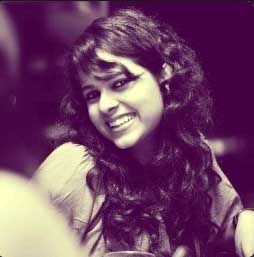
Ms. Neha Dwivedi, daughter of the Kargil war hero, Maj C B Dwivedi paid tribute to her father on his “Birth Anniversary” on 02 Jan 2018…
People often ask me what is it that I remember the most about my father, and I find it very difficult to answer that question. Not because my memory fails me, or that there isn’t anything. It is because there are so many and all of them so wonderful, that it is just not possible to single one out.
All of us have so many roles in life that it is often difficult to be able to play all of them to the T. However, daddy never seemed to struggle with any one of them. He actually made it look easy. I was very young to realize this earlier but now when I think of it, I can’t help but marvel at his ability to do that. It isn’t a surprise that when he was playing the role of a protector of our motherland, he played it par excellence!
The three of us (my mother, my younger sister and I) were completely dependent on him for every little thing in our lives. The idea of a life without him was unimaginable for us. Now I understand why the first thought that I had on hearing about his martyrdom was, “who will teach me maths now?”. That’s how ill-equipped I was. That was the maturity that I had at the time. He had kept us under such a protective blanket always that having to stretch out of it, seemed just impossible. Our lives began and ended on daddy and with him gone, we were suddenly helpless.
Saying that life after him was tough would be an understatement, especially for our mother who was literally the first child of my father’s. He didn’t leave a wife and two daughters behind, he left three of them. However, all the seeds that he had sown and nurtured, in his various relationships, came ahead and bore fruits for us and made the journey a little easy with time. Even when he wasn’t around, he made sure that he took care of us. That’s the man he was!
Till the day he lived, every single time that we faced a setback or a hurdle, we always knew in our hearts- “daddy theek kar denge”, and he did just that. He made everything right. Even while sitting up there.
Our parents are the first and biggest influences in our lives and a lot of our expectations from other people around come from what we see at home. Thanks to daddy, my younger sister and I grew up knowing and believing that we deserve the best in our lives as well.
This knowledge is perhaps the best gift that a parent can give to his offspring and even though we were not together for long daddy, I hope you know that you instilled that nice and deep in us. For all the things I said and the many that I will never be able to finish saying, WE LOVE YOU WITH ALL OUR HEART AND SOULS… ALWAYS HAVE ALWAYS WILL!
Neha Dwivedi
A Tribute by a Diksha Dwivedi :
It was a tough decision to write this but I have nothing to hide. The more I stare at my father’s nameplate stuck neatly on to my notice board, the angrier I get for how easily everybody has forgotten him. The letters in white engraved onto the black plate say — C B DWIVEDI — in English and in Hindi. Every year I come across multiple articles on the ‘Heroes of the Kargil war’ and not once have I found his name there. Trust me, I’ve waited with patience for over 16 years. He’s the reason I picked up journalism, he’s the reason I want to make a difference without expecting anything in return from the world. So his story will be told, today, by his daughter.
Because his life wasn’t a waste and you better thank him for the life you’re living.
An army is a profession. Actually, it’s more than that. It’s a way of life. It’s like giving a job to somebody that’s worth a million, and telling him that — “Hey you might just die tomorrow”. Even for a million bucks, you may not find many takers. It takes a lot to choose ‘army’ as a profession. Once in the Academy, you also get a chance to choose to be in the fighting arm or any other department. So it takes a lot to CHOOSE to be on the front and take a bullet for your countrymen. And yes, my father did exactly that. He chose to be in the artillery arm and served the Indian army for 18 years; today you can become a colonel in that much time. I sometimes wonder what post he would be at today if he was still around.
Maj. C.B. Dwivedi, an officer who didn’t have time to sleep a wink during the war, never forgot to write a letter to his family, faking his well-being oh-so-perfectly, even during the war. His last letter to my mother went something like this:
Dear Bhawna,
Sweet Kiss […….
…….] A lot of news shown on TV is true but a lot of it is false. So don’t believe in it completely, just believe in God.
This was two days before he sacrificed his life for the country. Daddy was a complete family man and our mother was the boss of the house. He loved spoiling her. Even when he would call from Srinagar, he would say “chota baby kahaan hai” and we would call mummy quickly. Not that he wasn’t a doting father too. He used to plan his leaves around our exams. We were so dependent upon him that my sister didn’t know how to prepare for her exams without him.
I still fail to understand how he managed to sound so carefree in his letters amidst all that chaos during the Kargil war. I remember him calling us from the satellite phone and talking about the bad weather in the background. I’m yet to come across a man who is as selfless as him. Seriously. The day I find someone like my father, I’ll marry him.
Not all units are employed during every war. During the Kargil war, Artillery and Infantry were the units that were employed majorly. Gunners belong to artillery and Maj C.B. Dwivedi was a proud Gunner. He would sit bravely at the top of the artillery gun (a weapon that’s big enough to be a tank), fearlessly facing the enemy, firing at them from dusk to dawn. Yes, this is how the Kargil war was fought — at night, when the world was sleeping peacefully, the Indian army was on duty.
It was the early morning of 14th May 1999 when 315 Field Regiment of the Indian Army was deployed to Drass. My mother, my sister and I had just gone to see daddy during our summer vacation and we only got to spend 12 hours with him. He mentioned that in one of his letters to my mom, where he wrote.
“Even though the meeting was short, only for twelve hours, it was really nice seeing you. I’ll see you guys soon.”
The harsh truth is that we never saw him again. Had we known that those were the last twelve hours we would be spending with him, we would’ve done so much more instead of just eating lunch and dinner with him in the mess. My father was a true romantic, a true comedian, a true chef sometimes, a true father always but before all of that, he was a true soldier. His jawans loved him for the way he motivated them during the war. While he manned the guns of 315 Field Regiment, his unit suffered only two casualties during the Kargil war.
315 Field Regiment was also the first artillery unit to be inducted into the war zone. Daddy was the officiating Second in Command at that time. Operation Vijay was a tough campaign in a tough war, mainly because of the lack of information, an under-prepared army and the strategically superior position of the enemies who had intruded into our land.
The first day the regiment arrived at the base camp in Drass, they were heavily fired upon. As my uncle (Col Upadhyay, who spent every second with my father during his last days) recalls, the unit had absolutely no information about the position of the enemies. He remembers saying the following lines to Daddy that night:
“Sir, we’re in big trouble.”
The army had been sent to the war zone blindly, with some massive planning to do and execute. As my father was responsible for the safety of the artillery units that had come in, he used to take off every morning to survey and search the area for empty spaces along highways where the vehicles and artillery units could be parked. He was also responsible for coordinating the arrival of the ammunition, the communications for firing, the war survey and the dumping plans.
Daddy’s unit, 315 field regiment, was responsible for supporting operations for 1 Naga, 8 Sikh, 17 Jat and 16 Grenadiers regiments who finally went on to capture Tololing, Point 5140, Black Tooth, Tiger Hill, Point 4875 (Gun Hill), Mahar Ridge and Sando Top in the Drass – Mushkoh Valley from the intruders.
The time between 14th and 31st May was the toughest for the unit – they had to fire at one position and quickly move on to another location to avoid detection continuously. The only free time daddy had was spent on staring at the map and devising plans for the regiments’ next move. But he still wrote letters. He never forgot to write to us.
With the responsibility of infantry units on their shoulders, 315 Field Regiment often faced two choices at night —they could stop firing and wait till morning or they could keep firing to protect the infantry units. My father mostly chose the latter. The artillery didn’t even have bunkers, they would stay in tents. And gunners can’t hide while firing because they sit right at the top of their artillery guns as they face the enemy. That’s where my daddy sat. Right at the top. Fearlessly looking at the enemy.
The day for his regiment used to start at 2.30 am when they moved around in the hills in vehicles whose headlights were switched off. Such was the danger they were exposed to. Even Indian aircrafts were shot down during this time – Squadron Leader Ajay Ahuja lost his life on May 27th, 1999, a big blow to the Indian army. But what had to be done had to be done.
I remember when we — my sister and I — had seen daddy commanding an Operation in Udi once (I don’t remember the year) — and we couldn’t stop laughing. He was far far away and had allowed us to sit on top of a hill and look at him at work. He was walking around like a true soldier, with his hands crossed behind him and his back straight as he commanded the soldiers. We kept giggling saying,
“Daddy is just taking a walk ordering people around.”
We were too young to understand what a terrific leader he was. He was always a winner and that day too, he came back only because the enemy had waved the white flag to declare peace.
On the evening of July 2nd, 1999, 315 Field Regiment was hit by yet another dilemma — to continue firing or to stop firing. The infantry units (18 Grenadier and 8 Sikh) would’ve been in serious danger had they stopped. Daddy again chose the former, rushing out of his tent and motivating his boys to keep firing, to keep attacking the enemy. He knew how dangerous it could be but it was either protecting himself or protecting a whole unit — he chose the latter. It’s the madness in a soldier’s blood that most of us will never understand. He was mad.
He was at the gunner’s position and was firing at the enemies when a shell landed right next to him. He realized that his arm had been hit. But, what he didn’t realize was that some of the shrapnel had also entered his body from the side. As a result, he bled a lot but kept thinking that it was just his arm. In the heat of war, a soldier often doesn’t feel pain. Maybe this was the reason, but we’ll never know.
In this shelling, he and four of the other gunners suffered fatal injuries. At that time, daddy was the only 2 IC who was single-handedly overseeing so many operations in that terrifying war zone. Tiger Hill was the last stop for the Indian army. My father could not see the tri-colour flag flying high but I’m sure he could sense the victory from wherever he was at the time. He played a huge part in it and no one can take that away from him.
Our world came shattering down when we got the news on July 2nd, 1999. We were just young kids and my mother, she was only 34 then. But, in some way, his spirit picked us up every time we fell. It’s been 16 years to that day.
The heroes of 315 Field Regiment were pivotal in bringing home the Kargil victory and received an honorary title as well but most of them never got the well-deserved appreciation from their country, from the people who were probably sleeping quietly in their homes when they were risking their lives. They, who were the backbone of the war, were never remembered again.
As my mother, my sister and I await the invitation from the government to celebrate Vijay Diwas in Drass someday with them, I want to salute every one of those men because of whom India is alive, free and safe today.
My father, my hero, I salute you.
Diksha Dwivedi



Col js kaundal
2025 at 11:07 pmA Big Salute to Maj CB Dwivedi. My Coursemate of 70th Regular. I came to know about his action much later. But now I realise how significant and vital it was that it invited heavy Counter Bombardment to his Gun posn from Pakis AND OUR FRIEND ALONG WITH SIX OF HIS GUNNER GOT VEERGATI . We will always miss him.
Colonel A R Khadar(Retd)
2025 at 7:39 amA mentor,philosopher and a guide whom I looked up to as a YO during my formative years of life in the Army .Sir bestowed me a sense of direction in navigating a life of Soldier.Blessed with innovative mind and his resourcefulness he was repository of solutions which indeed was highly motivating.Miss you for ever sir
Meena Airtel Koranne
2025 at 5:21 pmAn excellent officer, with whom I had close interaction.He never said No to any task assigned .Always cheerful .It was a personal loss to me as well my family.
Brig Sunil Dutt Upadhyay, VSM
2026 at 9:24 pm315 Field Regiment (KARGIL) is a battled hardened unit that proved its mettle during the 1999 Kargil War, 2010- 12 Counter Insurgency Operations in North East India and 2012- 2014 UN Deployment at UNDOF, Golan Heights Israel. In all these three professionally challenging situations, the unit performed outstandingly well and was bestowed with three different UNIT CITATIONS. A very highly decorated unit of Indian Artillery.
Late Major CB Dwivedi sir, Sena Medal, is our National Hero and our Regimental Inspiration. As our Unit Second in Command during the war, he led us at the Fire Direction Center and various Artillery Gun Positions during the crucial battles of Tololing, Tiger Hill and Point 4875(Gun Hill). He made supreme sacrifice of his life on 02 Jul 99 during the Artillery Fire Assualt on Tiger Hill. We were together….Sir attained martyrdom and I survived to see the Tricolour at Tiger Hill. On that fateful day, the complete Foxtrot 6 Gun Detachment of our Romeo Battery ,under the stewardship of Havilder Mallaya, also made supreme sacrifice of their lives…..perhapes a rare example in the history of Gunners worldwide wherein the complete Gun Detachment( Nk Sarvan, Nk Bishnu Rai, Lance Naik Gopiah, Gunner Raj Kumar and Gunner INC Singha,SM) breathed their last on the Gun itself, last delivering the penultimate artillery fire assualt (in support of 17 JAT during battle of Tiger Hill).
My Respect & Salute to my Regimental Heroes who inspire we KARGIL GUNNERS everyday and in every adversity. We are so proud of them and the legacy they have left behind for us to emulate. Jai Hind and Jai Hind ki Sena.
Brig Sunil Dutt Upadhyay, VSM
Brig Sunil Dutt Upadhyay, VSM
2026 at 9:31 pm315 Field Regiment (KARGIL) is a battled hardened unit that proved its mettle during the 1999 Kargil War, 2010- 12 Counter Insurgency Operations in North East India and 2012- 2014 UN Deployment at UNDOF, Golan Heights Israel. In all these three professionally challenging situations, the unit performed outstandingly well and was bestowed with three different UNIT CITATIONS. A very highly decorated unit of Indian Artillery. I had the honour to fight the 1999 Kargil War with with my unit and later in 2010 , command it as its Tenth Commanding Officer during its CI Tenure in NE India, leading to its coveted nomination for UN Mission UNDOF in Isreal.
Late Major CB Dwivedi sir, Sena Medal, is our National Hero and our Regimental Inspiration. As our Unit Second in Command during the war, he led us at the Fire Direction Center and various Artillery Gun Positions during the crucial battles of Tololing, Tiger Hill and Point 4875(Gun Hill). He made supreme sacrifice of his life on 02 Jul 99 during the Artillery Fire Assualt on Tiger Hill. We were together….Sir attained martyrdom and I survived to see the Tricolour at Tiger Hill. On that fateful day, the complete Foxtrot 6 Gun Detachment of our Romeo Battery ,under the stewardship of Havilder Mallaya, also made supreme sacrifice of their lives…..perhapes a rare example in the history of Gunners worldwide wherein the complete Gun Detachment( Nk Sarvan, Nk Bishnu Rai, Lance Naik Gopiah, Gunner Raj Kumar and Gunner INC Singha,SM) breathed their last on the Gun itself, last delivering the penultimate artillery fire assualt (in support of 17 JAT during battle of Tiger Hill).
My Respect & Salute to my Regimental Heroes who inspire we KARGIL GUNNERS everyday and in every adversity. We are so proud of them and the legacy they have left behind for us to emulate. Jai Hind and Jai Hind ki Sena.