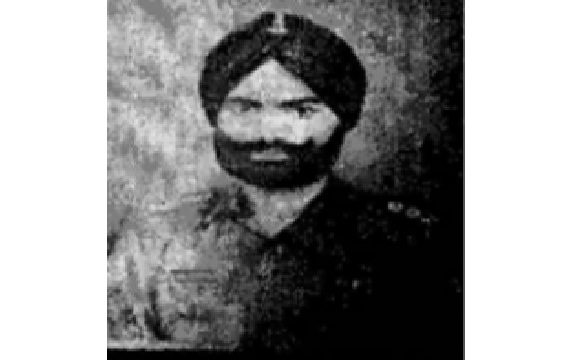

Service No : SS-22848
Place of birth : New Delhi
Service : Army
Last Rank : Captain
Unit : 7 Jat
Arm/Regt : The Jat Regiment
Operation : CI & IS Ops
Awards : Kirti Chakra
Martyrdom : July 31, 1973
Captain Haripal Singh Ahluwalia KC
Captain Haripal Singh Ahluwalia hailed from New Delhi, born into a family that valued discipline and service as the son of Shri Amar Singh Ahluwalia. From a young age, he displayed a keen desire to don the olive green, and this aspiration shaped his character and guided his choices, ultimately leading him to pursue a career in the Indian Army. On 15 March 1970, his dream took concrete shape when he was commissioned into the Army as a 2nd Lieutenant. He was commissioned into 7 Jat Battalion of the Jat Regiment—a formation celebrated for its rich legacy of valour, grit, and battlefield excellence.
Life in uniform suited Captain Ahluwalia perfectly. Energetic by nature, disciplined in conduct, and deeply committed to duty, he embraced the demands of military life with enthusiasm and pride. During his service, Captain Haripal Singh Ahluwalia quickly earned the admiration of both his superiors and subordinates. His peers respected him as a dependable officer, while his seniors recognised in him a bright and promising leader with a deep love for soldiering and immense potential for a distinguished career in the Indian Army.
Naga Insurgency Operation: 31 Jul 1973
During July 1973, Captain Haripal Singh Ahluwalia of 7 Jat Battalion was deployed in Nagaland, an area then experiencing heightened insurgent activity. The battalion’s Area of Responsibility (AOR) was particularly sensitive, requiring continuous counter-insurgency operations to contain and neutralise hostile groups operating from well-entrenched jungle bases. On 29 July 1973, credible and time-sensitive intelligence was received through the local intelligence network regarding the location of the General Headquarters of a Naga insurgent group. This headquarters was a strategically vital and heavily fortified stronghold that functioned as the nerve centre for hostile operations in the region. Any action against it involved considerable operational risk. Fully aware of the dangers and the importance of the mission, Captain Haripal Singh Ahluwalia voluntarily chose to accompany the raiding column, exemplifying his resolve to lead from the front. The operation commenced with a gruelling approach march through extremely hostile terrain. For two days and two nights, the column advanced through dense jungles, steep gradients, and adverse weather conditions. The physical strain on the troops was immense, yet morale remained high, driven by the significance of the mission and the leadership displayed by their officers.
On 31 July 1973, contact with the enemy was finally established. As the troops closed in on the hostile camp, Captain Ahluwalia positioned his men tactically for the final assault. At this critical juncture, a hostile sentry concealed within a well-camouflaged bunker suddenly opened fire at close range with a submachine gun. Captain Ahluwalia was struck by the first burst, sustaining a grievous wound to his right shoulder. Despite his severe injury, Captain Ahluwalia immediately assessed the situation and recognised the grave threat posed by the enemy bunker. Any delay could have resulted in heavy casualties among his men. Displaying exceptional presence of mind and utter disregard for personal safety, he charged towards the bunker, firing his Sten gun from the hip in an attempt to silence the hostile position. During this bold advance, he was hit by a second burst of enemy fire, this time in the chest, causing critical and ultimately fatal injuries. Even in his mortally wounded state, Captain Ahluwalia refused to withdraw. With extraordinary determination, he continued to urge his platoon forward, exhorting them to press the attack and overrun the camp. His actions and words in those final moments inspired immense courage and resolve among his men.
Captain Ahluwalia succumbed to his injuries shortly thereafter on 31 July 1973, collapsing barely 50 yards from the hostile bunker he had fearlessly assaulted. His supreme sacrifice became the turning point of the operation. Inspired by his exceptional gallantry and selfless leadership, the raiding column launched a resolute and coordinated assault, successfully overrunning the insurgent camp, which had long been regarded as impregnable. The operation led to the capture of a large cache of arms, ammunition, equipment, and vital documents, dealing a decisive blow to the hostile organisation and significantly degrading its operational capability in the region. Through his actions, Captain Haripal Singh Ahluwalia displayed conspicuous bravery, indomitable courage, and leadership of the highest order. He laid down his life in the finest traditions of the Indian Army, leaving behind an enduring example of valour, comradeship, and selfless service. In recognition of his outstanding courage, devotion to duty, and supreme sacrifice, Captain Haripal Singh Ahluwalia was posthumously awarded the "Kirti Chakra", the nation’s second-highest peacetime gallantry award.
No Comments