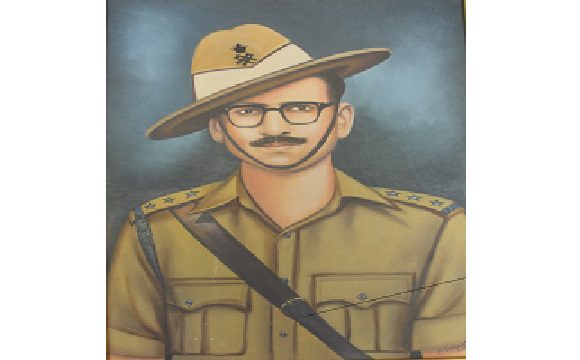

Service No : IC-8615
Place of birth : Varanasi (UP)
Service : Army
Last Rank : Captain
Unit : 3/3 GR
Arm/Regt : 3 Gorkha Rifles
Operation : Indo-China War 1962
Martyrdom : November 16, 1962
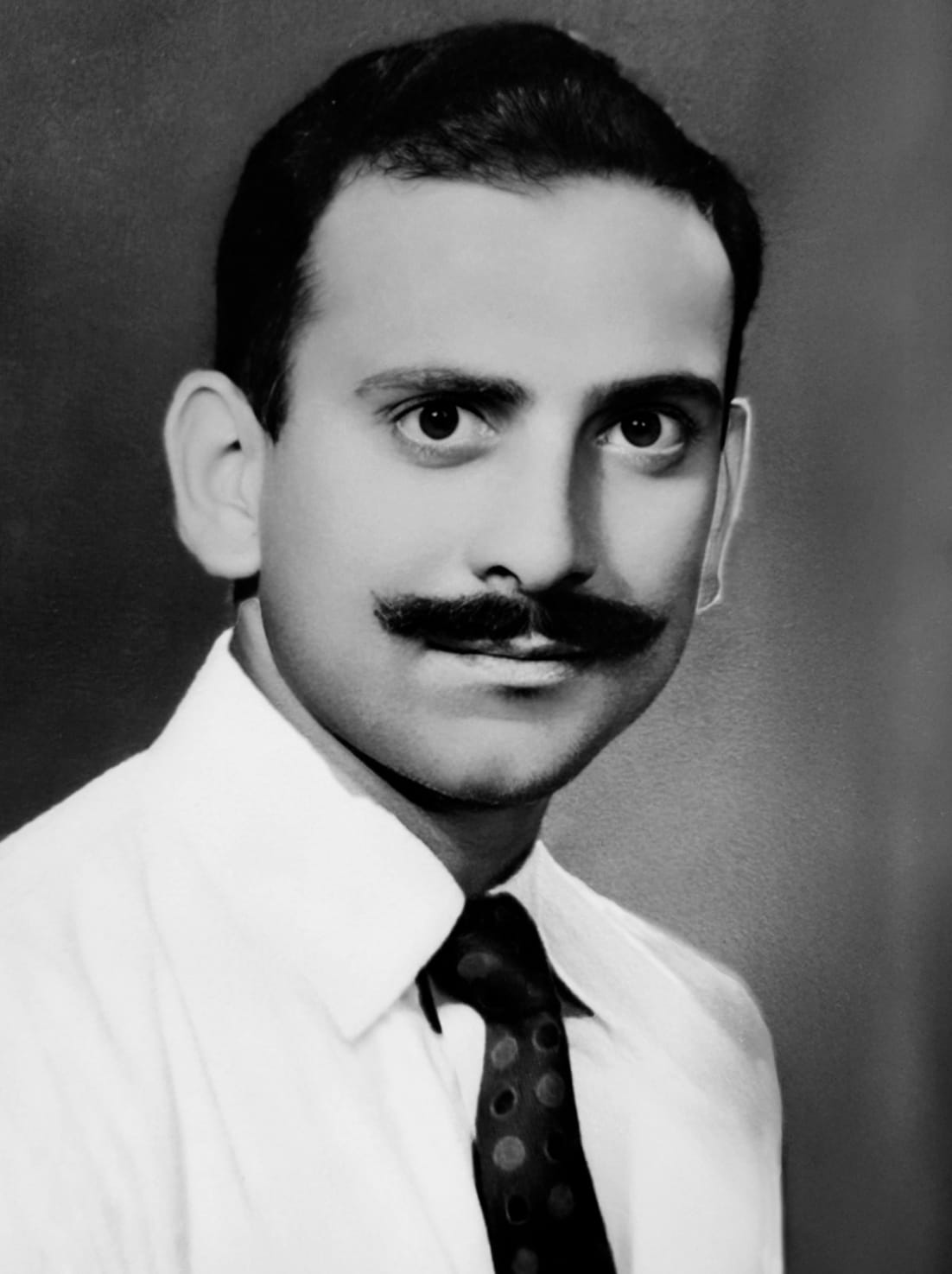
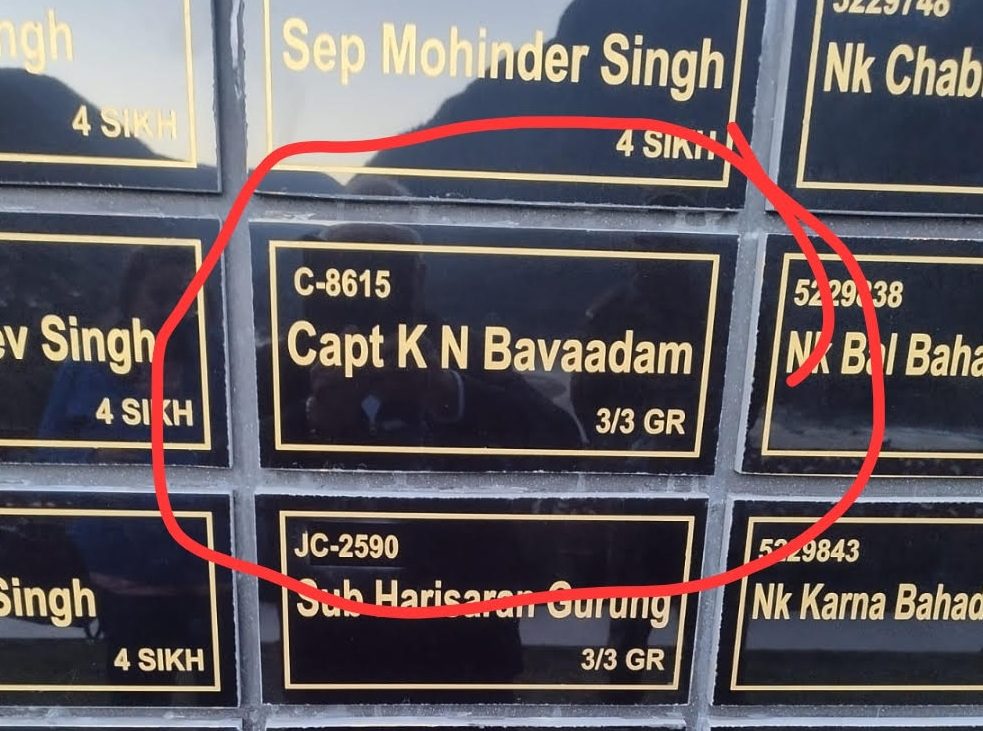
Captain KN Bavaadam
Captain Khushroo Noshirwan Bavaadam was born in Varanasi, Uttar Pradesh, though his family hailed from Mumbai, Maharashtra. He grew up in a close-knit family that valued education, integrity, and service to the nation. He was the son of Shri Noshirwan N. Bavaadam and Smt Najamai N. Bavaadam, whose guidance and values played a formative role in shaping his character. He had four sisters—Dhun Diniyar, Nergish Keki, Mani Phiroze, and Dogdo Noshirwan—and two brothers, Fredoon N. Bavaadam and Sam Noshirwan N. Bavaadam, and shared strong bonds with all his siblings. Driven by a deep sense of duty and patriotism, Captain Bavaadam chose a career in the Armed Forces. He gained entry into the prestigious Indian Military Academy (IMA), Dehradun, where he underwent rigorous training that instilled in him the highest standards of leadership, discipline, and professional competence.
Upon successful completion of his training, he was commissioned into the 3rd Battalion of the 3rd Gorkha Rifles (3/3 GR)—a regiment renowned for its bravery, discipline, and unwavering commitment to duty. Raised in the nineteenth century, the 3/3 Gorkha Rifles is one of the oldest and most distinguished infantry regiments of the Indian Army, with a long and glorious history of service in numerous campaigns and conflicts. As an officer of this legendary battalion, Captain Bavaadam exemplified the finest traditions of the Gorkha Rifles. His conduct and commitment reflected the highest ideals of the Indian Army and the enduring ethos of the Gorkha soldier.
Battle of Walong: Nov 1962
The Battle of Walong during the 1962 Indo-China War remains one of the most valiant stands in Indian military history. Despite shortages of resources, difficult mountainous terrain, and overwhelming enemy strength, Indian soldiers—including Sikhs, Kumaonis, Gorkhas, Dogras, and Assam Rifles—fought with extraordinary courage. As Chinese forces increased their buildup, 3/3 Gorkha Rifles was moved to reinforce Walong. By early November 1962, its companies were positioned across Dong Plateau, Dong Hill, the Ladders area, and Lachman Ridge—crucial defensive lines protecting the Walong airfield and the eastern approaches. Although command arrangements were confused and the battalions were over-stretched, the Gorkhas held firm against repeated probing attacks and heavy enemy pressure. Among the most heroic figures in this battle was Captain KN Bavaadam, the commander of D Company of 3/3 Gorkha Rifles. His leadership became crucial during the final phase of the fighting on 16 November.
When the Chinese launched large-scale assaults on Sikh and Gorkha positions, D Company was one of the last organised groups still offering resistance west of the Lohit River. Captain Bavaadam kept his men steady, fought off two enemy attacks, and maintained strict fire discipline even as ammunition ran low. Under his command, soldiers like Naik Keshar Bahadur Gurung and Havildar Chandra Bahadur Pun displayed exceptional bravery, continuing to fight until they fell. When communications with battalion and brigade headquarters were cut, Captain Bavaadam took full responsibility for his isolated company, making tactical decisions under extreme pressure. He personally led the evacuation of the wounded, including carrying out Major Samatsar of 4 Sikh, despite heavy enemy fire. As the Chinese began to outflank and surround them, he attempted a fighting withdrawal to save as many of his troops as possible. During this movement, the company was ambushed by Chinese elements that had slipped behind Indian lines. Captain Bavaadam continued to direct the fight, covering his men and refusing to leave his position. In this fierce rearguard action, Captain KN Bavaadam was "Killed in Action", sacrificing his life while ensuring that his soldiers had a chance to break out.
D Company, though reduced and battered, continued the fight from abandoned Sikh positions before eventually being forced to withdraw under intense artillery and machine-gun fire. By then, many positions held by Kumaonis, Sikhs, and Dogras had fallen or been overrun. Some troops never received the withdrawal orders and fought to the last man and the last bullet. When Indian forces returned two months after the ceasefire, they found the Chinese had marked the locations of the fallen, many still in their bunkers where they had died manning their weapons. The operation came at a high cost to the battalion. In addition to Captain Bavaadam, forty-eight other gallant soldiers of the 3rd Battalion, 3rd Gorkha Rifles (3/3 GR) laid down their lives during the course of the battle, including three Junior Commissioned Officers (JCOs) and forty-five Other Ranks (ORs). The fallen Junior Commissioned Officers were Subedar Hari Saran Gurung, Naib Subedar RB Thapa, and Naib Subedar JB Rana, each of whom exemplified outstanding courage and leadership in the face of overwhelming odds. The collective sacrifice of Captain Bavaadam and his men stands as a solemn and enduring chapter in the history of the 3/3 Gorkha Rifles, reflecting the regiment’s timeless ethos of bravery, loyalty, and unwavering commitment to duty.
Captain KN Bavaadam survived by his wife, Smt. Puran Bavaadam Shroff and son Shri Cyrus Bavaadam Shroff.
No Comments