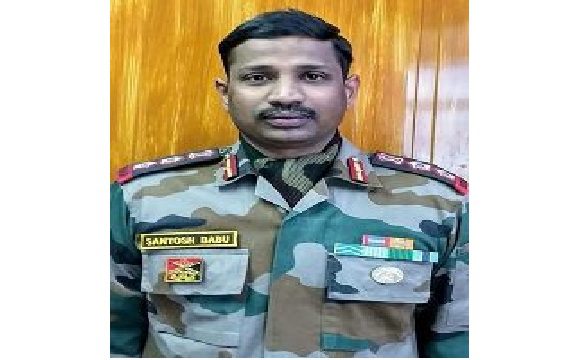

Service No : IC-64405M
Date of Birth : February 13, 1983
Place of birth : Suryapet, Telangana
Service : Army
Last Rank : Colonel
Unit : 16 Bihar
Arm/Regt : The Bihar Regiment
Operation : Op Snow Leopard
Awards : Maha Vir Chakra
Martyrdom : June 15, 2020
Col Bikumalla Santosh Babu MVC
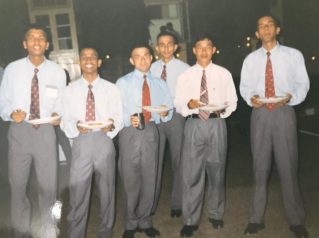
Colonel Bikumalla Santosh Babu was born on 13 February 1983 in the Suryapet district of present-day Telangana. He was the son of Shri Bikumalla Upender Babu and Smt Manjula, a homemaker. From an early age, he displayed discipline, determination, and a strong sense of duty—qualities that would define his military career. He completed his schooling at Sainik School Korukonda in Vizianagaram district, where his inclination towards the Armed Forces took firm root. As the years progressed, his resolve to serve the nation strengthened, culminating in his selection to the National Defence Academy on 27 December 2000. After graduating from the NDA, as part of the 105th Course, he proceeded to the Indian Military Academy, Dehradun, and was commissioned as a Lieutenant on 10 December 2004, at the age of 22. Colonel Santosh Babu was commissioned into the 16 Bihar Battalion of the Bihar Regiment, a regiment renowned for its valour and rich battle history. His first posting was in Jammu, where, as a young officer, he quickly distinguished himself as a committed soldier with excellent fieldcraft and leadership skills. Though a tough and resolute officer in operations, he was equally known for his warmth, approachability, and genuine concern for his men—traits that earned him deep respect and affection from peers and subordinates alike.
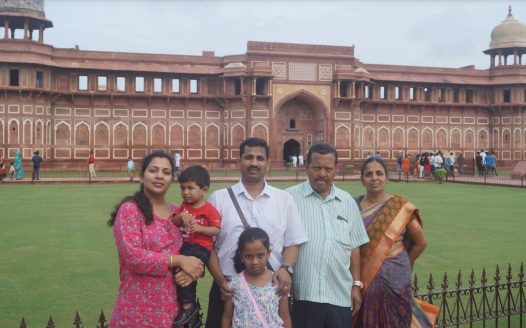
He progressed steadily through the ranks, distinguished by professionalism, operational competence, and exemplary leadership at every stage of his career. He was promoted to the rank of Captain on 10 December 2006, followed by his promotion to Major on 10 December 2010. Recognising his potential for higher command and staff responsibilities, he was selected to attend the prestigious Defence Services Staff College (DSSC), Wellington, an institution that prepares officers for senior leadership roles in the Armed Forces. Alongside his professional advancement, Colonel Babu also built a fulfilling personal life. In 2009, he married Ms Santoshi, who remained a steadfast pillar of support throughout his demanding military career. The couple was blessed with two children—a daughter, Abhigna, and a son, Anirudh Teja.
Colonel Babu gained valuable international operational experience during his tenure with the United Nations Peacekeeping Force in the Democratic Republic of the Congo (DRC), deployed amid the ongoing Kivu conflict. During a major joint operation involving Congolese and South African forces against the Nduma Defence of Congo (NDC) rebel group, his unit was caught in intense crossfire. Through calm leadership and decisive action, Colonel Babu played a crucial role in preventing the rebels from inflicting casualties on the joint force. During his posting in the Congo, he was also widely remembered for his kindness and generosity towards the local population, often extending help to civilians by assisting with medical and humanitarian needs. On 10 December 2017, he was promoted to the rank of Lieutenant Colonel. He subsequently served as a Divisional Officer and as an Instructor Class ‘B’ at the National Defence Academy (NDA), where he contributed significantly to the training and mentoring of future officers. Thereafter, he was appointed General Staff Officer Grade I (GSO-I) at the headquarters of 35 Infantry Brigade, a key operational staff role. In 2019, Colonel Babu was once again posted to Jammu and Kashmir, a region marked by demanding operational and leadership challenges. On 2 December 2019, he assumed command of the 16th Battalion of the Bihar Regiment (16 Bihar). In recognition of his distinguished service and leadership, he was promoted to the rank of full Colonel in February 2020.
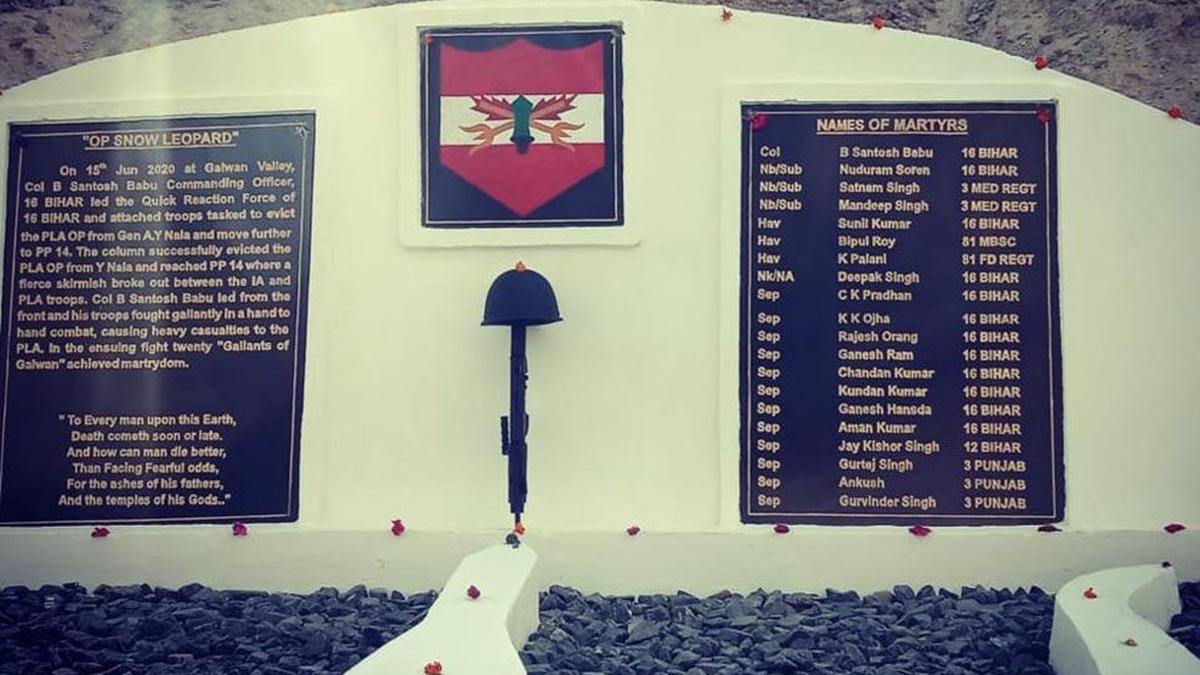
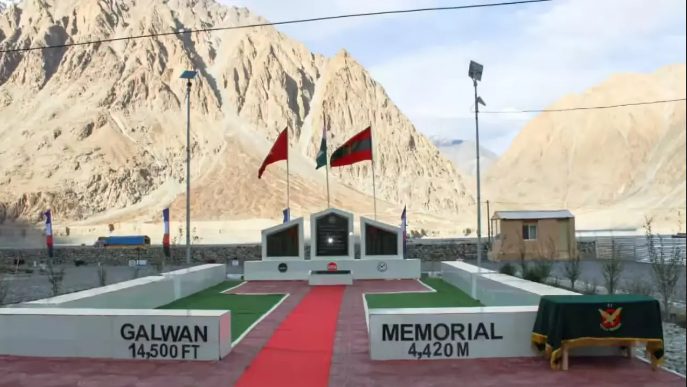
Operation Snow Leopard (Battle of Galwan): 15 June 2020
From April 2020, India observed a steady buildup of Chinese troops and armaments along the Line of Actual Control (LAC) in Eastern Ladakh. By early May, Chinese forces attempted to obstruct India’s traditional patrolling routes in the Galwan Valley, triggering face-offs. Similar transgression attempts followed at Kongka La, Gogra, and the North Bank of Pangong Lake. These moves were promptly detected and countered by Indian forces, while India conveyed through diplomatic and military channels that any unilateral attempt to alter the status quo was unacceptable. Amid escalating tensions along the Line of Actual Control (LAC) in Eastern Ladakh, senior military commanders of India and China convened on 6 June 2020 to deliberate on measures to ease the situation. The meeting took place at a Border Personnel Meeting point in the Chushul sector, south of Pangong Lake. The Indian delegation was led by the Leh-based Corps Commander, Lieutenant General Harinder Singh, while the Chinese side was headed by Major General Lin Liu. During the discussions, both sides agreed in principle to initiate a process of mutual disengagement, based on reciprocal and phased actions, to reduce tensions and maintain stability along the LAC. However, in blatant violation of this understanding, the Chinese side instigated a violent confrontation on 15 June 2020 in the Galwan Valley.
During this critical period, Colonel Bikumalla Santosh Babu, the Commanding Officer of 16 Bihar Battalion, was deployed in the Galwan Valley, Eastern Ladakh, as part of Operation Snow Leopard, which had been launched after China refused to restore the status quo ante. The 16 Bihar Battalion was operating under the operational control of the 3 Infantry Division, which in turn functioned under the overall command of the Leh-based XIV Corps—also known as the “Fire and Furious Corps. On 15 June 2020, it was observed that Chinese forces had erected an observation post at Indian Army Patrol Point 14 (PP-14), a location approximately 3 kilometres ahead of the Indian post known as KM-120, and about 220 kilometres by road from Leh. The construction of this post was considered highly objectionable, as it lay within India’s perception of the LAC and contravened prior understandings reached between senior commanders regarding disengagement. When the Chinese side refused to dismantle the structure, Colonel Bikkumalla Santosh Babu, Commanding Officer of 16 Bihar Battalion, was tasked with proceeding to PP-14 to ensure compliance and to establish an Indian observation presence at the site.
At approximately 1530 hours on 15 June, Colonel Santosh Babu led a column of around 75 soldiers from 16 Bihar Battalion to Patrol Point 14. The objective was to verify the removal of the Chinese structure and assert India’s position. During a face-to-face engagement, tensions escalated rapidly. In the course of heated exchanges, a Chinese soldier allegedly pushed Colonel Santosh Babu, triggering a violent physical confrontation. The situation deteriorated swiftly into a brutal hand-to-hand clash. Chinese troops returned in larger numbers, armed with improvised weapons such as iron rods, nail-studded clubs, batons wrapped in barbed wire, and heavy stones. Though soldiers on both sides carried firearms, longstanding confidence-building agreements prohibited their use to prevent escalation. Recognising the gravity of the situation, Colonel Santosh Babu ordered reinforcements. In the second phase of the confrontation, troops from 3 Punjab and personnel from 3 Medium Regiment and 81 Field Regiment joined the engagement. By evening, Indian strength at the site had increased to approximately 400 soldiers. On the opposing side, an estimated 1,200 Chinese troops were involved.
The clash unfolded at an altitude of nearly 14,000 feet, over steep and treacherous terrain, and in near-total darkness. The fighting, which took place close to the fast-flowing Galwan River, lasted up to six hours. Amid the melee, several soldiers from both sides fell into a rivulet connected to the river; some were killed or seriously injured. Despite sustaining grievous injuries early in the confrontation, Colonel Santosh Babu continued to lead from the front. Demonstrating exceptional composure and resolve, he maintained command and control under the most hostile conditions, inspiring his men to resist repeated attempts to dislodge them from their position. From around 8:30 p.m. onwards, Colonel Santosh Babu could no longer be contacted amid the intense and chaotic fighting, indicating that he had likely sustained serious injuries during the confrontation. Despite continued efforts by his troops to locate him in the darkness and treacherous terrain, he remained untraceable through the night. His body was subsequently found in the early hours of 16 June. He was immediately evacuated to Post KM-120, arriving around 0045 hours. After initial attempts at resuscitation, he was transported at approximately 0130 hours to the Army’s field hospital at Darbuk, nearly 120 kilometres away. Despite the best medical efforts, he succumbed to his injuries. The confrontation at Patrol Point 14 resulted in the loss of 20 Indian soldiers. While some died due to severe combat injuries, others succumbed to hypothermia after falling into the icy river in sub-zero temperatures. Despite the loss of their commanding officer in the midst of battle, the troops of 16 Bihar and the reinforcing units continued to hold their ground with determination and courage.
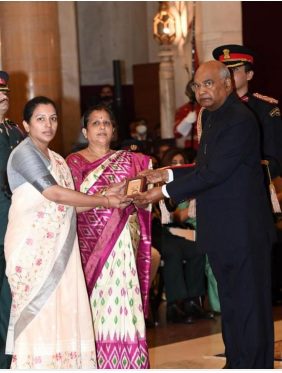
Throughout the fierce skirmish, Colonel Babu valiantly resisted the enemy until his last breath, motivating the soldiers under his command to hold their ground against relentless assaults. His leadership ensured that the Indian troops remained steadfast, denying the adversary their objective. In this gallant action, Colonel Santosh Babu and 19 other brave soldiers laid down their lives, making the supreme sacrifice in the line of duty. Their resolute stand not only upheld India’s territorial integrity but also inflicted high costs, including casualties, on the Chinese side. Besides Colonel Santosh Babu, the other fallen heroes included: Nb Sub Nanduram Soren, Nb Sub Satnam Singh, Nb Sub Mandeep Singh, Hav Bipul Roy, Hav Sunil Kumar, Hav K Palani, Naik Deepak Singh, Sep Ganesh Hansda, Sep Chandan Kumar, Sep Chandrakanta Pradhan, Sep Aman Kumar, Sep Kundan Kumar, Sep Rajesh Orang, Sep Ganesh Ram, Sep K.K. Ojha, Sep Jay Kishor Singh, Sep Gurtej Singh, Sep Ankush, and Sep Gurbinder Singh. For his conspicuous gallantry, exemplary leadership, astute professionalism, and supreme sacrifice in the face of the enemy, Colonel Bikumalla Santosh Babu was posthumously awarded the Maha Vir Chakra, India’s second-highest wartime gallantry award, by the President of India.
Col Bikumalla Santosh Babu is survived by his father, Shri Bikumalla Upender Babu, mother Smt Bikumalla Manjula, wife Smt Bikumalla Santoshi, daughter Ms Bikumalla Abhigna and son Master Bikumalla Anirudh Teja.


Kanika
2025 at 11:29 amSuch brave hearts, Rest in peace sir
Vinod kumar Kakarla
2025 at 11:29 amIn reply to Neha ghansham kendrekar.
Bharath matha ki jai
naveen
2025 at 11:30 ambrave heart Jai hind
Neha ghansham kendrekar
2025 at 11:30 amThanks to all soldiers who sacrificed their lives to maintain the freedom
Rajendra Kumar Sharma
2025 at 11:31 amJai Hind, Bharat Man ke veer sapoot.
Mohit Kumar
2025 at 11:32 amNiceeee
Mohit Kumar
2025 at 11:32 amIn reply to Abhinav Singh.
Very good
Bratesh
2025 at 11:33 amIndia china face off soldier give guard
of Honour to Karnal Santosh Babu.
JAI HIND VANDE MATARAM
India is the best country of the world.
Sourabh Lodha
2025 at 11:39 amJai Hind
Bhola Paswan
2025 at 11:39 amHi my name is Bhola city up Siddharth Nagar ka army my joint hona chatiho sr please help me my WhatsApp no 7607649967 please sar Tell me please