Field Marshal Sam Hormusji Framji Jamshedji Manekshaw, fondly known as “Sam Bahadur,” was born on 3 April 1914 in Amritsar. He was born into a Parsi family to Dr. Hormusji Manekshaw and Smt. Heerabai Manekshaw. His father was a distinguished medical practitioner who had earlier served with the British Indian Army as a medical officer in Mesopotamia during the World War I. After his service, the family relocated to Valsad, a coastal town in Gujarat, where Sam spent much of his early childhood. He grew up in a large and disciplined household with three brothers and two sisters. Education and values were given great importance in the family, and most of the children, except the eldest brother, were sent to the prestigious Sherwood College in Nainital for their schooling. It was here that young Sam developed many of the qualities—confidence, leadership, and a sharp sense of humor—that would later define his personality.
At the age of 15, Field Marshal Sam Manekshaw aspired to follow in his father’s footsteps and pursue a career in medicine. He expressed a keen desire to go to London to study gynecology. However, his father felt he was too young to be sent abroad and declined his request. Determined and strong-willed, Sam chose an entirely different path. In what could be seen as an act of youthful defiance, he appeared for the entrance examination to the newly established Indian Military Academy on 1 October 1932. He was successfully selected and became part of the Academy’s very first batch of 40 cadets—a historic beginning that would shape the future leadership of the Indian Army. Upon completion of his training, he was commissioned as a Second Lieutenant in 1934 into the Frontier Force Regiment of the British Indian Army. During his early years of service, he was attached to the Royal Scots for training and later served with the 54th Sikh Regiment. Following the partition of India in 1947, this regiment became part of the Pakistani Army, marking a significant transition period in his military career. After serving for a few years, he entered into matrimony with Ms Siloo Bode on 22 April 1939. Their marriage was marked by deep companionship and mutual respect. The couple was blessed with two daughters—Sherry, born on 11 January 1940, and Maya, born on 24 September 1945. These formative years of Field Marshal Manekshaw’s life reflect not only his determination and independent spirit but also the strong foundation of values, discipline, and courage that would later guide him to become one of India’s most respected and celebrated military leaders.
Military Leader-Par Excellence
Field Marshal Sam Hormusji Framji Jamshedji Manekshaw had a military career marked by numerous historic firsts and exceptional achievements. He holds the distinction of being the first officer of the Indian Army to be promoted to the rank of Field Marshal. His illustrious service spanned over four decades and encompassed five major conflicts, beginning with his early years in the British Indian Army during the World War II. He was among the first batch of cadets at the Indian Military Academy, famously known as “The Pioneers.” His first significant combat experience came during World War II, when he served as a Captain with the 4/12 Frontier Force Regiment in Burma in 1942. In February 1942, during the fierce Battle of Sittang Bridge, he demonstrated extraordinary courage and leadership while fighting against the Imperial Japanese Army. Despite heavy casualties, including the loss of nearly half his men, he led a daring counterattack with remarkable determination. His leadership played a crucial role in securing the strategically vital Sittang Bridge for the Allied forces. During this intense engagement, Captain Manekshaw was severely wounded by a burst of light machine gun fire, sustaining grave injuries to his abdomen. His bravery deeply impressed his commanding officer, David Cowan, who commanded the 17th Infantry Division. Believing that the young officer might not survive, Major General Cowan pinned his own Military Cross ribbon on Manekshaw’s chest, remarking, “A dead person cannot be awarded a Military Cross.” The gallantry award was later officially confirmed when it was published in the The London Gazette on 21 April 1942. He was evacuated and treated by an Australian surgeon, and after a long recovery, returned to active service.
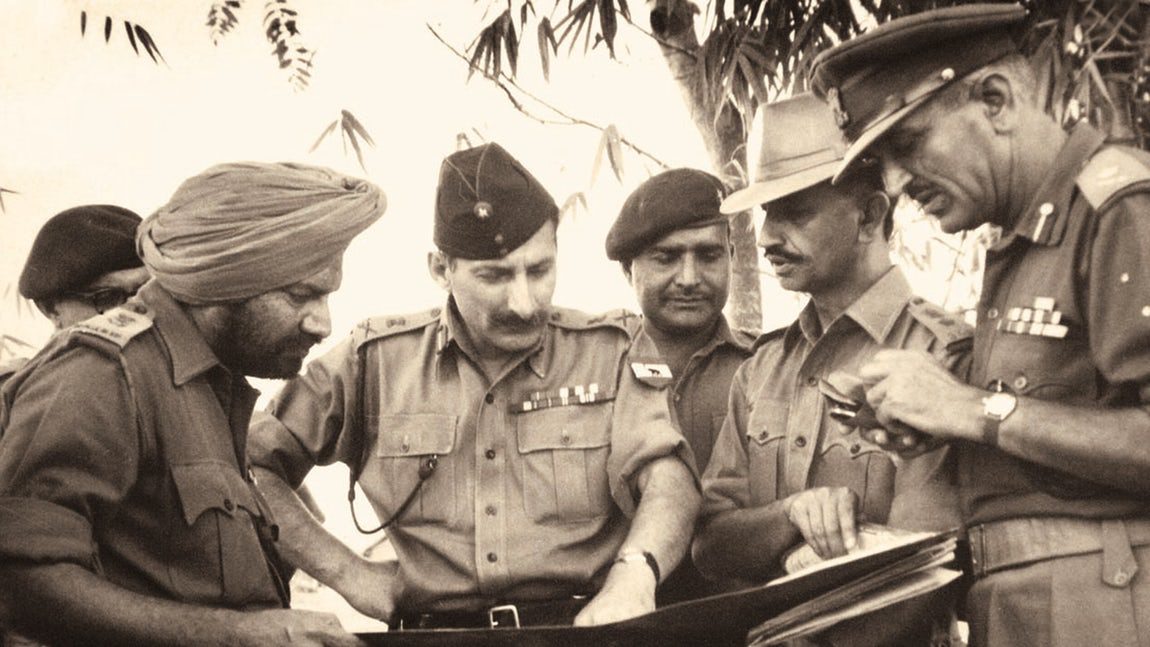
Following his recovery, he completed the prestigious staff course at the Command and Staff College in Quetta and later served as an instructor. He rejoined active operations in Burma with the 12 Frontier Force Rifles and was again wounded in action. Towards the end of the war, he was entrusted with the critical responsibility of overseeing the rehabilitation of approximately 60,000 Japanese prisoners of war. He executed this complex task with exceptional efficiency and discipline, earning widespread appreciation for maintaining order and ensuring humane treatment without any untoward incidents. In the years following independence, Field Marshal Manekshaw played a key role in shaping the newly formed Indian Army. Serving in the Military Operations Directorate, he handled vital planning and administrative responsibilities during the turbulent period of partition. He also accompanied V. P. Menon to Srinagar during the signing of the Instrument of Accession by Maharaja Hari Singh. Additionally, he contributed to the planning of Operation Polo in September 1948, which led to the integration of Hyderabad into the Indian Union. Field Marshal Manekshaw’s finest hour came during the Indo-Pakistani War of 1971, when he served as the Chief of Army Staff. The conflict began on 3 December 1971, following preemptive air strikes by the Pakistani Air Force on Indian airbases. Demonstrating exceptional strategic acumen, FM (Then General) Manekshaw devised and executed a comprehensive military plan to operate simultaneously on both the western and eastern fronts. The war concluded decisively in just 13 days, culminating in the surrender of over 90,000 Pakistani troops and the creation of Bangladesh as an independent nation. True to his values as a professional soldier, he ensured that all prisoners of war were treated with dignity in accordance with international conventions.
In recognition of his exceptional leadership and distinguished service to the nation, he was promoted to the rank of Field Marshal on 1 January 1973, becoming the first officer in the Indian Army to be elevated to this highest rank. Shortly thereafter, he retired from active military service on 15 January 1973, bringing to a close a remarkable career spanning over four decades. Even after retirement, he remained actively engaged in corporate and public life, carrying forward the same principles of integrity, discipline, and professionalism that had defined his military service. His wisdom and leadership continued to inspire many beyond the armed forces. Over the course of his illustrious life, he was honoured with several of the nation’s highest civilian awards, including the Padma Vibhushan and the Padma Bhushan, in recognition of his invaluable contributions to the country. Field Marshal Sam Manekshaw lived a long, fulfilling, and accomplished life. He passed away on 27 June 2008 at the age of 94, at the Military Hospital in Wellington. Though he is no longer with us, his legacy endures—etched permanently in the illustrious history of the Indian Army. His life and achievements continue to inspire generations, and his name remains synonymous with courage, leadership, and unwavering dedication to the nation.






Lt. Col. Roshan Lal Raina ( Retd. )
2026 at 2:57 pmSalute to the greatest son of INDIA .He has been a source of encouragement through out my Army career .
Mamta Aditya
2026 at 2:57 pmA big salute to you for enrolling Sir and leaving behind such a legacy for people to look upto. More than taking a life what matters most is treating and value people who are alive and your valor proves this to treat POW as human beings. Thank you for doing that and setting such an excellent example. Thank you !!!
Dushyant
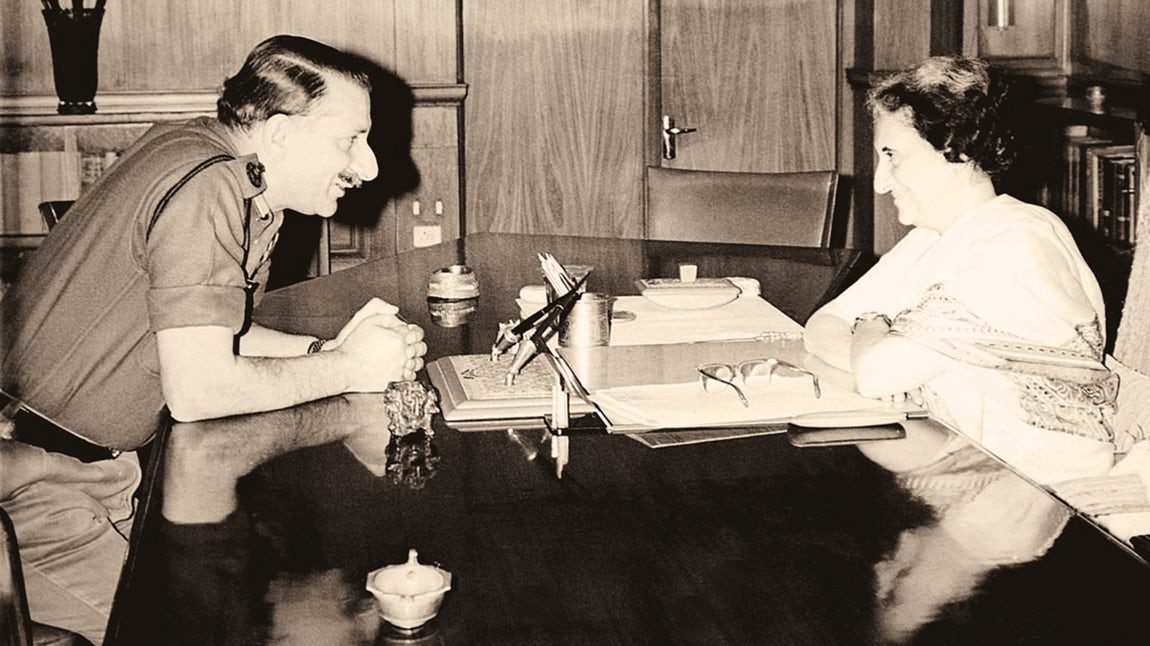
2026 at 2:58 pmFM Manekshaw Sir, has always been a source of inspiration. An ideal leader, a charming and witty personality. The stories of his leadership which I heard, helped me to become a better leader whenever it was time for me to take the charge. His ideas, his strategies, his approaches are undeniable, reading about him is such a delight. All of his interactions with ‘Sweety’ (a nickname he used for Indira Gandhi), and his decisions which made Pakistan to surrender in the 71 war. No words can describe his service to the nation.
Thanks a lot, for your service sir. India will always miss a son like you!
Dr.Abhhey BAJPAI
2026 at 2:58 pmI always worshipping to sam manekshaw as my lord . My life very much influenced with sam manekshaw’s personality . I am biggest devotee of sam manekshaw. I have personal letter of sam manekshaw with his photograph with his autograph that I received in the year of 1969.
Regards
Dr.Abhhey Bajpai
Indore
Milind Tambe
2026 at 2:59 pmSalute to the Field Marshal
Jesse Garczynski
2026 at 2:59 pmWith thanks! Valuable information!
Valsan Kunnath
2026 at 2:59 pmBig Salute Respected Sir, Field Marshal SHFJ Manekshaw , Military Cross
Just to quote your words to the soldiers of NE command during 1971 war
” I have arrived. There will be no retreat. Thank You”
Sir, You are the Real Brave Son of Bharath, Salute You
JAI HIND… VANDE MATHARAM