

Service No : 6751 GD(P)
Place of birth : Mumbai (Mah)
Last Rank : Flying Officer
Unit : 20 Sqn AF
Arm/Regt : Indian AIr Force
Operation : Indo-Pak War-1965
Martyrdom : September 16, 1965
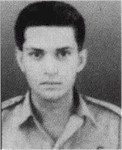
Flying Officer Farokh Dara Bunsha
Flying Officer Farokh Dara Bunsha hailed from Mumbai and was born to Shri Dara Bunsha and Smt. Bachoo Patel, who nurtured in him strong values of integrity, and service from an early age. After completing his schooling, he was selected to join the prestigious National Defence Academy (NDA), marking the first major step in his journey towards a career in the Armed Forces. He was commissioned into the Indian Air Force on 10 November 1962, marking the beginning of a promising career in military aviation. A proud alumnus of the 82nd course of the National Defence Academy (NDA), he underwent rigorous training that instilled in him the core values of discipline, courage, and professional excellence—qualities that would define his service. On commissioning, Flying Officer Bunsha was inducted into the fighter stream of the Indian Air Force and trained to fly the Hawker Hunter, one of the most formidable fighter-bomber aircraft of that era. Known for its speed, agility, and potent strike capability, the Hunter demanded exceptional flying skill and sharp tactical acumen—attributes that he quickly mastered during his training. After successfully completing his flying training, Flying Officer Bunsha was posted to No. 20 Squadron IAF. However, with the outbreak of the 1965 Indo-Pak War, operational exigencies led to his deputation to No. 7 Squadron IAF, a frontline combat unit actively engaged in intense air operations.
In a short span of time, Flying Officer Bunsha demonstrated remarkable aptitude and confidence on the Hunter aircraft. He rapidly gained proficiency in executing complex operational manoeuvres, including low-level attack profiles and high-stress combat flying. His growing expertise, composure in the cockpit, and professional dedication earned him the trust of his peers and superiors alike, establishing him as a capable and dependable fighter pilot during a critical phase in the nation’s history.
Air Operations (Hawker Hunter) - Indo-Pak War: Sep 1965
During the 1965 Indo-Pak War, Flying Officer Farokh Dara Bunsha was serving with No. 20 Squadron, popularly known as the “Lightnings,” of the Indian Air Force. At the time, the squadron was based at Air Force Station Pathankot. Shortly after the war, No. 20 Squadron relocated to its new base at Hindon, near Delhi, where it was re-equipped with the Hunter F Mk.56A aircraft. In July 1971, the squadron later returned to Pathankot. Initially tasked with air defence, No. 20 Squadron—like other Hunter units—was subsequently prepared for ground support and offensive operations. Flying Officer Bunsha was among the junior-most pilots of the unit, with less than two years of service and approximately 250 hours of flying experience on the Hunter. However, as the conflict intensified in September 1965, he was deputed to operate with No. 7 Squadron, which was based at Air Force Station Halwara in Punjab. On 16 September 1965, No. 7 Squadron was tasked with countering Pakistani Air Force activity over the Amritsar sector. The Hunters operating from Halwara had not encountered air combat since 6 September, but that situation changed dramatically later that afternoon. Flying Officer Prakash Sadhashivrao Pingale and Flying Officer Farokh Dara Bunsha were on Operational Readiness Platform (ORP) duty when an incoming Pakistani air raid was detected. A scramble order was immediately issued, and both pilots took off in their Hunters.
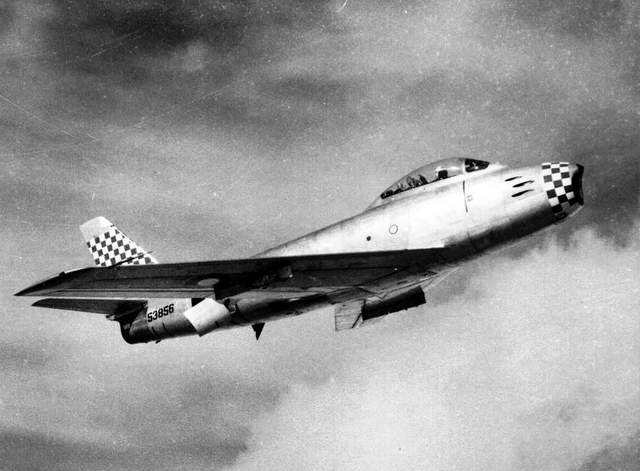
Once airborne, the fighter controller, Flying Officer RC Mahadik, vectored the pair in a north-westerly direction toward Jalandhar. Flying at an altitude of approximately 20,000 feet and at speeds approaching Mach 0.9, the pilots scanned the skies intently for hostile aircraft. The intruders were soon identified as two Pakistani Sabre jets—one flown by Squadron Leader MM Alam and the other by Flying Officer MI Shaukat. The Indian pilots were flying in the well-established “loose deuce” combat formation, designed for mutual support during air combat. Flying Officer Pingale was the first to sight an enemy aircraft approaching head-on at a lower altitude. As it passed almost directly beneath them, he clearly identified the green and white Pakistani Air Force roundels on the aircraft, confirming it as Squadron Leader Alam’s Sabre. He immediately alerted Flying Officer Bunsha over the radio, and both Hunters peeled off into a diving turn to engage. The Sabre, meanwhile, turned from a south-easterly to a southerly heading, maintaining altitude and initially showing no evasive manoeuvres. As Flying Officer Pingale closed in on the Sabre ahead, he instinctively checked his right side and spotted the second Sabre—piloted by Flying Officer Shaukat Ali—closing in rapidly from his 4 o’clock position at a distance of about 800 yards. Assessing the situation, Flying Officer Pingale decided to engage the trailing Sabre himself, as he was better positioned to do so, while Flying Officer Bunsha was ideally placed to continue the pursuit of the lead aircraft. Pingale radioed Bunsha to continue after the Sabre ahead, and Bunsha acknowledged with a calm “Roger” before pressing the attack on Squadron Leader Alam.
Flying Officer Pingale increased power as the Sabre behind him emerged from the sun. Observing the Sabre’s leading-edge slats deploy, he anticipated a tight turn. His first burst missed the target, but by then he had closed to within 250–300 yards. His second burst struck home, and the Sabre exploded in a massive fireball, destroying the aircraft instantly. Meanwhile, Flying Officer Bunsha continued his pursuit of Squadron Leader Alam, who began aggressive manoeuvring to evade the Hunter. Pingale, having destroyed the second Sabre, kept a watchful eye on Fg Offr Bunsha’s engagement and issued timely warnings as Sqn Ldr Alam manoeuvred. The dogfight soon developed into a horizontal scissors engagement, with both aircraft reducing speed and turning tightly in an effort to gain a firing advantage. During the intense manoeuvring that followed, the Pakistani Sabre managed to cut inside Flying Officer Bunsha’s turn and gained a fleeting firing opportunity. Gunfire struck Flying Officer Bunsha’s Hunter, causing critical damage. The aircraft crashed shortly thereafter. It is believed that Flying Officer Bunsha did not have sufficient time to eject and went down with his aircraft. Flying Officer Farokh Dara Bunsha attained martyrdom while fearlessly engaging the enemy in close air combat. Despite his youth and limited experience, he displayed exceptional courage, determination, and devotion to duty.
Dolly Kanwal Jit
2025 at 6:14 pmYour endevour for a tribute for Farokh brings tears rolling one more time…, Farokh Bunsha was my fiance we got engaged in August 65 . He was a Parsi and I Hindu. needless to say there was family opposition. Farokh was a man of great courage, incredibly gentle, kind, and so very handsome. His death devastated me for all my life. It was a very profound and pure bond I still have with him. Since life is eternal I think at least he didn’t kill anyone although it is the Dharma of a Fauji the Dharma of life is not to kill.
He would say Life is full of bumps and bruises it how you take is what really matters… I have remembered these words always.
He loved flying, he loved his Hunter, he loved his mother and he loved me..
It would be impossible to find anyone as noble and honourable as Farokh D Bunsha in this world today.
Thank you Honourpoint for trying to honour the honourables.
Dolly Kanwal Jit
Honourpoint
2025 at 6:15 pmWe really appreciate your admiration and respect for Fg Offr Farokh Bunsha, even though five decades have gone by since his martyrdom. Fg Offr Bunsha who made his supreme sacrifice at such a young age, would always remain a hero and source of inspiration for generations to come.
Dionne Bunsha
2025 at 6:15 pmThank you for honouring my uncle Farokh who I never saw but have heard so much about. Seeing his photo here brings tears to my eyes.
Dolly, I would love to get in touch and hear more about your memories of my uncle. My email id is: dionne11@gmail.com
Thank you,
Dionne Bunsha
Anil kotwal
2025 at 6:16 pmVery touching comments
Avneesh
2026 at 1:13 amMy love and respect to Flying Officer Farokh Dara Bunsha and all those who had the good fortune to know him.
As a soldier who served the same flag for 34 years, I feel the pain of lost family, friends and loved ones.