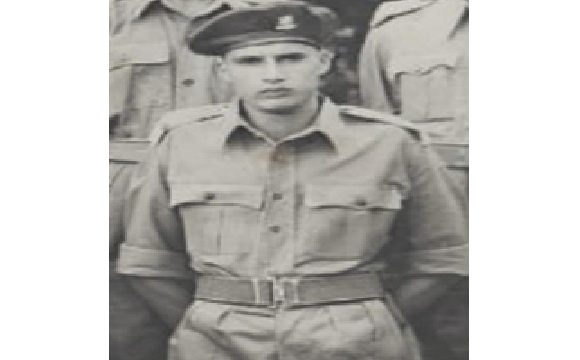

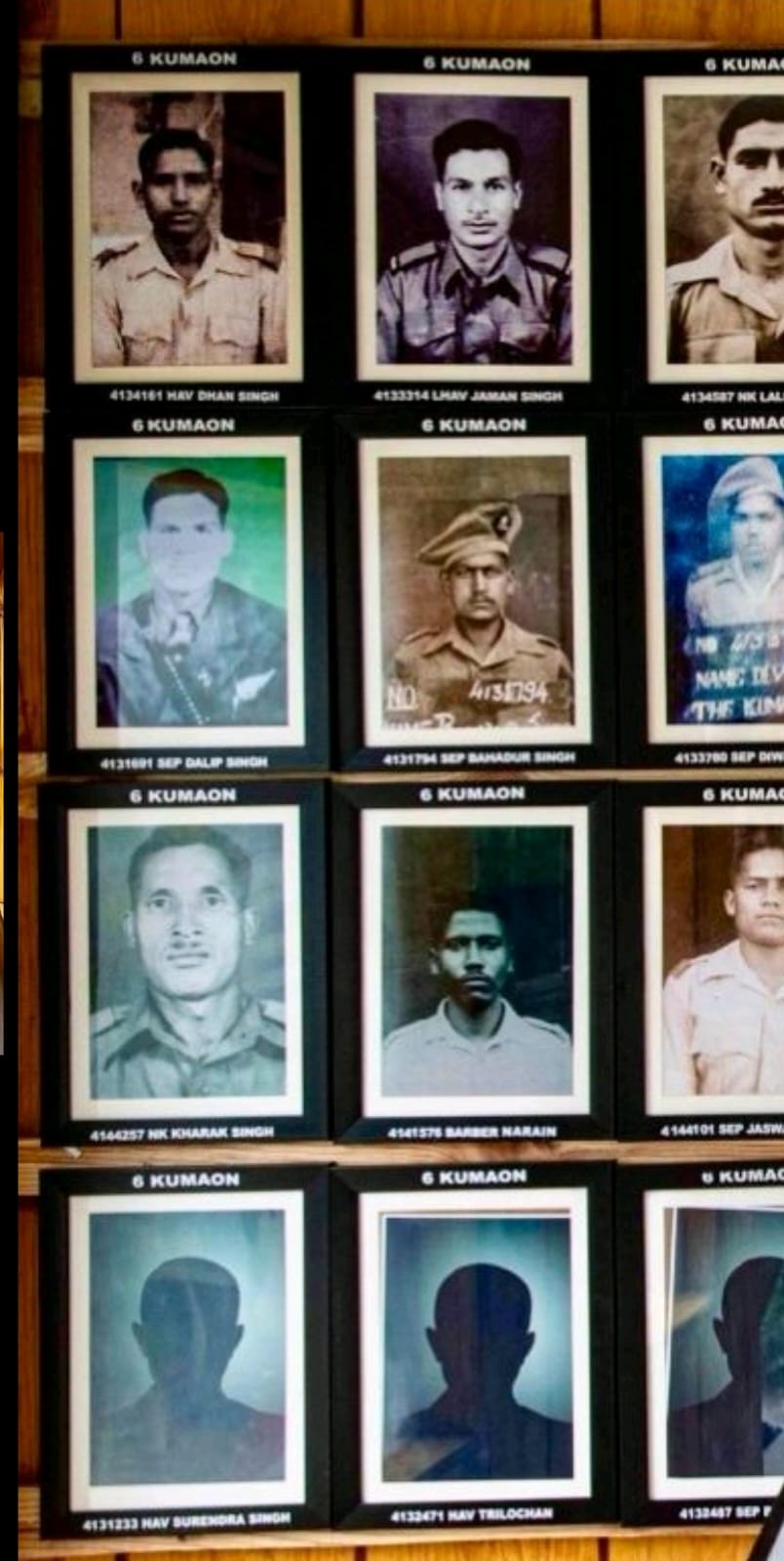
Service No : 4134161
Date of Birth : 1930
Place of birth : Almora Dist (U'khand)
Service : Army
Last Rank : Havildar
Unit : 6 Kumaon
Arm/Regt : The Kumaon Regiment
Operation : Indo-China War 1962
Martyrdom : November 15, 1962
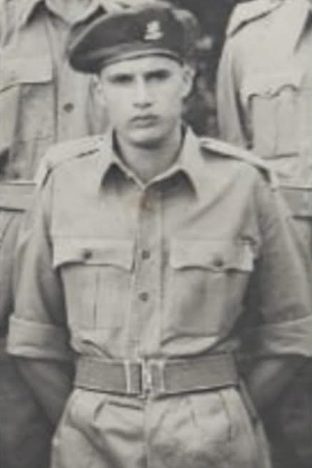
Hav Dhan Singh Kunjwal
Havildar Dhan Singh Kunjwal, son of Shri Karam Singh and Smt. Lakshmi Devi hailed from Kunj village in the Almora district of Uttarakhand—a region renowned for its deep-rooted martial traditions and long-standing contribution to the nation’s defence. He was the third child and grew up alongside his four brothers and two sisters in an environment that nurtured discipline, resilience, and patriotism. These early influences played a significant role in shaping his character and instilling in him the values that guided his life and service. Before joining the Army, he served as a teacher at a local primary school; however, driven by a profound sense of duty towards the nation, he chose the path of military service and was enrolled in the 6th Battalion of the Kumaon Regiment on June 5, 1948, at the young age of 18. The Kumaon Regiment, one of the most distinguished and battle-hardened infantry regiments of the Indian Army, is celebrated for its fearless soldiers, exemplary discipline, and a glorious legacy of gallantry. Serving in such an illustrious unit further strengthened his resolve to uphold its proud traditions through dedicated and professional service.
To enhance his skills, Havildar Dhan Singh Kunjwal underwent technical training at the Army School of Mechanical Transport, Faizabad, from 10 August 1953 to 31 October 1953. Over the course of more than 14 years of service, he proved himself to be a sincere, dependable, and disciplined soldier, earning the respect of his comrades for his quiet determination and strong sense of duty. Alongside his military career, he embraced family life and was married to Ms Bhavani, balancing his personal responsibilities with the demanding obligations of a soldier. During his service, Hav Dhan Singh Kunjwal was deployed in some of the most challenging operational areas like Jammu & Kashmir: 29 July 1951 – 6 October 1954, Naga Hills: 1 October 1957 – 26 December 1958, and 14 March 1960 – 12 July 1962, NEFA (now Arunachal Pradesh): 13 July 1962 – 15 November 1962. In recognition of his devoted and distinguished service to the nation, he was awarded: Sainya Seva Medal with clasp “Jammu & Kashmir”, and also General Service Medal (1947) with clasp “Naga Hills”
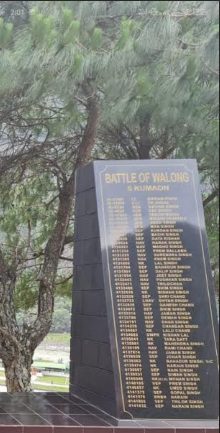
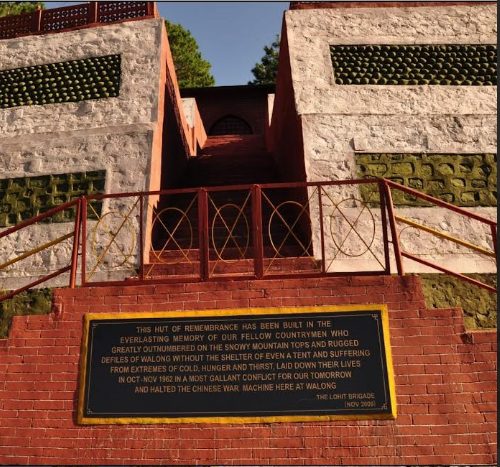
Battle of Walong (Indo-China War): 15 Nov 1962
During the 1962 Indo–China War, the easternmost frontier of India became the stage for one of the most heroic stands in military history—the Battle of Walong. Fought between October and November 1962 in the remote Siang Frontier Division of the then North-East Frontier Agency (NEFA), now Arunachal Pradesh, the battle came to symbolise extraordinary courage in the face of overwhelming odds. Hav Dhan Singh Kunjwal, a dedicated soldier of the 6 Kumaon Battalion, was among those deployed in this inhospitable theatre under the command of Lieutenant Colonel CN Madiah. Following early reverses across NEFA, the Indian Army undertook urgent reorganisation. The newly raised 2 Infantry Division, under Major General MS Pathania, was tasked with defending the region, with 11 Infantry Brigade, commanded by Brigadier NC Rawlley, responsible for holding the strategically critical Walong–Kibithu–Namti axis along the Lohit River valley. The brigade—comprising battalions from the Kumaon, Sikh, Gorkha, and Dogra Regiments—faced an enemy vastly superior in numbers and equipment. Within this formation, 6 Kumaon emerged as a pillar of resistance.
Between 21 October and 16 November 1962, roughly 2,500 Indian soldiers held their ground against an estimated 12,000–15,000 Chinese troops in brutal terrain ranging from 3,000 to over 14,000 feet, where extreme cold, rugged mountains, and isolation magnified every hardship. By mid-November, Chinese forces had seized dominating heights such as Yellow Pimple and Green Pimple, threatening to encircle Indian defences. In an act of rare boldness during the war, the Indian command ordered a counter-offensive to regain these features. The responsibility for this near-impossible mission fell primarily on 6 Kumaon, in whose ranks Havildar Dhan Singh Kunjwal stood steadfast. The battalion headquarters was moved on foot from about 6,000 feet to nearly 13,000 feet to the Namti Tri-Junction (Tiger’s Mouth) under continuous enemy observation. With no vehicle access and no air resupply, soldiers carried every round of ammunition and every ration on their backs. The ascent through snow-covered ridges, freezing temperatures, and thinning air tested endurance to the limits—but Havildar Kunjwal and his comrades pressed on without hesitation.
On 14 November 1962, the 6 Kumaon Battalion launched a determined uphill assault on well-entrenched Chinese positions. The attack was spearheaded by Alpha Company under the command of Captain BN Singh and Bravo Company led by Major BN Sharma, whose men advanced with exceptional courage against formidable odds. Fighting in sub-zero temperatures, without artillery support and with severely limited ammunition, the soldiers displayed extraordinary bravery and succeeded in temporarily capturing key enemy posts. As casualties mounted and ammunition ran dangerously low, the troops continued to hold their ground with unwavering grit and resolve. Throughout the night of 14–15 November, repeated enemy counter-attacks resulted in ferocious close-quarters combat amid darkness and snow. Even after ammunition was exhausted, the men of 6 Kumaon fought on with bayonets and bare hands, refusing to yield. At 0430 hours on 15 November, the Chinese launched a full-scale assault on the Tri-Junction, supported by heavy artillery. A single, depleted company—many of its soldiers already wounded—continued to resist for hours before finally being overrun. Havildar Dhan Singh Kunjwal was among those who laid down their lives in this epic defence, embodying the highest traditions of courage, selflessness, and duty. Brigadier NC Rawlley later immortalised their supreme sacrifice with the words: “6 Kumaon at Tri-Junction fought and fought and fought till there was an eerie silence.”
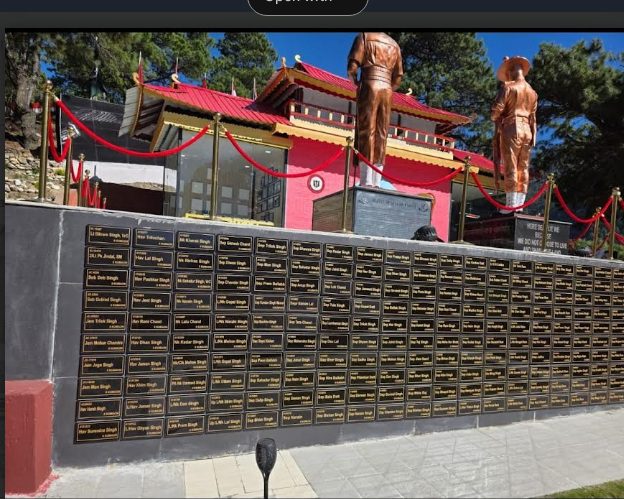
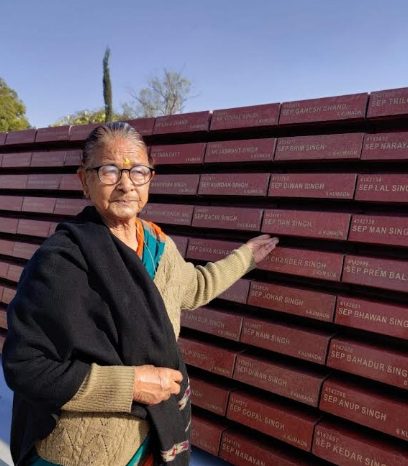
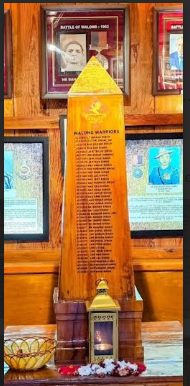
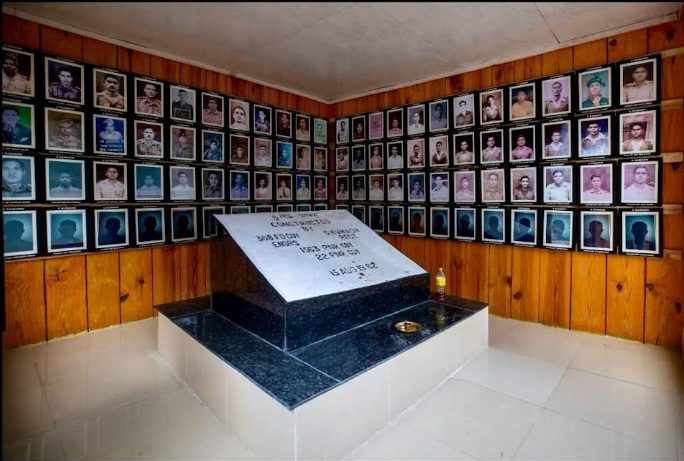
The legacy of Havildar Dhan Singh Kunjwal and his fallen comrades continues to live on. Even today, soldiers of the 6 Kumaon Regiment light 119 diyas every Tuesday in the regimental mandir, in honour of the 119 bravehearts who made the supreme sacrifice at Walong. This solemn tradition stands as a timeless tribute to their courage—and to the undying spirit of soldiers like Hav Dhan Singh Kunjwal, whose sacrifice will forever inspire generations.
Havildar Dhan Singh Kunjwal is survived by his wife, Smt Bhavani Kunjwal, daughter and grandchildren.
Pradeep Kunjwal
2025 at 11:42 pmI will provide information about him and his family