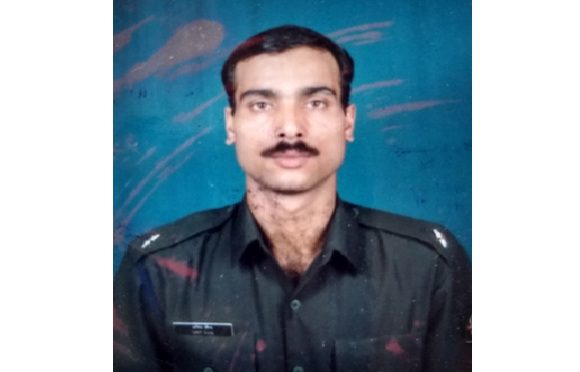

Service No : SS-37135Y
Date of Birth : 1974
Place of birth : Jammu
Service : Army
Last Rank : Lieutetant
Unit : 2 Engr Regt
Arm/Regt : The Corps of Engineers
Operation : Op Rakshak
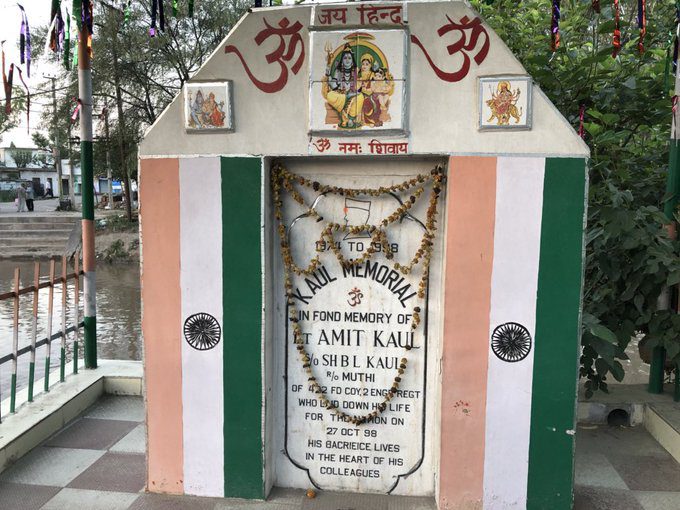
Martyrdom : October 27, 1998
Lieutenant Amit Kaul
Lieutenant Amit Kaul was born in Jammu into the family of Shri Bansi Lal Kaul and Smt. Sheela Kaul. He grew up in an environment shaped by strong values of discipline, patriotism, and a deep sense of duty toward the nation. Belonging to a generation that came of age during one of the most turbulent periods in the history of Jammu and Kashmir, he witnessed the rapid and often violent transformation of the region during the rise of militancy in the 1990s. These experiences played an important role in shaping his character and strengthening his resolve to serve the country. After completing his graduation, he appeared for the Combined Defence Services (CDS) Examination, a highly competitive national-level examination conducted for entry into the Armed Forces. Successfully clearing the selection process, he was selected for training at the Officers Training Academy (OTA), Chennai. After undergoing rigorous military training at OTA Chennai, he was commissioned as an officer into the Corps of Engineers, one of the oldest and most distinguished arms of the Indian Army, known for its vital role in providing combat engineering support to military operations. Following his commissioning, Lieutenant Kaul was posted to the 2nd Engineers Regiment, a unit known for its high standards of professionalism, operational efficiency, and vital support role in military operations. Combat engineers in such regiments perform a wide range of tasks essential to battlefield success. Their responsibilities include ensuring mobility for troops, constructing defensive positions, carrying out demolition operations, building bridges, conducting mine warfare, and supporting infantry units in complex and challenging operational environments.
The late 1990s marked one of the most violent phases of insurgency in Jammu and Kashmir. Militancy had reached its peak, and the region was marked by frequent encounters between security forces and militant groups. Cross-border infiltration, ambushes, improvised explosive devices, and landmine blasts had become a grim routine for soldiers deployed in the counterinsurgency grid. It was in this challenging and dangerous operational environment that young officers like Lieutenant Amit Kaul served. Despite the risks, they remained committed to their duties, often operating in remote and hostile terrain to safeguard civilian populations and maintain stability in the region. Lieutenant Kaul’s service also carried a deeper symbolic significance. As a member of the Kashmiri Pandit community—a community that was experiencing one of the darkest periods in its history during the 1990s—his decision to serve in the Indian Army reflected resilience, courage, and an unwavering sense of belonging to the nation. For many, he embodied not only military resolve but also the enduring spirit of a community determined to persevere despite displacement and adversity. The Corps of Engineers, in which he served, plays a vital role in strengthening the operational capabilities of the Indian Army. The Corps is composed of three principal components: the Combat Engineers, the Military Engineer Services (MES), and the Border Roads Organisation (BRO). Combat Engineers provide direct support on the battlefield, ensuring mobility for friendly forces and denying it to adversaries through specialized engineering tasks.
Beyond these operational roles, the Corps of Engineers also contributes to the broader strategic and technological framework of national defence. Officers from the Corps are often deputed to specialized institutions such as the Defence Research and Development Organisation (DRDO) and military survey establishments, where they support research, mapping, and technological innovation essential for modern warfare. Through these varied responsibilities, the Corps of Engineers remains a cornerstone of India’s military strength. Within this distinguished tradition of service, Lieutenant Amit Kaul represented a new generation of officers—well-trained, resilient, and deeply committed to the defence of the nation.
Operation Rakshak (J&K): 27 Oct 1998
In October 1998, Lieutenant Amit Kaul was serving with the 2nd Engineers Regiment of the Corps of Engineers, a vital arm of the Indian Army responsible for providing combat engineering support during military operations. His unit functioned under the 3rd Infantry Division, which in turn operated under the operational control of the 15 Corps (Chinar Corps). This formation was responsible for security and military operations along the Line of Control (LoC) in the Kargil region of Jammu and Kashmir—an area that had become increasingly tense and volatile in the months leading up to the Kargil conflict. At the time, Lieutenant Kaul’s unit was deployed in Jammu and Kashmir as part of Operation Rakshak, the Indian Army’s long-running counter-insurgency mission aimed at combating militancy and restoring stability in the region. The late 1990s marked some of the most violent years of insurgency in the Kashmir Valley. Militants frequently carried out ambushes, planted landmines and improvised explosive devices, and targeted military patrols moving through remote and vulnerable routes. Cross-border infiltration from across the Line of Control was also common, forcing security forces to operate under constant threat. In such an environment, even routine duties—such as patrolling roads, inspecting routes, or supporting troop movements—could quickly turn into life-threatening situations. Despite being relatively young in service, Lieutenant Amit Kaul had already earned the respect and admiration of both his superiors and the soldiers he commanded. Colleagues remembered him as disciplined, calm under pressure, and deeply committed to his responsibilities. As an officer in the Corps of Engineers, his role extended well beyond conventional engineering work. Combat engineers form a crucial component of frontline operations and often operate alongside infantry units in high-risk areas. Their responsibilities include detecting and clearing mines and explosive hazards, constructing field defences and temporary bridges, demolishing enemy obstacles, and ensuring safe mobility for troops operating in difficult and hostile terrain.
In counter-insurgency environments such as Jammu and Kashmir, the role of combat engineers becomes even more critical. Engineering detachments frequently move ahead of or alongside infantry units to examine roads, secure vulnerable routes, and detect hidden explosives planted by militants. These tasks demand not only technical expertise but also exceptional courage, because engineers are often the first to encounter danger. During the operational deployment in October 1998, Lieutenant Kaul and his team were engaged in such a mission, supporting troops working within the counter-insurgency grid. Their responsibility was to assist in securing movement routes and ensuring that soldiers operating in the area could move safely through terrain that militants had previously targeted with explosive traps and ambushes. It was during one such operational task under Operation Rakshak that Lieutenant Amit Kaul made the ultimate sacrifice in the line of duty. Demonstrating remarkable courage and commitment to his duty, Lieutenant Kaul continued to carry out his responsibilities despite the danger, prioritising the safety of his fellow soldiers and the success of the mission above his own life. His sacrifice reflected the highest traditions of the Corps of Engineers and the Indian Army. Lieutenant Amit Kaul was a valiant soldier and an exemplary officer who, at the young age of just twenty-four, laid down his life in the service of the nation.
Lieutenant Amit Kaul is survived by his father, Lt Bansi Lal Kaul, and mother, Smt Sheela Kaul.

No Comments