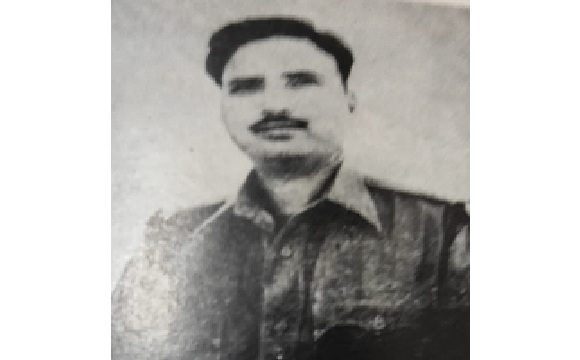
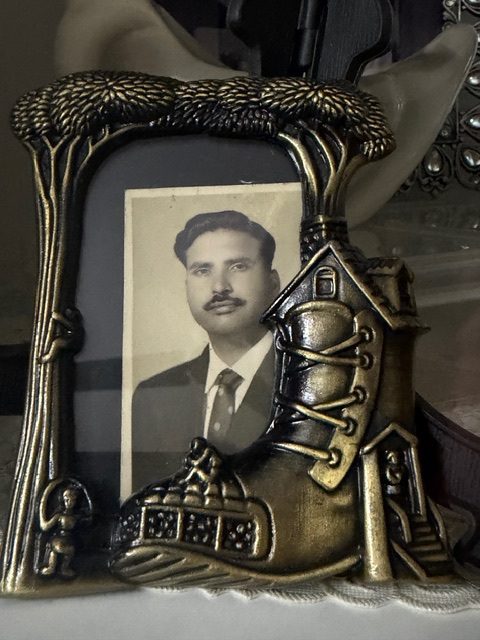
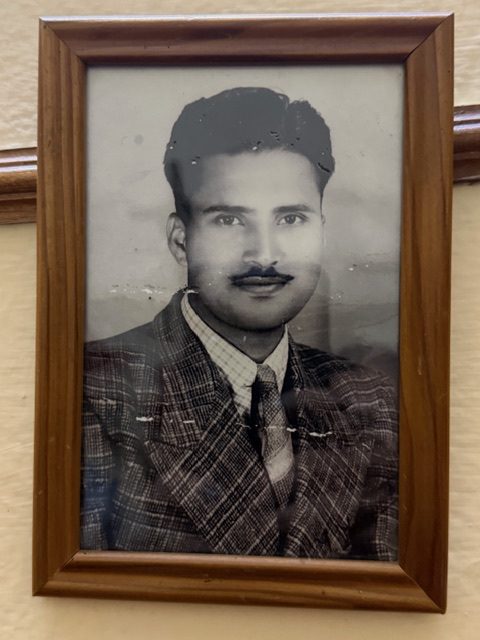
Lieutenant Colonel A Mathew Manohar hailed from Trimulgherry, a prominent residential and cantonment area in Secunderabad, Telangana. After completing his education, he successfully cleared the rigorous selection process for the Indian Army, marking the beginning of a distinguished career defined by courage, honour, and unwavering duty. He was commissioned as an officer in the Indian Army and joined the 6th Battalion of the Maratha Light Infantry (6 MLI). The Maratha Light Infantry is one of the oldest and most respected regiments of the Indian Army, renowned for its fearless soldiers, rich traditions, and a proud history of battlefield heroics. Soon after his commissioning, he found himself engaged in active military operations—a true test of his training, character, and resolve. Serving in such a distinguished regiment demanded exceptional dedication and professionalism—qualities that Lt Col Manohar consistently demonstrated throughout his service.
After a few years of service, he married Ms Ratna, who became his life partner and a steadfast source of strength and support throughout his military career. The couple was blessed with three children, who remain a proud part of his enduring legacy. He was a God-fearing man who raised his children with strong faith and values. He taught them to read the Bible and pray every day, and whenever he was home, he faithfully led daily family devotions. As geopolitical tensions escalated in 1965 and the possibility of war became imminent, his unit was deployed to the Western Sector in preparation for active operations. His sense of responsibility, calm leadership under pressure, and steadfast commitment to his men earned him the confidence of both his comrades and senior officers.
Battle of Chawinda: Indo-Pak War- 19 Sep 1965
During the Indo-Pakistani War of 1965, Lieutenant Colonel AM Manohar served as the Commanding Officer of the 6th Battalion, Maratha Light Infantry (6 MLI). The battalion was placed under the operational control of 35 Infantry Brigade of the 6th Mountain Division, operating under the I Corps during the Indian offensive toward Sialkot. As hostilities intensified in early September 1965, 6 MLI moved to Pathankot on 5 September to join its brigade and subsequently reached Sibu Chak. Despite being subjected to enemy air raids en route, the battalion arrived without major loss. On the night of 7 September, it was inducted directly into active operations as part of the division’s assault on the villages of Maharajke and Charwa. The following morning, enemy aircraft attacked the battalion’s B Echelon area at Sibu Chak, destroying vehicles and heavy weapons, though fortunately causing no casualties. Undeterred by continuous artillery shelling and repeated air attacks, the unit maintained its operational momentum. By 13 September, the formation was advancing steadily toward Sialkot, securing intermediate objectives including the village of Gador with only minor casualties. Shortly thereafter, the division received orders to participate in a major offensive against Chawinda under “Operation Nepal.” Chawinda was of immense strategic importance: it served as a key communications hub linking the Sialkot–Pasrur and Gujranwala road axes and functioned as the base of Pakistan’s 6th Armoured Division. Capturing it was essential to disrupting enemy logistics and blunting armoured operations in the sector.
The task assigned to 6 MLI was both vital and formidable — to capture the Chawinda railway station and its surrounding area. From 14 to 17 September, the battalion carried out detailed preparations under relentless artillery fire and frequent air raids. By 04:00 hours on 18 September, the unit had concentrated in its assembly area south of the village of Manga. The brigade’s attack commenced at 21:30 hours that night and was immediately met with intense and accurate enemy artillery fire. Under the resolute leadership of Lt Col AM Manohar, the battalion advanced steadily despite fierce resistance. Leading from the front, he remained with the forward companies, motivating his men and personally directing the assault. Two companies pushed determinedly toward the railway station, navigating heavily defended approaches with the assistance of valuable intelligence inputs from the battalion’s intelligence officer, 2nd Lieutenant LK Nadgir. Through discipline, courage, and determined leadership, 6 MLI fought its way forward and, by 03:30 hours on 19 September 1965, successfully captured the Chawinda railway station along with its designated objectives. During the assault, Subedar Madhukar Rao and Naib Subedar Narain Rao lost their lives while leading their platoons with conspicuous bravery. However, the success proved precarious. It soon became evident that 6 MLI was the only battalion in the divisional attack to have secured its objective. Deep inside enemy-held territory and without immediate armoured support, the battalion found itself isolated. Enemy tanks quickly closed in, encircling its positions and subjecting them to intense fire. At first light, heavy field and medium artillery bombardment descended upon the exposed troops.
Lt Col AM Manohar personally led the assault and remained with the forward elements, continuing to direct the defence despite devastating shellfire. Amidst the intensity of the engagement, he was 'killed in action', displaying exceptional courage and steadfast leadership in the face of overwhelming odds. Lt Col AM Manohar's body was never recovered. For a long time, his family waited for news, hoping he had been taken as a prisoner of war, before they were finally compelled to accept the pain of his untimely loss. Second Lieutenant LK Nadgir also succumbed to shellfire and was later Mentioned in Despatches (Posthumous) in recognition of his gallantry. In total, 42 soldiers of the 6 Maratha Light Infantry laid down their lives during the entire operation. Among them were two officers, while 40 other brave soldiers made the supreme sacrifice in the line of duty. Among them were two Junior Commissioned Officers—Subedar Madhukar Rao and Naib Subedar Narain Rao—along with 38 other ranks who made the supreme sacrifice in the line of duty. With the tactical situation rendered untenable, and acting on orders from Brigade Headquarters, the battalion commenced a fighting withdrawal at 07:30 hours on 19 September 1965. Lt Col AM Manohar’s conduct during the Battle of Chawinda remains a lasting testament to his bravery, tactical acumen, and unwavering devotion to duty. By leading from the front and standing firm under relentless fire, he upheld the highest traditions of the Indian Army and the proud legacy of the Maratha Light Infantry.
Lt Col AM Manohar is survivedby his wife Smt Ratna Manohar and three children.

No Comments