Major Man Mohan Chopra was born in Jammu Tawi in the Jammu & Kashmir region, the son of Shri Chet Ram Chopra. Raised in an environment that valued discipline and service, he pursued his education with diligence and developed a strong sense of duty from an early age, which ultimately inspired him to join the Indian Army. He was commissioned into the 7th Light Cavalry (7 Cavalry) on 21 December 1947 as part of the 'Second Course' of the Indian Military Academy. As a young officer in the Armoured Corps, he became part of a regiment renowned for its rich legacy, operational versatility, and excellence in armoured warfare. The 7th Light Cavalry traces its origins to 1784, when it was raised at Arcot near Madras from selected drafts of three regiments of local cavalry taken over by the East India Company. From its inception, the Regiment developed a reputation for professionalism and gallantry, serving with distinction both in India and overseas. During the pre-Independence era, the Regiment saw extensive active service. In the First World War, it operated in challenging theatres such as Persia, Russia, Transcaspia, and Afghanistan. In the Second World War, it played a notable role in the siege of Imphal and subsequently advanced through Burma, becoming the first cavalry regiment to reach Rangoon.
In recognition of its exemplary performance, the Regiment was chosen by Lord Louis Mountbatten, Supreme Allied Commander, South East Asia Command (SEAC), as the sole cavalry regiment from across the Commonwealth to represent the Occupation Forces in Japan. Following Independence, the 7th Light Cavalry continued to uphold its distinguished legacy by participating in every major conflict involving the Indian Army. During the Jammu and Kashmir operations of 1947–49, the Regiment was deployed in the Valley to repel Pakistani raiders and went on to fight in key battles at Uri, Naushera, Poonch, and Jhangar. One of its most remarkable achievements came when it created history by taking tanks to the formidable heights of Zoji La at over 11,000 feet—an unprecedented feat that played a crucial role in securing Ladakh. In the 1961 Goa operations, the Regiment led the Army’s advance along two of the three axes, contributing significantly to the liberation of the state. During the 1962 operations in NEFA, it performed commendably at Bomdi La and Dirang Dzong, and assisted in the orderly withdrawal of 4 Infantry Division under difficult conditions.
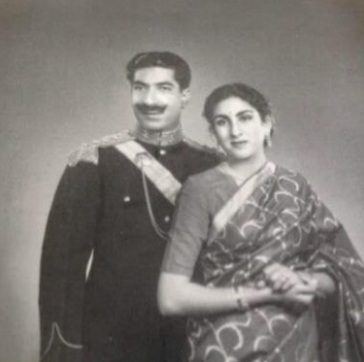
On the eve of the 1965 Indo-Pak War, the Regiment was in the process of converting to PT-76 tanks and, as per Army Headquarters’ policy, was not considered fully battle-ready. However, under the dynamic leadership of its Commanding Officer, Colonel Dalip Jind, the Regiment demonstrated exceptional determination. He successfully persuaded higher authorities to permit the unit to move to the concentration area with the available resources, continuing its training even while on the move—ensuring that the Regiment was prepared to meet the challenges of the impending conflict. Over the years, Major Chopra distinguished himself as a capable and dedicated officer, known for his sound tactical understanding, technical proficiency in handling tanks and heavy equipment, and his ability to lead from the front. His participation in various training exercises and operational deployments helped him develop a deep understanding of modern armoured warfare, while earning him the respect of both his superiors and subordinates. On the personal front, Major Man Mohan Chopra was married to Ms Sudha Chopra. The couple married in 1955 and were blessed with two sons.
Indo-Pak War (Western Sector) : Sep 1965
During Sep 1965, Major Man Mohan Chopra was serving with 7th Cavalry, which was operating in support of the Indian Army’s offensive in the Western Sector during the Indo-Pak War of 1965. At the time, XI Corps under Lieutenant General JS Dhillon had been tasked by Western Command to launch operations towards the Ichhogil Canal and threaten Lahore, while simultaneously countering any Pakistani ingress into Punjab. As operations commenced in early September 1965, Indian formations achieved significant early success, advancing rapidly towards key objectives along multiple axes. However, the battlefield soon became highly contested, particularly in the Khem Karan–Asal Uttar sector, where Pakistan launched strong armoured counterattacks. In this fluid and intense operational environment, armoured units like 7th Cavalry played a crucial role in supporting infantry assaults, stabilising defensive positions, and launching counter-offensives. 7th Cavalry was frequently deployed alongside infantry formations to engage enemy armour and strongholds. The regiment operated under challenging conditions, including difficult terrain, heavy artillery fire, and well-prepared enemy defences. Despite these obstacles, its troops displayed exceptional skill and determination in providing direct fire support, securing key areas, and enabling infantry advances.
In mid-September, as part of efforts to regain the initiative and relieve pressure on 4 Mountain Division in the Khem Karan sector, a coordinated offensive was planned against enemy positions that had penetrated Indian defences. A composite force, including elements of 19 Maratha Light Infantry and 7th Cavalry, was tasked to attack and dislodge the enemy from fortified localities such as Chathanwala. On 19 September 1965, during one such operation, a squadron of 7th Cavalry under the command of Major Manmohan Chopra was tasked to support the infantry assault. As the attack progressed, it became evident that the enemy was present in greater strength than anticipated and was well entrenched with tanks deployed in advantageous hull-down positions. The advancing troops came under intense and accurate artillery, mortar, and direct tank fire. Amidst this heavy engagement, some of the tanks, including that of Major Chopra, became bogged down in difficult terrain. Undeterred by the intense enemy fire and the precarious situation, Major Chopra displayed remarkable courage and leadership. He remained in the thick of the action, directing operations and successfully extricating three stranded tanks, thereby preventing their loss and ensuring continued support to the infantry. During this gallant effort, his tank came under heavy enemy mortar fire, and he was grievously wounded when a shell struck his position. Despite his injuries, he continued to lead until he eventually succumbed.
The entire operation witnessed the ultimate sacrifice of nine other brave soldiers of 7 Cavalry, who laid down their lives alongside their comrades. These included: Major MS Bal, Captain DS Jaswal, Naib Risaldar Jagjit Singh, Lance Dafadar Bharath Singh, Lance Dafadar Jhanda Singh, Acting Lance Dafadar C. B. Shohu, Acting Lance Dafadar Sucha Singh, Sowar Chandan Singh and Sowar Bhale Ram. Major Chopra’s conduct throughout the engagement was marked by conspicuous gallantry, indomitable determination, and an unwavering sense of duty. His leadership under fire and selfless devotion to his comrades and mission remain a shining example of the highest traditions of the Indian Army. Major Man Mohan Chopra for his act of bravery on the battlefield was given the nation’s third highest gallantry award, “Vir Chakra”, posthumously.
Major Man Mohan Chopra is survived by his wife, Smt. Sudha Chopra.


No Comments