During the Indo–Pakistan War of 1971, the Chhamb sector once again emerged as a major objective for Pakistan owing to its strategic importance astride the Akhnoor–Jammu axis. Having captured Chhamb in the 1947–48 and 1965 wars, Pakistan launched a determined offensive in this sector in December 1971. Unlike the earlier conflicts, Pakistan was allowed to retain the territory west of the Munnawar Tawi River at the end of the war, as its forces had reached those positions before the ceasefire. At the outbreak of hostilities on 3 December 1971, 10 Infantry Division was responsible for the defence of the Chhamb sector. Two brigades—191 Infantry Brigade and 28 Infantry Brigade—were deployed forward, while 52 Infantry Brigade and 68 Infantry Brigade were positioned east of the river and in depth for counter-attack roles. 9 Horse (The Deccan Horse), an armoured regiment of the Indian Army, was placed under the operational control of 10 Infantry Division to provide critical armoured support.
3–4 December 1971: Opening of Hostilities
On the evening of 3 December, following Pakistani air attacks on Indian airfields, it became clear that a major offensive in the Chhamb sector was imminent. Pakistani forces initiated intense artillery shelling of Indian defended localities, followed by coordinated infantry and armoured thrusts. With the withdrawal of BSF posts after dark, gaps were created along the forward line, particularly between Red Hill and Pir Jamal, which the enemy quickly exploited. As Pakistani armour and infantry advanced through these gaps, armoured elements of 9 Horse were swiftly moved forward, often in small packets, to plug breaches, cover threatened approaches, and protect vital crossings over the Munnawar Tawi River. Despite heavy enemy artillery fire and poor visibility, tanks of 9 Horse provided immediate fire support to hard-pressed infantry battalions, delaying the enemy’s momentum during the critical initial phase.
4–6 December 1971: Escalation and Counter-Actions
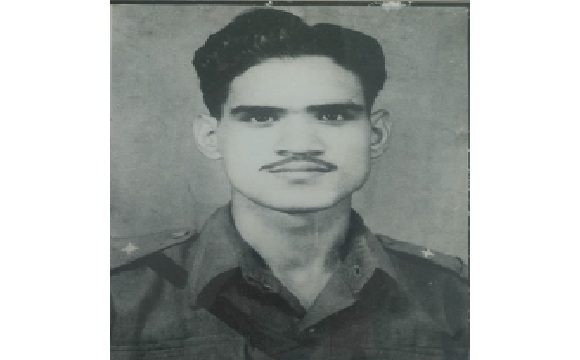
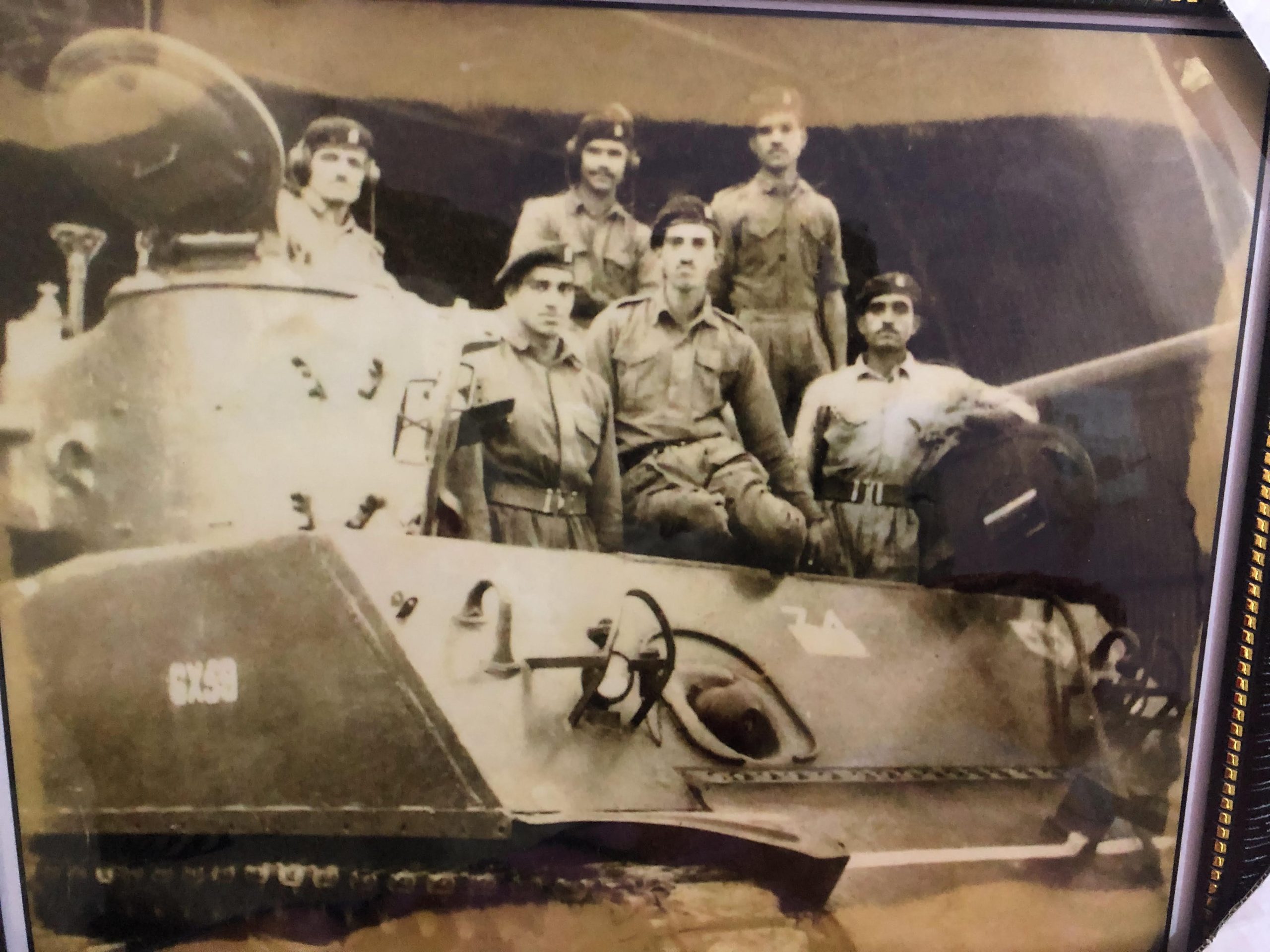
On 4 December, Pakistani forces overran Mandiala North, cutting the line of communication to Dewa, and subsequently captured several localities in the areas held by 5 Sikh, 5 Assam, and 4/1 Gorkha Rifles. To counter the threat to river crossings, one troop of C Squadron, 9 Horse, along with 9 Para Commando, was deployed east of the river to protect the Mandiala crossing. During the nights of 4/5 and 5/6 December, Pakistani battalions attempted to exploit success by advancing through nullahs and attacking depth positions. The fighting was intense and confused, with tanks frequently operating in soft ground, sometimes bogging down or becoming separated from infantry. Nevertheless, 9 Horse repeatedly supported local counter-attacks, including the recapture of key features such as Point 994, alongside infantry units. These actions imposed heavy casualties on the enemy and prevented a rapid armoured exploitation. Throughout these engagements, Naib Risaldar Sukh Chain Singh, serving with 9 Horse, distinguished himself by his calm leadership and tactical skill. At a time when communications were disrupted and orders changed rapidly, he ensured that his troop continued to fight cohesively. Leading his tank crew under constant threat from enemy anti-tank weapons and artillery, he brought accurate and effective fire to bear on advancing Pakistani armour and infantry, playing a vital role in stabilising threatened sectors.
6–8 December 1971: Withdrawal and Defence East of the River
By 6 December, with pressure mounting and Pakistani forces securing Mandiala South, 191 Infantry Brigade was ordered to withdraw across the Munnawar Tawi River. During this difficult withdrawal, A Squadron of 9 Horse was deployed south of Chhamb to protect the town and the river crossings. Despite the lack of prepared positions and enemy interference, tanks of 9 Horse provided essential covering fire, enabling infantry formations to disengage and re-establish defences east of the river. On 7–8 December, Pakistani attempts to force crossings at Mandiala, Chhamb, Darh, and Raipur were repeatedly repulsed, with armour of 9 Horse playing a crucial role in breaking up enemy concentrations and denying bridgeheads. Even when tanks were forced to operate from exposed positions or difficult terrain, their presence deterred enemy armour and bolstered infantry morale.
9–10 December 1971: Climax of the Battle
During the night of 9/10 December, Pakistani forces succeeded in securing a lodgement at the Darh and Raipur crossings, overrunning some depth positions. On the morning of 10 December, a counter-attack was launched involving infantry and elements of 9 Horse and 72 Armoured Regiment. Although tanks again faced severe difficulties due to soft ground and intense fire, their involvement was critical in containing the enemy bridgehead. Later that day, decisive intervention by higher command led to coordinated counter-attacks by 52 and 68 Infantry Brigades, which successfully restored the situation by the early hours of 11 December, effectively blunting the Pakistani offensive. It was during these fierce armoured engagements on 10 December 1971 that Naib Risaldar Sukh Chain Singh made the supreme sacrifice, laying down his life while leading from the front. The determined resistance offered by 9 Horse (The Deccan Horse), supported by the gallantry of soldiers like Naib Risaldar Sukh Chain Singh, played a crucial role in slowing the Pakistani advance, denying rapid exploitation east of the Munnawar Tawi, and stabilising the Chhamb sector during a critical phase of the war.
Naib Risaldar Sukh Chain Singh is survived by his wife Smt Satya Devi, and sons, Shri Hardyal Singh & Shri Hardev Singh.

No Comments