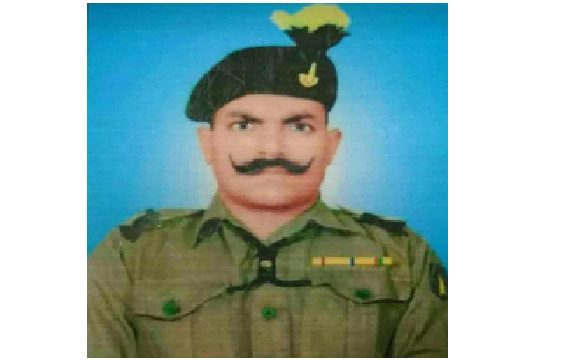
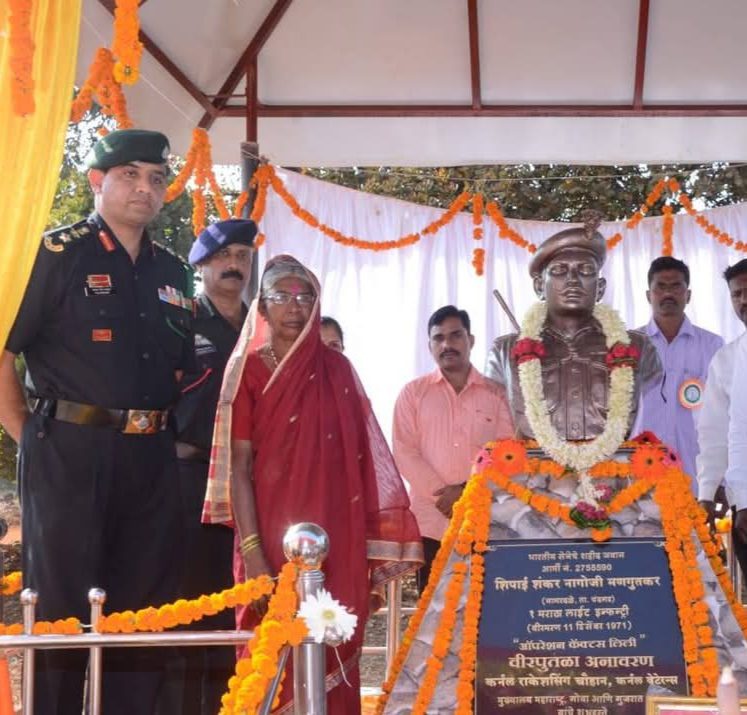
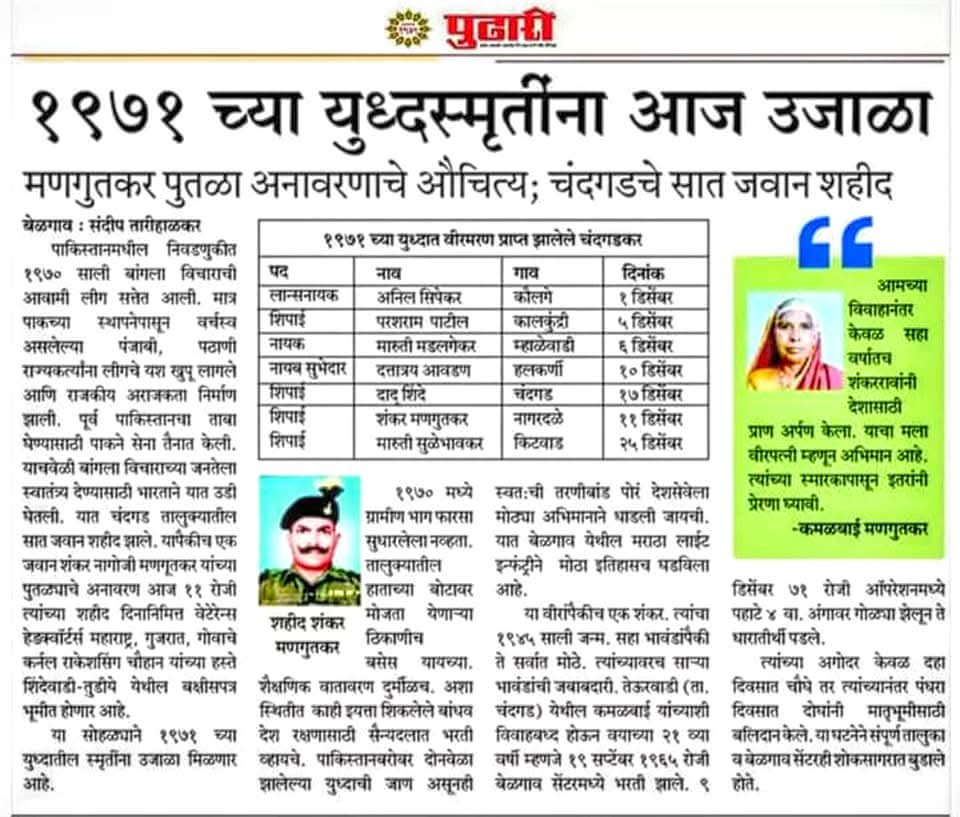
Sepoy Shankar Mangutkar hailed from Teurwadi village in Kolhapur district of Maharashtra. Born in 1945, he was the eldest among six siblings and, from an early age, bore the responsibility of caring for and guiding his younger brothers and sisters. Growing up in a rural setting steeped in tradition and values, he imbibed qualities of discipline, courage, and an unwavering sense of duty—traits that would later define his life as a soldier. He was married to Kamalbai of Teurwadi village in Chandgad taluka of Kolhapur district. At the young age of 21, driven by a deep sense of patriotism and a desire to serve the nation, he was recruited into the Indian Army at the Belgaum Centre on 19 September 1965.
Upon recruitment, Sepoy Shankar Mangutkar was inducted into the 1st Battalion of the Maratha Light Infantry, one of the oldest and most highly decorated regiments of the Indian Army. The Maratha Light Infantry is renowned for its rich legacy, indomitable fighting spirit, and numerous acts of valour in wars and operations since its raising. Serving in such a distinguished regiment was both an honour and a responsibility, and Sepoy Mangutkar rose to it with sincerity and pride. Throughout his service, he upheld the highest traditions of the regiment and the Indian Army. His dedication, sense of duty, and commitment to the ideals of courage and selfless service reflected the finest qualities of a Maratha soldier.
Eastern Theatre (Indo-Pak War): Dec 1971
During the Indo–Pak War of 1971, Sepoy Shankar Mangutkar was serving with the 1st Battalion of the Maratha Light Infantry (1 MLI), under the command of Lt Col KS Brar. Even before the formal declaration of war, 1 MLI was moved from Nagaland and deployed along the border in the Tura sector in October 1971, as part of 95 Mountain Brigade, for operations in what was then East Pakistan (now Bangladesh). This early deployment placed the battalion at the forefront of operations aimed at shaping the battlefield ahead of the decisive phase of the conflict. Throughout the latter half of October and into November 1971, 1 MLI played an active and aggressive role in dominating the sector. Operating in close coordination with local Mukti Bahini freedom fighters, the battalion undertook extensive patrolling to deny the enemy freedom of movement and to gather vital intelligence on Pakistani positions. These operations included long-range patrols, notably up to Jamalpur, as well as raids on enemy posts and carefully planned ambushes. One such ambush proved particularly effective, resulting in the destruction of a Pakistani heavy mortar battery. The successful execution of these preliminary operations steadily built pressure on the adversary and set the stage for the battalion’s outstanding performance during the war.
Soon after last light on 3 December 1971, following the outbreak of hostilities, Sepoy Shankar Mangutkar's 1 MLI battalion launched a bold wide outflanking move from its border base. Advancing across difficult terrain on a man-pack basis, the battalion made contact with the Pakistani defences at Bakshiganj. The position was captured without significant resistance after the enemy’s abortive attempt to break the cordon established by the battalion. Continuing the momentum, 1 MLI moved out again from Bakshiganj at last light on 5 December, deliberately avoiding the main axes of advance. The battalion crossed a tributary of the Brahmaputra well west of Jamalpur, using country boats procured with the assistance of local freedom fighters. By first light on 9 December, the battalion had successfully established a firm roadblock astride the strategically important Jamalpur–Tangail road, effectively isolating the Jamalpur garrison. A few sharp skirmishes followed. Later that day, the Brigade Commander, Brigadier HS Kler, landed at the battalion location by helicopter. After consultations with the Commanding Officer, Lieutenant Colonel KS Brar, a message was sent to the Jamalpur garrison commander through a Mukti Bahini freedom fighter, Zohal Haq Munshi—later honoured with the ‘Bir Purush’ award by the Government of Bangladesh—calling upon the garrison to surrender. The Pakistani commander, Colonel Sultan Ahmed of 31 Baluch, arrogantly rejected the offer.
Immediately after last light on 9 December 1971, the 1st Battalion, The Maratha Light Infantry (1 MLI) resumed its advance as part of the operations in the Eastern Sector. Shortly after midnight, the battalion successfully occupied carefully coordinated blocking positions astride the Jamalpur–Tangail road, approximately 1,000 metres south of the Jamalpur defences. Y Company was deployed to the west of the road and C Company to the east, while A and D Companies were held in depth to provide support and reinforcement to the defensive layout. During these intense operations, Sepoy Shankar Mangutkar displayed exemplary courage and devotion to duty. While actively engaged in combat against determined enemy resistance, he was struck by enemy fire and sustained grievous injuries. Despite the severity of his wounds, he remained steadfast, reflecting the highest traditions of the Maratha Light Infantry and the Indian Army. Sepoy Shankar Mangutkar later succumbed to his injuries on 11 December 1971, attaining martyrdom at the age of 26 while in the line of duty. His valour, commitment, and selfless sacrifice contributed significantly to the successful execution of his unit’s mission. Alongside him, several of his comrades from the battalion also laid down their lives in the same action. Fighting with unwavering determination and complete devotion to duty, these brave soldiers stood firm in the face of a fierce enemy assault, exemplifying the spirit of camaraderie and regimental honour. The gallant soldiers who attained martyrdom in this operation were: Havildar Gajanan Chavan; Naik Laxman Rane, Vir Chakra; Lance Naik Narayan Phalke; Lance Naik Tukaram Gawade; Sepoy Yashwant Pawar; Sepoy Prabhakar Katkar; Sepoy Tayappa Nalavade; Sepoy Suresh Patole; Sepoy B. B. Patil; Sepoy Dattatraya Dalvi; Sepoy Ashok Dadu Yadav; Sepoy Maruti Jadhav; and Sepoy Parashram Patil.Their collective sacrifice ensured that the battalion held its ground and accomplished its operational task. These brave men upheld the finest traditions of the Maratha Light Infantry, leaving behind a legacy of courage, comradeship, and supreme devotion to the nation.
Sepoy Shankar Mangutkar is survived by his wife, Smt Kamalbai Mangutkar.

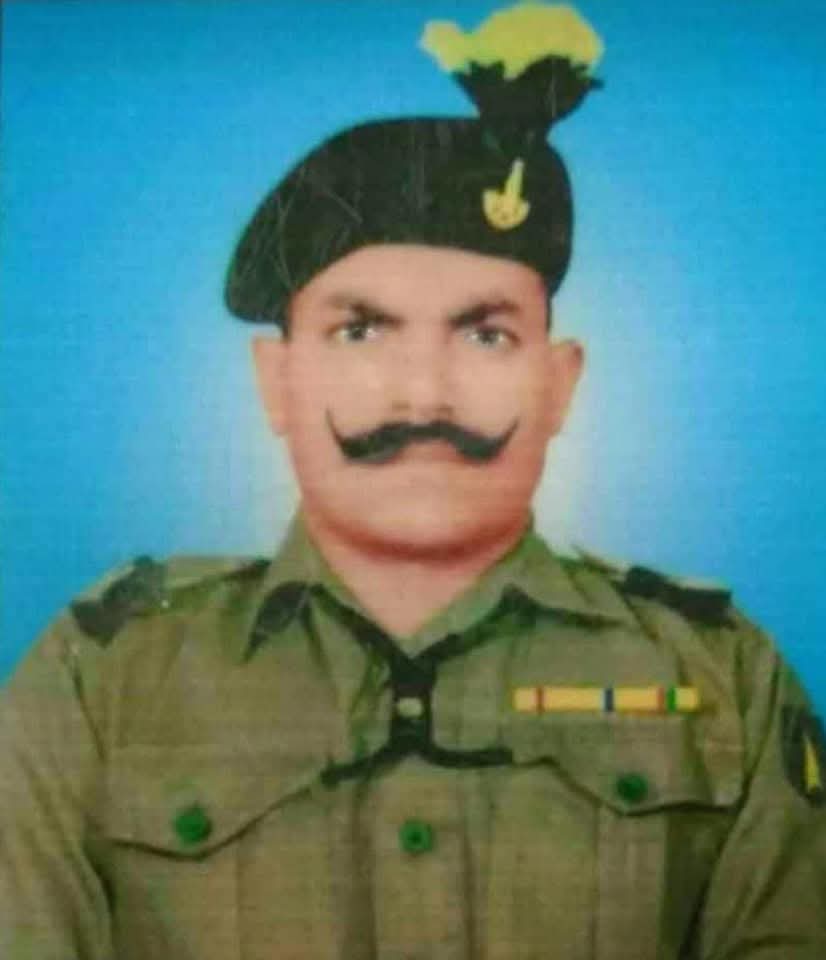
Nilesh Mangutkar
2025 at 12:38 amJai Hind