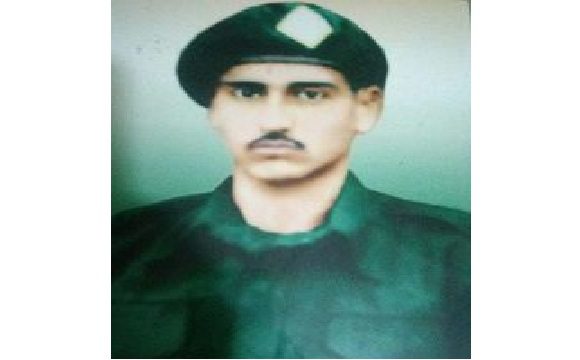

Service No : 3951343
Date of Birth : November 26, 1938
Place of birth : Bilaspur dist (HP)
Service : Army
Last Rank : Sepoy
Unit : 3 Dogra
Arm/Regt : The Dogra Regiment
Operation : Indo-Pak War-1965
Awards : Vir Chakra
Martyrdom : September 6, 1965
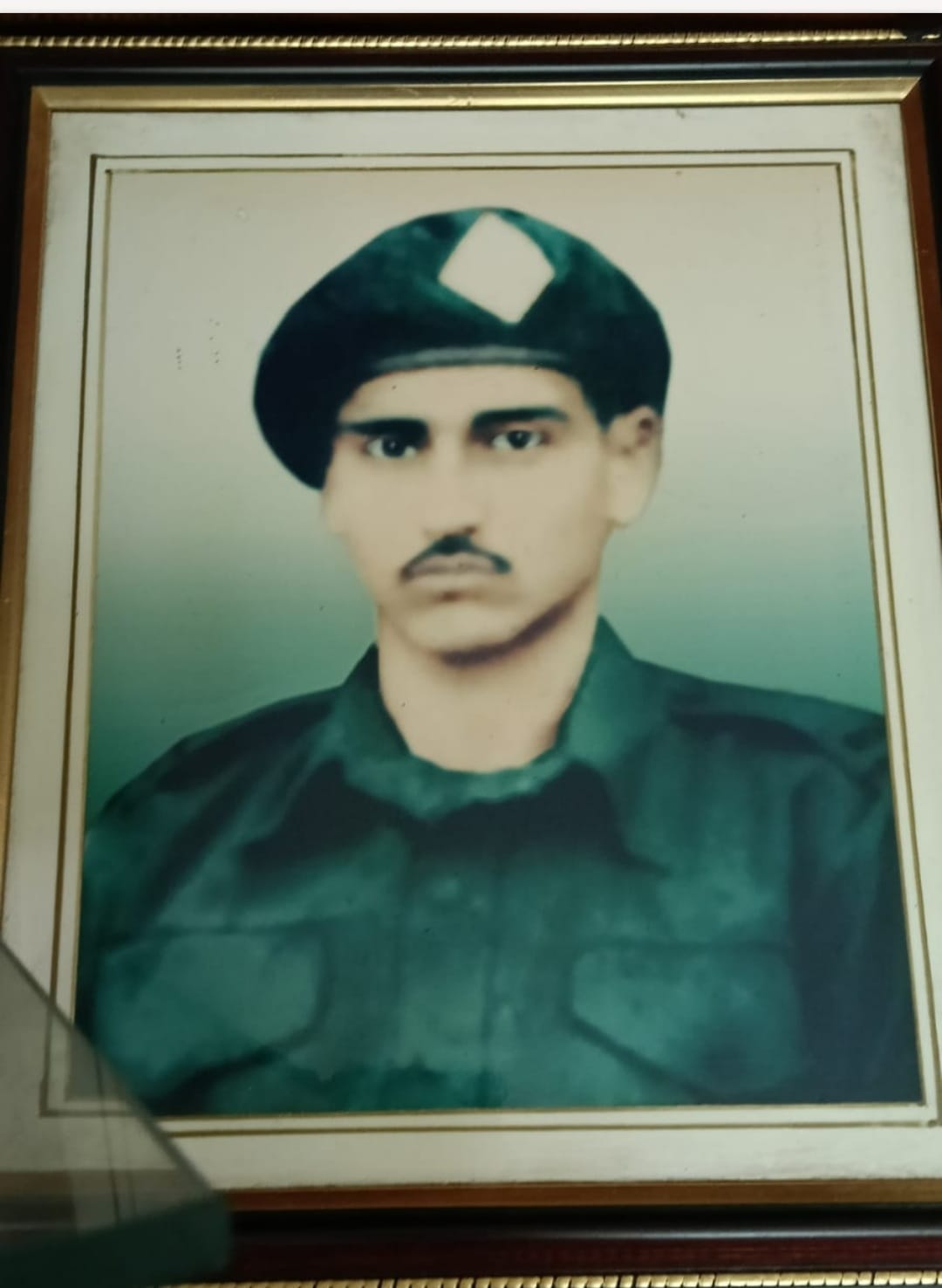
Sepoy Sukh Ram VrC
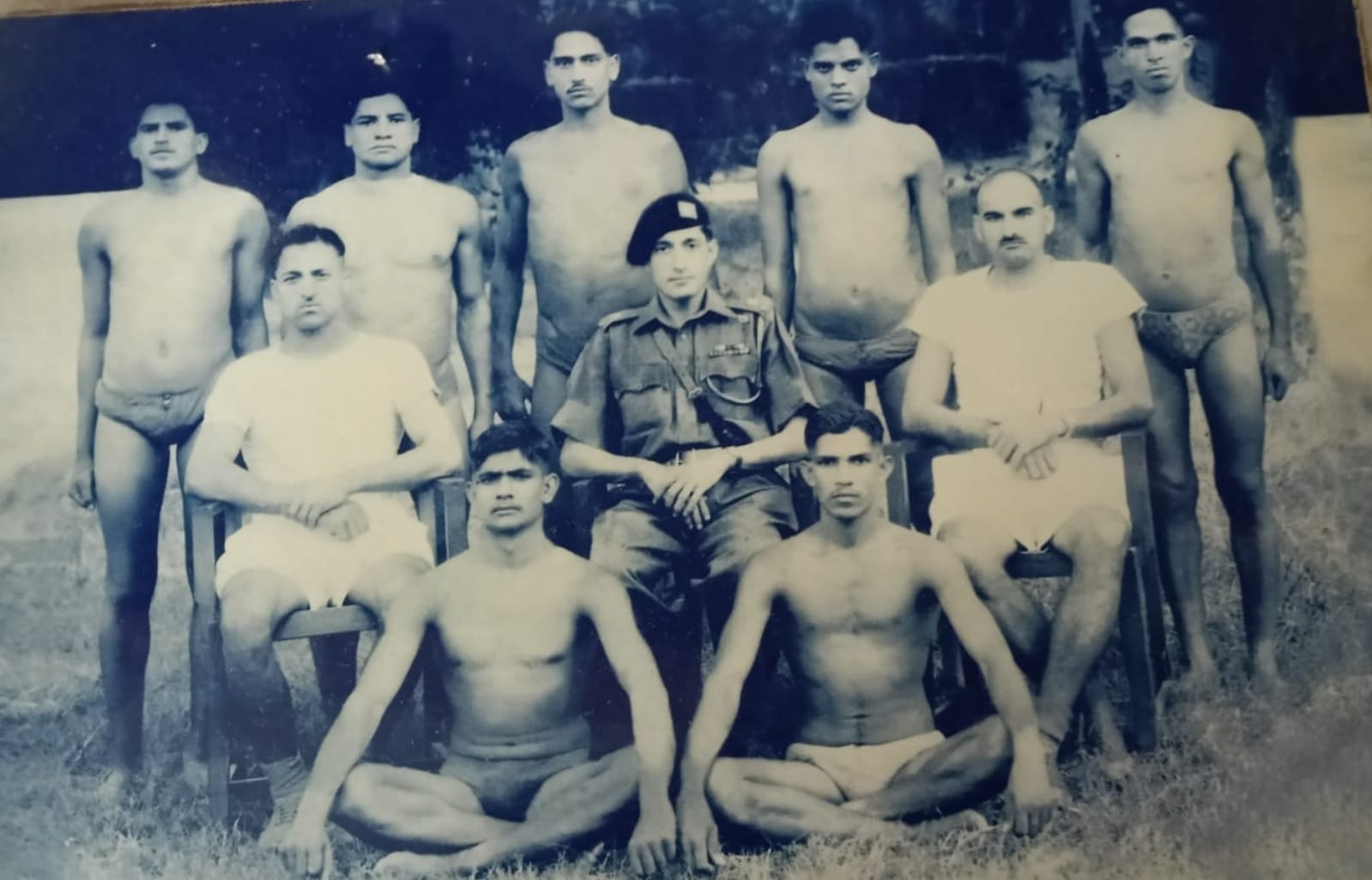
Sepoy Sukh Ram was born on 26 November 1938 in the small village of Malyawar in the Bilaspur district of Himachal Pradesh. He was the son of Shri Lakhu Ram and grew up in a humble rural environment where values such as discipline, hard work, and patriotism were deeply ingrained. From an early age, Sukh Ram nurtured a strong desire to serve the nation by joining the Indian Army. Determined to fulfil his dream, he enlisted in the Indian Army on 26 November 1959, the day he turned twenty-one years old. Before joining the Army, he had already earned a formidable reputation in Bilaspur and the surrounding regions for his exceptional skills in traditional wrestling (Kushti). Actively participating in akhara-style wrestling, a sport deeply rooted in the cultural traditions of Himachal Pradesh, he was widely admired for his remarkable strength, discipline, and competitive spirit. Over time, he came to be regarded as one of the finest wrestlers of his era in Bilaspur, earning admiration and respect across the region. His prowess in the wrestling arena made him a well-known and respected figure, and his name became familiar in many households in the district. The rigorous training and discipline of the akhara not only honed his physical abilities but also instilled in him qualities such as exceptional physical fitness, endurance, mental toughness, courage, and an indomitable fighting spirit. These attributes, developed through years of dedication to wrestling, later played a significant role in shaping his character and preparing him for the challenges of military life.
After his recruitment, he was inducted into the 3rd Battalion of the Dogra Regiment (3 Dogra), one of the distinguished infantry regiments of the Indian Army. The Dogra Regiment has a long and proud military tradition, known for the courage, discipline, and battlefield achievements of its soldiers. Over the years, the regiment had earned a reputation for bravery and steadfastness in numerous military campaigns, and becoming part of such a prestigious unit was both an honour and a responsibility for the young soldier. As a new recruit in the battalion, Sepoy Sukh Ram began his military journey with great dedication and enthusiasm. Like all soldiers, he underwent rigorous training designed to prepare him for the demanding conditions of military life. Through discipline, physical endurance, and tactical training, he gradually adapted to the challenges of soldiering. During the early 1960s, the security situation along India’s borders began to grow increasingly tense. Political and military relations between India and Pakistan were steadily deteriorating, and by 1965, the possibility of armed conflict had become imminent. As tensions escalated, the Indian Army strengthened its deployments in sensitive border areas to safeguard the nation’s territorial integrity. During this period, the 3 Dogra Battalion was deployed in the strategically important region of Jammu and Kashmir. This region had long been a focal point of tension between India and Pakistan, frequently witnessing military standoffs and cross-border hostilities. The battalion’s presence there placed it at the forefront of the developing situation, where officers and soldiers had to remain constantly vigilant and prepared to respond to any hostile action. As a member of this battalion, Sepoy Sukh Ram became part of a unit entrusted with the critical responsibility of defending the nation’s borders during a period of growing conflict.
Operation Faulad (Indo-Pak War): 05/06 Sep 1965
In 1965, Sepoy Sukh Ram’s unit, the 3rd Battalion of the Dogra Regiment (3 Dogra), was deployed in the Poonch sector of Jammu and Kashmir. The battalion was operating under the command of 93 Infantry Brigade, which formed part of the 25 Infantry Division of the Indian Army. This sector held great strategic importance because it lay close to vital mountain routes and communication lines that connected several operational areas in the region. The Indo–Pakistan War of 1965 effectively began on 1 September 1965 when Pakistani forces launched a major offensive in the Chhamb sector. Just a few days earlier, on 27 August 1965, Indian forces had achieved a significant success by capturing the strategically vital Haji Pir Pass. This pass was of immense operational value because it served as an important infiltration route used by Pakistani forces and irregulars. Following the capture of the pass, the Indian Army launched Operation Faulad with the objective of securing the Haji Pir Bulge from the southern side and ensuring safe communication between Poonch and Haji Pir. However, the enemy had established a series of well-prepared defensive positions on several hill features located between Poonch and Kahuta. These positions dominated the important Poonch–Haji Pir track, enabling the enemy to observe and control movement along this route. The pickets were heavily fortified with cemented weapon emplacements and shell-proof bunkers, supported by coordinated Medium Machine Gun (MMG) and Light Machine Gun (LMG) fire. The strength of these defences made any direct assault extremely challenging. To achieve its objective, the 93 Infantry Brigade was tasked with capturing these enemy pickets and establishing a secure link between Poonch and Haji Pir. Among the various enemy positions, the Raja and Chand Tekri pickets were considered the most formidable. These posts were protected by barbed wire and minefield obstacles and were regarded as nearly impregnable. Under the command of Lieutenant Colonel RB Nair, the 3 Dogra Battalion, along with the 2nd Battalion of the Sikh Regiment (2 Sikh), was assigned the difficult mission of capturing these heavily defended positions.
The brigade planned a coordinated two-battalion assault. While 2 Sikh was tasked with attacking from the left flank to capture the Raja picket, 3 Dogra was assigned the objective of capturing Point 7702, a key feature dominating the surrounding area. On the evening of 5 September 1965, the battalion moved towards its objective and successfully manoeuvred past the Raja picket under the cover of darkness. The assault on Point 7702 was to be carried out by B Company and C Company of 3 Dogra. Sepoy Sukh Ram was a member of B Company, which was commanded by Major Greesh Chandra Verma, while C Company was commanded by Captain Gurdev Singh Bawa. According to the battle plan, the two companies were to advance from the left flank and cross the start line at 04:00 hours on 6 September 1965. At approximately 05:00 hours, the assault commenced as B and C Companies launched a determined attack on Point 7702. As the troops advanced towards the objective, they came under intense enemy fire from well-prepared defensive positions. The enemy’s LMG and MMG posts dominated the approaches, making further advance extremely difficult and causing casualties among the attacking troops.
During this critical phase of the battle, Sepoy Sukh Ram, who was part of the leading assault elements, realized that two enemy LMG posts were posing a grave threat to his comrades and preventing the forward movement of the attacking troops. Understanding that these positions had to be neutralized in order for the attack to succeed, he decided to take immediate action. Displaying exceptional courage and complete disregard for his personal safety, Sepoy Sukh Ram rushed forward towards the enemy position carrying four hand grenades. Despite the heavy enemy fire and the strong defensive layout, he managed to reach close enough to one of the LMG posts and hurled two grenades at it, successfully silencing the weapon and eliminating the threat from that position. Without pausing, he then moved towards the second LMG post and lobbed another grenade at the enemy soldier manning the weapon. During this daring action, Sepoy Sukh Ram was hit by two bursts of LMG fire in the head and chest, causing him severe injuries. Despite his grievous wounds, his courageous action had already neutralized the enemy’s key defensive positions, enabling his comrades to continue the assault and press forward towards the objective. Sepoy Sukh Ram later succumbed to his injuries and attained martyrdom on the battlefield. His extraordinary bravery, determination, and selfless devotion to duty played a crucial role in the success of the attack.
During the same fierce engagement, Captain GS Bawa, the commander of C Company, also displayed remarkable courage. While attempting to silence an enemy MMG position that was causing heavy casualties among the attacking troops, he was fatally wounded in the line of duty. The battle was intense and came at a high cost for the battalion. In this operation, the battalion lost two officers, one Junior Commissioned Officer (JCO), and fourteen Other Ranks (ORs), while three officers, two JCOs, and sixty ORs were wounded. Despite these losses, the battalion inflicted significant damage on the enemy, killing thirty-nine enemy soldiers and capturing five as Prisoners of War. Sepoy Sukh Ram proved himself to be a gallant and dedicated soldier who led from the front and displayed the highest traditions of military service. For his exceptional courage, fighting spirit, and supreme sacrifice in the face of the enemy, he was posthumously awarded the Vir Chakra, the nation’s third-highest gallantry award. Besides Sepoy Sukh Ram, the other brave soldiers of 3 Dogra who laid down their lives during the entire operation were: Major Greesh Chandra Verma, Captain GS Bawa, Subedar Bansi Lal, Havildar Sarwan Singh, Havildar Braham Chand, Naik Bishamber Singh, Naik Kuldip Singh, Naik Anchal Singh, Sepoy Kashmir Singh, Sepoy Uttam Singh, Sepoy Jagan Nath, Sepoy Devi Chand, Sepoy Mehar Singh, Sepoy Tulsi Ram, Sepoy Parkash Chand, and Sepoy Sher Singh. Their sacrifice remains a lasting testament to the courage, dedication, and indomitable spirit of the soldiers who fought bravely to defend the nation.
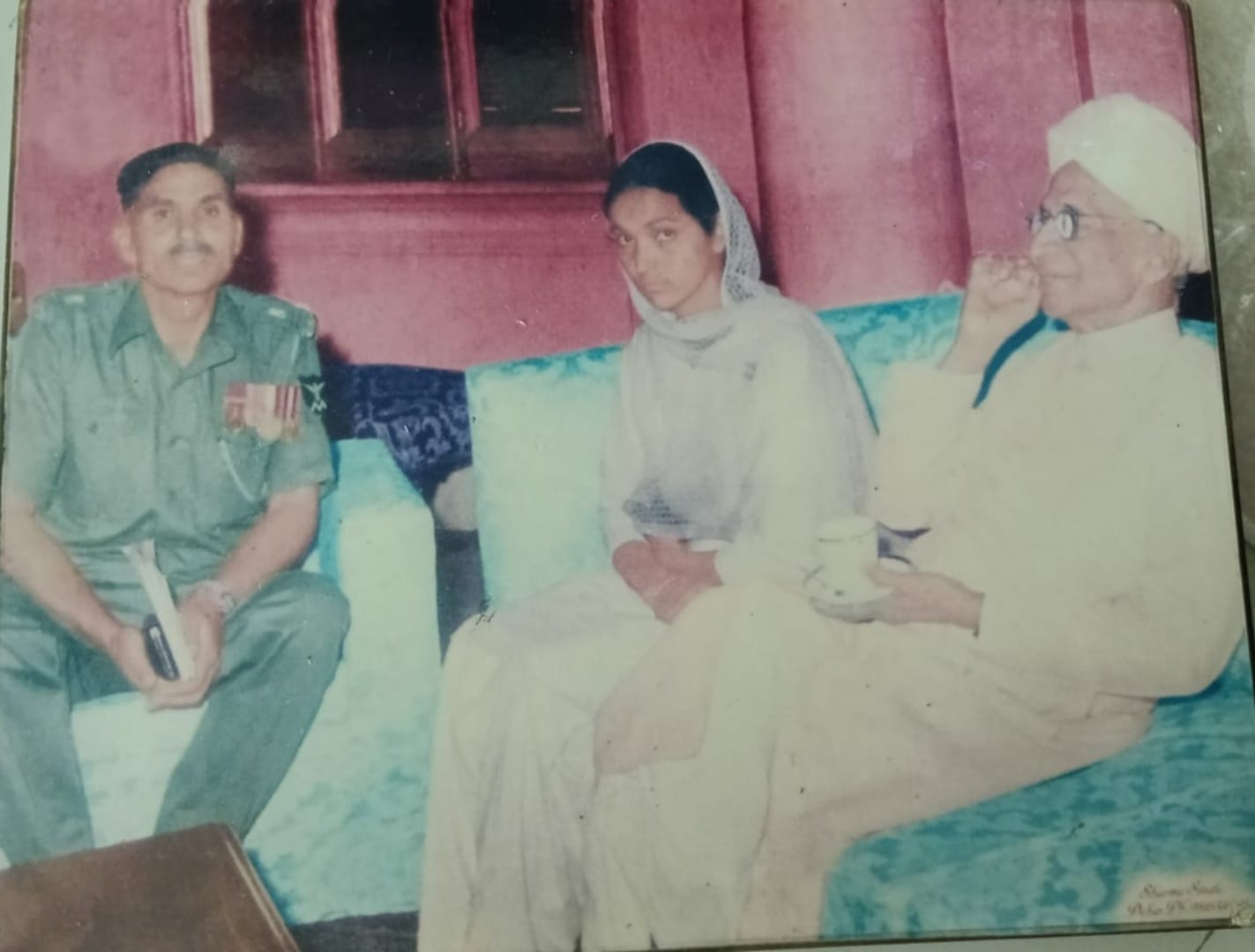
Sepoy Sukh Ram is survived by his wife Smt Shila Devi, son Shri Baldev Thakur and grandsons Shri Shubam Thakur & Shri Sachin Thakur.


PRATAP SINGH THAKUR
2026 at 10:28 amVeer Chakra Vijeta Late Shri Sukh Ram – A Pride of Himachal and Country
Late Shri Sukh Ram of Malyawar village in Bilaspur of Himachal Pradesh, stands as a shining symbol of courage, patriotism, and sacrifice. Honoured with the prestigious Veer Chakra, he exemplified unmatched bravery in the face of danger while serving the nation in Sept.1965 war with China
His story is not just one of valour on the battlefield, but also of deep commitment to duty and love for the motherland. Rising from the serene hills of Himachal, he carried the spirit of his land into service, displaying extraordinary determination and fearlessness.
Though he is no longer with us, his legacy continues to inspire generations. After the supreme sacrifice of Veer Chakra awardee Late Shri Sukh Ram of Bilaspur, Himachal Pradesh, his family—especially his wife Smt. Shila Devi—faced immense hardships. While the nation honored his bravery, the personal loss and the sudden responsibility of managing the household fell heavily upon her shoulders. Like many war widows, she had to navigate emotional grief along with practical challenges such as financial stability, raising the family, and securing a dignified future. In the early years, access to support systems, awareness of entitlements, and administrative processes were not always easy, making her journey even more difficult. Despite these struggles, she displayed remarkable strength and resilience. Her perseverance ensured that the legacy of Shri Sukh Ram remained alive, not just as a story of sacrifice, but also as a testament to the silent courage of the families left behind. Her life reminds us that the cost of war is borne not only on the battlefield, but also in the quiet endurance of those who carry on after the heroes are gone. She is now living a dignified life with his son and grandsons at her village.
Late Shri Sukh Ram (Vir Chakra awardee)’s only son is Shri Baldev Thakur, who served in the Himachal Pradesh Public Works Department (HPPWD) and retired as an Assistant Engineer in 2023 reminding us that true heroes live forever through their deeds. It’s quite notable how one generation served the nation on the battlefield, while the next contributed through public infrastructure and development—both forms of service in their own way.
He had two grandsons serving in society in different fields. Shubam Thakur serving in the Merchant Navy, contributing to international maritime operations and Sachin Thakur working as a Civil Engineer in Dubai, UAE.
He wasn’t just a war hero, but also a celebrated sportsman in Bilaspur Distt. Of Himachal Pradesh. In his early life, Sukh Ram earned a powerful reputation in Bilaspur and beyond for his wrestling skills. He was widely known in Bilaspur for his excellence in wrestling (kushti). He was regarded as one of the finest wrestlers of his time and admired for his strength and discipline. He participated in traditional akhara-style wrestling, which is deeply rooted in Himachal’s culture He had earned respect and recognition in every household of Bilaspur for his physical prowess. His wrestling background likely played a big role in shaping physical fitness and endurance, mental toughness and courage, discipline and fighting spirit. These qualities carried forward into his military service, where he displayed the bravery that earned him the Vir Chakra.
His wife smt. Shila Devi honoured her husband’s memory by installing a bronze statue in his name. This statue was installed on 19th Oct. 2011 in his Malyawar village and the chief guest for this ceremony was honuorable Chief Minister Shri Prem Kumar Dhumal. Remarkably, she funded this tribute from her own earnings, showing immense dedication and respect. It reflects a wife’s pride and devotion toward a national hero and to helps to keep his legacy alive for future generations and serves as a source of inspiration for the local community. This is truly a story of courage, dignity, and remembrance.
Salute to you Sir, Jai Hind
PRATAP SINGH THAKUR
BILASPUR H.P.
________________________________________
Lokinder singh verma
2026 at 10:29 am3rd Dogra is one of the finest Dogra Regiment which has gallontly participated
In WW.1, WW.2 , korea war , 1965 , 1971 winning laurals of bravery with Victoria cross, Mahavir chakkar , Vir chakkar and other war citations . My father late Brig.U.B.S.Verma , commanded the Regiment from 1957 to 1961 . I feel so very proud to be associated with the DOGRA REGIMENT .
pavan
2026 at 10:29 amjai hind sir
Sachin Thakur
2026 at 10:30 amI am grand son of sepoy sukh ram.. I can tell about the story of Brave Son who sacrifice his life for our country at very early age..The story is very sad…you can contact me..7807035447