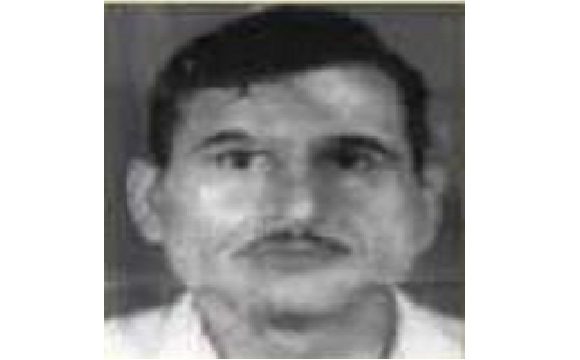

Service No : 4145729
Place of birth : Varanasi (UP)
Service : Army
Last Rank : Sepoy
Unit : 13 Kumaon
Arm/Regt : The Kumaon Regiment
Operation : Indo-China War 1962
Martyrdom : November 18, 1962
Sepoy Tilak Dhari Yadav
Sepoy Tilak Dhari Yadav was born in Chakka village of Varanasi district, Uttar Pradesh, a land steeped in history, culture, and an enduring spirit of patriotism. The region has long been known for its proud contribution to the nation’s armed forces, producing generations of brave men who answered the call of duty with honour and courage. Growing up in this environment, young Tilak Dhari Yadav was shaped by the values of integrity, resilience, and devotion to the motherland. Driven by this patriotic conviction, he chose the noble path of military service and enlisted in the 13 Kumaon Battalion of the Kumaon Regiment, one of the Indian Army’s oldest and most illustrious infantry regiments. With a distinguished legacy tracing back to the 18th century, the Kumaon Regiment has earned a formidable reputation for its gallantry, discipline, and steadfast professionalism across numerous campaigns and wars. To be part of such a regiment was both an honour and a responsibility — one that Sepoy Tilak Dhari Yadav embraced wholeheartedly.
During his years in uniform, he distinguished himself through his sincerity, quiet determination, and unwavering commitment to duty. He wore the regiment’s insignia not merely as a mark of identity, but as a symbol of honour and sacrifice, upholding its cherished traditions and martial ethos with pride. In 1962, his battalion was stationed at Ambala before being redeployed to Jammu & Kashmir as tensions along the northern frontier intensified. The move reflected the Army’s trust in the operational readiness, capability, and fighting spirit of 13 Kumaon. For Sepoy Tilak Dhari Yadav, it was another step in fulfilling his solemn duty — to stand guard at the nation’s frontiers and defend its honour at any cost.
Battle of Rezang La (Indo-China War): 18 November 1962
In June 1962, the 13 Kumaon Battalion, under the command of Lt Col H.S. Dhingra, moved from Ambala to Baramulla in Jammu & Kashmir. As tensions along the Indo-China border escalated rapidly, the battalion was ordered in September to redeploy to Leh at very short notice. Upon its arrival in Ladakh, 13 Kumaon was placed under the operational control of 114 Infantry Brigade, commanded by Brigadier T.N. Raina, who would later become Chief of the Army Staff. The brigade bore the formidable responsibility of defending nearly 400 kilometres of the frontier, including the strategically crucial Chushul sector. Other units under its command included 14 J&K Militia, 7 J&K Militia, 5 Jat, and 1/8 Gorkha Rifles. Sepoy Tilak Dhari Yadav served in ‘C’ (Charlie) Company under the leadership of Major Shaitan Singh. As part of the brigade’s defensive strategy, Charlie Company was entrusted with the vital task of defending Rezang La — a dominating feature that overlooked the approaches to Chushul and safeguarded the critical supply route from Leh via Dungti. Alpha Company under Major G.N. Sinha remained in reserve at the battalion headquarters near Chushul, while Bravo and Delta Companies, led by Captain R.V. Jatar, were deployed on Maggar Hill between Spanggur Gap and Rezang La. By 26 October 1962, Sepoy Tilak Dhari Yadav and his comrades had meticulously fortified their positions and prepared for the impending battle.
The deployment at Rezang La was executed with careful tactical planning to maximise the advantages of the rugged terrain. Platoons 7, 8, and 9 occupied the forward slopes: 7 Platoon under Jemadar Surja Ram secured the northern flank; 8 Platoon under Jemadar Hari Ram defended the pass; and 9 Platoon under Jemadar Ram Chander held the central sector, with Company Headquarters located close by. The mortar section, commanded by Naik Ram Kumar Yadav, was positioned on the reverse slope to provide effective fire support. In the early hours of 18 November 1962, Chinese forces launched a massive offensive in the Chushul sector, coinciding with their assault at Sela in NEFA. A coordinated two-pronged attack targeted the defences — one thrust aimed at Gurung Hill and the other directed squarely at Charlie Company at Rezang La. Situated approximately 11 kilometres south of Spanggur Gap, Rezang La commanded the vital supply route from Leh, making its defence critical to the survival of the Chushul garrison.
At around 2:00 AM, the first enemy wave advanced toward the sector held by 8 Platoon. The movement was detected by a Listening Post, and Section Commander Naik Hukam Chand promptly alerted Jemadar Hari Ram, who informed Major Shaitan Singh. As the enemy closed to within 50 yards, the defenders opened devastating fire, catching the attackers by surprise and forcing them to withdraw. A second assault followed at approximately 4:00 AM against 7 Platoon. Demonstrating exceptional leadership, Jemadar Surja Ram repositioned his troops and mounted a fierce counterattack using rifles, light machine guns, and grenades. The enemy was repulsed once again, reinforced by the determined efforts of Naik Sahi Ram. However, the attacks intensified, with successive waves striking at 4:55 AM, 6:00 AM, and 6:30 AM. Despite mounting casualties and damage to their weapons, Sepoy Tilak Dhari Yadav and the soldiers of Charlie Company stood unwavering.
By 7:40 AM, during the sixth wave, their numbers had been severely reduced. At 8:40 AM, the enemy escalated the assault by deploying a 57 mm recoilless gun on a nearby ridge, followed by yet another attack at 9:00 AM. Facing freezing temperatures, thin mountain air, and overwhelming enemy strength, Sepoy Tilak Dhari Yadav and his comrades fought with unmatched courage and resolve. Determined to defend every inch of Rezang La, they inflicted heavy casualties on the advancing forces. In the midst of the fierce engagement, Sepoy Tilak Dhari Yadav sustained grievous wounds and made the supreme sacrifice in the line of duty. The soldiers of 13 Kumaon fought to the last man and the last bullet, successfully preventing the enemy from advancing toward the strategically vital Chushul airfield. After the ceasefire, Rezang La became a barren and contested no-man’s land. For nearly three months, the bodies of the fallen heroes — including Sepoy Tilak Dhari Yadav — remained frozen on the battlefield until they were eventually discovered by a shepherd. The valiant stand of Charlie Company at Rezang La stands as one of the most extraordinary and inspiring chapters in the history of the Indian Army — a timeless testament to courage, sacrifice, and unwavering devotion to duty.
Sepoy Tilak Dhari Yadav is survived by his wife, Smt. Supti Devi.
No Comments