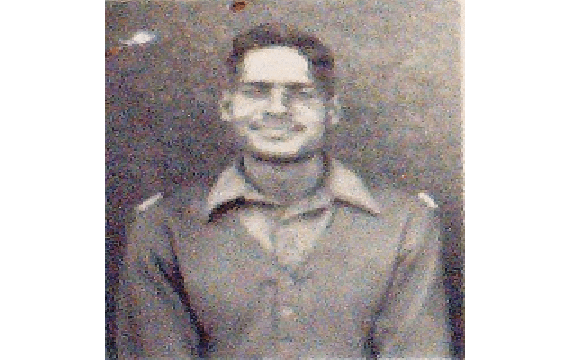

Service No : 4147039
Place of birth : Farrukhabad Dist(UP)
Service : Army
Last Rank : Sepoy
Unit : 13 Kumaon
Arm/Regt : The Kumaon Regiment
Operation : Indo-China War 1962
Martyrdom : November 18, 1962
Sepoy Ujvir Singh
Sepoy Ujvir Singh was a native of Jaisinghput village in the Farrukhabad district of Uttar Pradesh, an area recognised for its strong martial heritage and enduring tradition of service to the nation. Inspired by deep patriotism, he enlisted in the 13 Kumaon Battalion of the Kumaon Regiment, one of the Indian Army’s oldest and most decorated infantry regiments. Established in the eighteenth century, the Kumaon Regiment has earned a distinguished name through its courage, professionalism, and gallantry in numerous campaigns.
In his service, Sepoy Ujvir Singh was respected for his discipline, devotion to duty, and steadfast commitment to his responsibilities. He wore the Kumaoni uniform with honour and upheld the customs and values of his battalion with pride. By 1962, his unit was based at Ambala before being deployed to Jammu & Kashmir, reflecting the high level of trust placed in its preparedness and operational effectiveness.
Battle of Rezang La (Indo-China War): 18 Nov 1962
In June 1962, the 13 Kumaon Battalion, in which Sepoy Ujvir Singh was serving, was transferred from Ambala to Baramulla in Jammu & Kashmir under the command of Lieutenant Colonel H. S. Dhingra. By September 1962, as tensions along India’s northern frontier intensified, the battalion received urgent orders to move to Leh. After its arrival, 13 Kumaon came under the operational authority of the 114 Infantry Brigade, led by Brigadier T. N. Raina, who later went on to become the Chief of Army Staff. The brigade was entrusted with the defence of nearly 400 kilometres of the Indo–China border, including the strategically crucial Chushul sector. Its constituent units included 13 Kumaon, 14 J&K Militia, 7 J&K Militia, 5 Jat, and 1/8 Gorkha Rifles. Sepoy Ujvir Singh was part of ‘C’ (Charlie) Company of 13 Kumaon, commanded by Major Shaitan Singh. In accordance with the brigade’s defensive strategy, Charlie Company was deployed at Rezang La, a high-altitude mountain pass vital for the protection of Chushul. Alpha Company, under Major G. N. Sinha, was held in reserve near Chushul, while Bravo and Delta Companies, commanded by Captain R. V. Jatar, were positioned along Maggar Hill between Spanggur Gap and Rezang La.
By 26 October 1962, Sepoy Ujvir Singh and his fellow soldiers had completed the strengthening of their defensive positions at Rezang La, arranging their deployment based on the tactical advantages offered by the terrain. Platoons 7, 8, and 9 were placed on the forward slopes: Platoon 7, led by Jemadar Surja Ram, secured the northern approach; Platoon 8, under Jemadar Hari Ram, guarded the pass; and Platoon 9, commanded by Jemadar Ram Chander, defended the central area near Company Headquarters. A mortar detachment led by Naik Ram Kumar Yadav was positioned on the reverse slope to provide supporting fire. In the early hours of 18 November 1962, Chinese forces launched a coordinated two-directional assault on Gurung Hill and Rezang La, coinciding with a major offensive at Sela in the Northeast Frontier Agency (present-day Arunachal Pradesh). Located approximately 11 kilometres south of Spanggur Gap, Rezang La controlled the only road linking Leh through Dungti, making it essential to the defence of the Chushul garrison.
The initial enemy attack began at around 2:00 AM, advancing toward the area held by Platoon 8. A Chinese force of about 30 soldiers was detected by the Listening Post. Naik Hukam Chand immediately raised the alarm, informing Jemadar Hari Ram, who alerted Major Shaitan Singh and deployed a Light Machine Gun team. When the enemy closed in to within 50 yards, effective fire was opened, forcing them to retreat. A second assault followed at approximately 4:00 AM against Platoon 7’s position. Jemadar Surja Ram quickly repositioned his troops and met the attack with coordinated rifle, LMG, and grenade fire. The resolute defence, especially under the leadership of Naik Sahi Ram, once again compelled the attackers to withdraw. Undeterred, the enemy launched further assaults at 4:55 AM, 6:00 AM, and 6:30 AM, each met with determined resistance. Despite increasing casualties and a severe shortage of ammunition, Sepoy Ujvir Singh and his comrades refused to give ground. During the sixth assault at 7:40 AM, the enemy intensified its attack and by 8:40 AM introduced a 57 mm recoilless rifle positioned openly on a nearby ridge. The final assault began at 9:00 AM. Facing overwhelming enemy numbers, extreme cold, and superior firepower, the soldiers of Charlie Company, 13 Kumaon, displayed exceptional courage and steadfast resolve.
Gravely wounded in the brutal fighting, Sepoy Ujvir Singh continued to resist until he laid down his life in the service of the nation. Charlie Company fought to the last man and the last round, successfully preventing the enemy from advancing toward the strategically vital Chushul airfield. After the ceasefire, Rezang La became a contested no-man’s land. Nearly three months later, the frozen bodies of Sepoy Ujvir Singh and his fellow soldiers were discovered by a local shepherd, standing as a powerful and lasting tribute to their extraordinary valour, sacrifice, and devotion to duty.
No Comments