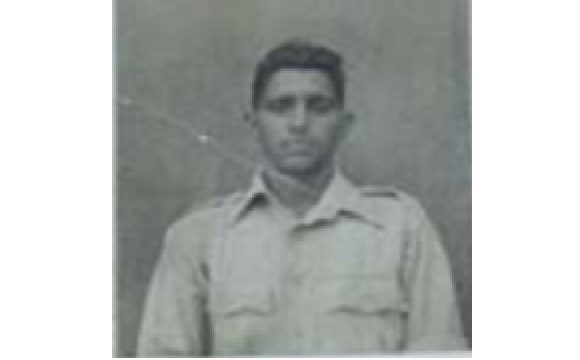

Service No : 1028119W
Place of birth : Bhiwani Dist (Har)
Service : Army
Last Rank : Sower
Unit : 7 Cav
Arm/Regt : The Armoured Corps
Operation : Indo-Pak War-1965
Martyrdom : September 20, 1965
Sower Bhale Ram
Sowar Bhale Ram hailed from Bhiwani in Haryana and belonged to a family that valued discipline, integrity, and service. Driven by a deep desire to serve the nation, he was recruited into the 7th Light Cavalry (7 Cavalry). The 7th Light Cavalry traces its origins to 1784, when it was raised at Arcot near Madras from selected drafts of three regiments of local cavalry taken over by the East India Company. From its inception, the Regiment developed a reputation for professionalism and gallantry, serving with distinction both in India and overseas. During the pre-Independence era, the Regiment saw extensive active service. In the First World War, it operated in challenging theatres such as Persia, Russia, Transcaspia, and Afghanistan. In the Second World War, it played a notable role in the siege of Imphal and subsequently advanced through Burma, becoming the first cavalry regiment to reach Rangoon.
Indo-Pak War (Western Sector): Sep 1965
During September 1965, Sowar Bhale Ram’s unit, 7th Cavalry, was actively engaged in support of the Indian Army’s offensive operations in the Western Sector during the Indo–Pak War of 1965. At the time, XI Corps, under Lieutenant General J. S. Dhillon, had been tasked by Western Command to advance towards the Ichhogil Canal and pose a direct threat to Lahore, while simultaneously countering any Pakistani incursions into Punjab. In the opening phase of operations in early September, Indian forces made significant gains, advancing swiftly along multiple axes. However, the situation soon became highly contested, particularly in the Khem Karan–Asal Uttar sector, where Pakistani forces launched powerful armoured counterattacks. In this dynamic and intense battlefield environment, armoured regiments such as 7th Cavalry played a pivotal role in supporting infantry operations, stabilising defensive positions, and executing counter-offensives. Operating under extremely challenging conditions—marked by restrictive terrain, heavy artillery barrages, and well-prepared enemy defences—the regiment consistently demonstrated exceptional professionalism and resilience. Its squadrons were frequently tasked to support infantry assaults and engage enemy armour and fortified positions, often under intense and sustained fire. Despite these difficulties, the regiment effectively provided direct fire support, secured critical ground, and enabled the continued advance of infantry formations.
In mid-September, as part of a broader effort to regain the initiative and relieve pressure on 4 Mountain Division, a coordinated offensive was launched against well-entrenched enemy positions in the Chathanwala area. A composite force comprising elements of the 19 Maratha Light Infantry and 7th Cavalry was tasked with this mission. During the attack on 20 September 1965, the enemy was found to be far stronger than anticipated, with tanks deployed in hull-down positions and supported by heavy artillery and mortar fire. Despite these formidable defences, the assault pressed on under intense and sustained enemy fire. Amidst this fierce engagement, Sowar Bhale Ram distinguished himself through exceptional courage and devotion to duty. Displaying remarkable determination, he played a crucial role in maintaining the momentum of the attack and ensuring continued close support to the infantry. In the closing stages of the war, Sowar Bhale Ram made the supreme sacrifice, laying down his life on 20 September 1965. The entire operation witnessed the ultimate sacrifice of nine other brave soldiers of 7 Cavalry, who laid down their lives alongside their comrades. These included: Major MS Bal, Major Man Mohan Chopra, Captain D. S. Jaswal, Naib Risaldar Jagjit Singh, Lance Dafadar Bharath Singh, Lance Dafadar Jhanda Singh, Acting Lance Dafadar CB Shohu, Acting Lance Dafadar Sucha Singh, and Sowar Chandan Singh. The gallantry and sacrifice displayed by Sowar Bhale Ram and his comrades remain a shining example of courage, dedication, and the highest traditions of the Indian Army.
Sowar Bhale Ram is survived by his wife, Smt Kamla Devi.
No Comments