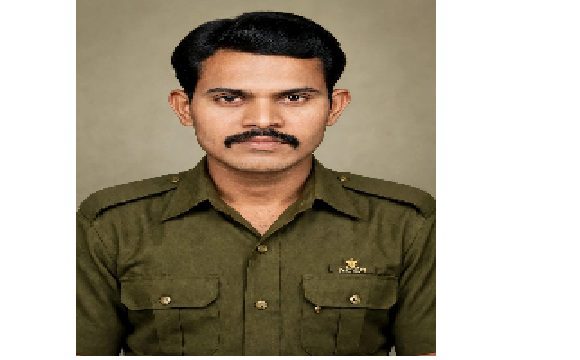

Service No : 2588892L
Date of Birth : April 29, 1965
Place of birth : Krishnagiri Dist(TN)
Service : Army
Last Rank : Sepoy
Unit : 3 Madras
Arm/Regt : The Madras Regiment
Operation : Op Meghdoot
Martyrdom : September 26, 1988
Sepoy N Lakshmaian
Sepoy N Lakshmaian hailed from Varatanapalli village in Krishnagiri district, Tamil Nadu, and was born on 29 April 1965. He was the son of Shri M V Narasimha Naidu and Smt Thimmakka and had two brothers, N Ramachandran and N Srinivasan. Growing up in Tamil Nadu, he developed a desire to serve the nation by joining the Armed Forces, an aspiration shared by many young men who sought to dedicate their lives to the country's defence. Guided by this ambition, he joined the Indian Army and was recruited into the 3 Madras Battalion of the Madras Regiment, a distinguished infantry regiment with a proud military heritage and a long tradition of courage, discipline, and sacrifice.
In April 1988, Sepoy Lakshmaian was posted to the Siachen Glacier, one of the world's most challenging and strategically significant military regions. Located in the eastern Karakoram range of the Himalayas, the glacier presented extraordinary difficulties for soldiers deployed there. As a member of the 3 Madras Battalion, Sepoy Lakshmaian served in this demanding environment, carrying out his responsibilities as part of the Indian Army's efforts to safeguard the nation's territorial interests. His posting to this formidable frontier formed an important chapter in his military service, reflecting the hardships endured by soldiers who stand guard in some of the most inhospitable regions of the country.
Operation Meghdoot: 26 Sep 1988
In September 1988, Sepoy N Lakshmaian was serving with the 3 Madras Battalion of the Madras Regiment, deployed at the Siachen Glacier as part of Operation Meghdoot, the Indian Army's ongoing mission to secure the strategically important glacier. The unit was positioned in one of the most remote and inhospitable sectors of the glacier, where troops were required to maintain a constant vigil over their designated posts and conduct regular patrols to monitor activity along the border. During the harsh winter months, these positions often became virtually inaccessible, making the sustenance of military operations exceptionally challenging. Deployed at altitudes reaching approximately 19,000 feet, Sepoy Lakshmaian and his comrades faced some of the most demanding conditions encountered by soldiers anywhere in the world. Sub-zero temperatures, thin air, treacherous ice formations, and sudden changes in weather made every movement hazardous. The threat of avalanches added to the dangers, as large accumulations of snow could become unstable and descend without warning. In addition to these natural hazards, the troops remained alert to the possibility of hostile activity and occasional firing from across the border. Their duties demanded constant vigilance, physical endurance, and unwavering commitment to safeguarding the nation's territorial interests in this strategically sensitive region.
The enemy frequently resorted to unprovoked firing in an attempt to dominate the area and gain tactically advantageous positions. On 26 September 1988, the enemy again resorted to unprovoked firing, targeting Indian Army positions. Sepoy N Lakshmaian was manning one of the posts when it came under enemy fire. During the firing, a shell struck his post, leaving him severely wounded. He was immediately moved for medical assistance; however, despite efforts to save him, he succumbed to his injuries and made the supreme sacrifice in the line of duty. Sepoy N Lakshmaian was only 23 years old at the time of his martyrdom.
Sepoy N Lakshmaian is survived by his brothers, Shri N Ramachandran and Shri N Srinivasan.
No Comments