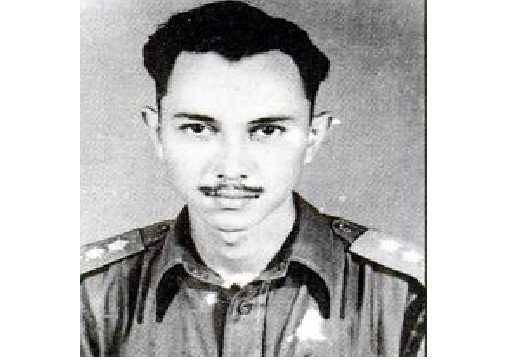

Service No : IC-5034
Date of Birth : October 21, 1927
Service : Army
Last Rank : Captain
Arm/Regt : Maratha Light Infantry
Operation : CI & IS Ops
Awards : Ashok Chakra
Martyrdom : August 2, 1957
Capt Eric James Tucker AC
Captain Eric James Tucker was born on 21 October 1927 and was commissioned into the Maratha Light Infantry on 13 July 1947, just weeks before India attained Independence. He was the son of Mr. Veera Vijaya Suckev and grew up with a deep sense of discipline, integrity, and duty—qualities that would later define his military career. Captain Tucker was widely regarded as one of the most determined and dependable officers of the Indian Army. He possessed exceptional mental clarity and a calm, methodical approach to leadership. Rather than acting on impulse, he carefully assessed every situation, weighed the available options, and made well-considered decisions even under the most demanding circumstances. His ability to remain composed under pressure, combined with his unwavering commitment to his mission and his men, earned him the trust and admiration of both his superiors and fellow soldiers.
His courage, professionalism, and steadfast devotion to duty reflected the finest traditions of the Maratha Light Infantry. Captain Eric James Tucker's life remains an enduring example of disciplined leadership, selfless service, and unwavering dedication to the nation.
The Naga Insurgency: Aug 1957
In 1957, the Naga Hills remained one of the most volatile and challenging operational theatres for the Indian Army. The Naga insurgency, India's first and longest-running armed rebellion after Independence, was marked by well-trained and highly motivated guerrilla groups who exploited the dense forests and rugged terrain to launch surprise attacks on security forces. In this demanding environment, Captain Eric James Tucker, commanding 'B' Company of the 2nd Battalion, Maratha Light Infantry, emerged as an exceptional leader whose courage, tactical brilliance, and unwavering determination inspired all ranks under his command.
Although his remarkable service in the region had begun in 1956, when he successfully opened the vital line of communication from Chakabama to Phek (42 miles) and further to Meluri (20 miles), overcoming fierce resistance from heavily armed insurgents despite sustaining injuries, it was during 1957 that his leadership and gallantry reached extraordinary heights. Having already earned a reputation for relentlessly pursuing hostile elements, he continued to undertake hazardous missions despite repeated warnings from the insurgents that they intended to kill him. On 1 April 1957, Captain Tucker received reliable intelligence regarding a concentration of armed rebels at Chipokatami. Without hesitation, he led his troops through dense, dark jungles in a swift and daring operation. Taking the insurgents completely by surprise, he successfully overpowered the group, capturing four rebels along with their weapons. The operation demonstrated his exceptional planning, speed of execution, and ability to exploit surprise against a determined enemy.
His relentless offensive operations continued over the following months. On 18 July 1957, Captain Tucker conducted a major manoeuvre against insurgent positions, inflicting heavy casualties on the rebels and capturing several prisoners. His aggressive tactics and fearless leadership significantly weakened insurgent activities in the area and strengthened the confidence of his troops. The defining moment of his military career came on 2nd August 1957. While leading a platoon from Khuzami to Kivikhu, Captain Tucker's patrol entered a dense stretch of jungle where insurgents, having obtained advance information about his movement, had laid a carefully planned ambush. As intense automatic fire erupted from concealed positions, Captain Tucker was seriously wounded in the face and legs. Despite his severe injuries, he refused to withdraw or abandon his men. Displaying extraordinary courage and determination, he continued directing the battle, returning fire, and encouraging his soldiers to fight with determination. Even after exhausting nearly all available ammunition, he remained steadfast in the face of overwhelming enemy fire. In an act of supreme bravery, Captain Tucker launched a final charge against the insurgents, determined to break their attack and protect his men. During this fearless assault, he was struck by a burst of automatic fire and was killed instantly. His courageous stand enabled his troops to continue the engagement and remains one of the finest examples of leadership under fire.
Captain Eric James Tucker consistently led from the front, displaying exceptional courage, unwavering determination, and complete disregard for his own safety. His inspiring leadership, tactical brilliance, and supreme sacrifice embodied the highest traditions of the Maratha Light Infantry and the Indian Army. His devotion to duty, indomitable spirit, and selfless sacrifice continue to inspire generations of soldiers and stand as a lasting testament to the values of courage, honour, and service to the nation.
No Comments