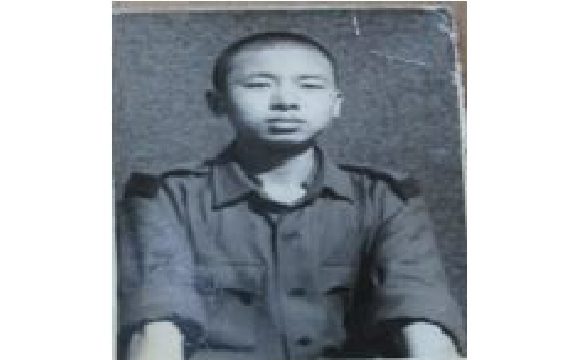

Service No : 9414508W
Place of birth : Darjeeling (WB)
Service : Army
Last Rank : Havildar
Unit : 1/11 GR
Arm/Regt : 11 Gorkha Rifles
Operation : Op Pawan
Martyrdom : August 18, 1989
Havaldar Amir Rai
Havildar Amir Rai hailed from Goomti village in the Darjeeling district of West Bengal. Born into the proud tradition of the Gorkha community, he grew up with a spirit of dedication, courage, and a strong sense of duty. Inspired by the honour and discipline associated with military service, he joined the Indian Army and was recruited into 1/11 Gorkha Rifles, a battalion of the distinguished 11 Gorkha Rifles Regiment, renowned for its gallantry, professionalism, and rich military heritage. During his service career, Havildar Amir Rai served in various operational areas, where he encountered challenging environments and demanding military responsibilities. His years in uniform were marked by commitment, perseverance, and devotion to duty. Through his service, he earned the trust and respect of his comrades and steadily progressed in his military career.
In due course, he married Ms Kumari Rai, beginning a new chapter of his personal life alongside his responsibilities as a soldier. While his family remained an important part of his life, his commitment to the nation continued to guide his professional journey. By 1989, he had completed several years of distinguished service and had risen to the rank of Havildar, reflecting his experience, dedication, and leadership within the battalion. During the Indian Peace Keeping Force (IPKF) operations in Sri Lanka, Havildar Amir Rai’s unit, 1/11 Gorkha Rifles, was deployed to undertake operations against the Liberation Tigers of Tamil Eelam (LTTE). The deployment placed the battalion in a demanding operational environment, where troops were required to remain constantly alert and prepared to face the uncertainties of counter-insurgency operations.
Sri Lankan Operations(Op Pawan) – 18 Aug 1989
Following the induction of Indian forces into Sri Lanka in August 1987, the militants were expected to surrender their arms in accordance with the prevailing arrangements. However, the dreaded Liberation Tigers of Tamil Eelam (LTTE) reneged on their commitment and launched hostilities against the Indian forces, plunging the region into renewed conflict. What had initially been envisaged as a peacekeeping mission gradually transformed into a demanding military campaign against a determined and well-entrenched adversary. Initially, the Indian Army inducted the 54 Infantry Division into Sri Lanka. As the conflict intensified and the operational requirements expanded, additional formations, including the 3, 4 and 57 Infantry Divisions, were subsequently committed to the theatre. The Indian forces were required to operate in unfamiliar terrain, often under extremely challenging conditions, while confronting an adversary that resorted to guerrilla warfare, ambushes and sudden attacks.
By August 1989, the Indian forces had undertaken numerous operations against the LTTE as part of Operation Pawan. Despite sustained efforts and extensive operational commitments, the conflict remained far from over. The troops continued to undertake arduous patrols and missions in areas where the threat of an enemy ambush remained ever-present. Havildar Amir Rai was serving with 1/11 Gorkha Rifles, a unit actively involved in Operation Pawan. On 18 August 1989, the unit was tasked with undertaking an operation in Sri Lanka. As part of the mission, a patrol comprising one Junior Commissioned Officer (JCO) and ten soldiers was assigned a long-range patrol lasting 15 days. The patrol was required to operate in challenging conditions, maintain vigilance, and carry out its assigned responsibilities in an area where LTTE activity posed a constant threat. During the course of this patrol, the soldiers were suddenly confronted by an ambush laid by LTTE militants. The attack was swift and deadly, catching the patrol in a hostile situation. In the ensuing encounter, five soldiers were killed in action. Among them was Havildar Amir Rai, who fought in the face of grave danger and laid down his life in the line of duty.
The ambush brought a tragic end to the lives of five brave soldiers who had ventured into the field in the service of the nation. Along with Havildar Amir Rai, the other soldiers who made the supreme sacrifice were Nb Sub H. C. Sawan, Rifleman Sukh Bir Limbu, Rifleman Naba Raj Limbu and Rifleman Dewan Singh Rai. Their loss was a poignant reminder of the grave risks faced by troops operating in hostile and uncertain conditions. Havildar Amir Rai’s supreme sacrifice stands as a testament to the courage, devotion to duty, and unwavering spirit of the Gorkha soldier. Amid the challenges and dangers of counter-insurgency operations, he remained steadfast in his commitment to the mission and laid down his life in the service of the nation. His sacrifice during Operation Pawan remains a solemn reminder of the hardships endured by Indian soldiers deployed in Sri Lanka and the exceptional courage with which they confronted a determined adversary. Havildar Amir Rai will forever be remembered with honour and gratitude for his valour, dedication and supreme sacrifice. His legacy of courage and selfless service will continue to inspire generations.
Havildar Amir Rai is survived by his wife, Smt. Kumari Rai.
No Comments