Lance Havildar Birbal hailed from Palwal, a region in the state of Haryana known for its rich cultural heritage and long-standing tradition of producing brave and dedicated soldiers for the nation. He was the son of Shri Jiwan Lal and Smt. Ram Kali, who instilled in him strong values of discipline, integrity, and patriotism from an early age. Growing up in a humble rural environment, L/Hav Birbal developed a deep sense of responsibility and a profound love for his country. He completed his schooling in the vicinity of his native village, where he was known among his peers and teachers for his sincerity, determination, and strong work ethic. Inspired by the stories of valour and sacrifice associated with the Indian Armed Forces, and motivated by his innate sense of duty, he resolved to join the army soon after completing his education. Fulfilling this aspiration, he was recruited into the Indian Army on 4 June 1987, joining the Corps of Signals. The Corps of Signals is a vital arm of the Indian Army, entrusted with the responsibility of establishing, operating, and maintaining secure and reliable communication networks for the armed forces. In modern military operations, effective communication forms the backbone of operational success, enabling seamless coordination, intelligence sharing, and command and control across widely dispersed units during both peace and wartime operations.
During his initial years of service, he underwent rigorous military and technical training designed to prepare him for the demanding role of a signals operator. Through this training, he developed proficiency in handling advanced communication systems, tactical field networking, and encryption protocols essential for secure military communications. His responsibilities included operating sophisticated communication equipment, ensuring secure transmission of critical information, maintaining communication links in challenging operational environments, and supporting coordination between different military formations during field operations. Over the years, Lance Havildar Birbal’s dedication, discipline, and professional competence helped him develop into a highly skilled and dependable soldier. His technical expertise, combined with his operational experience, earned him the trust and respect of his superiors and fellow soldiers alike. He consistently demonstrated a high level of commitment to his duties, understanding that reliable communication on the battlefield could often determine the success of an operation and the safety of troops.
Rajouri Operation (J&K):30 Nov 1998
During 1998, Lance Havildar Birbal of the 57 Wireless Experimental Unit, Corps of Signals, was deployed with one of the unit’s Signal Intelligence detachments in the Rajouri Sector, an area frequently affected by militant infiltration and hostile activities. The unit was engaged in operational tasks that required movement through rugged and forested terrain while maintaining constant vigilance against militant threats. On 30 November 1998, at approximately 1400 hours, Lance Havildar Birbal was part of a small operational party assigned to move from the base camp (road head) to a remote detachment location located about 15 kilometres away. The route to the detachment passed through difficult mountainous terrain and narrow forest tracks, making the movement both physically demanding and tactically vulnerable. The party consisted of one officer—Lieutenant Jadhav of the Rashtriya Rifles—two Junior Commissioned Officers (JCOs), six Other Ranks (OR), and Lance Havildar Birbal. As part of standard operating procedure, the team commenced the journey on foot, maintaining a tactical formation while advancing along a narrow mountain track surrounded by thick vegetation.
Lance Havildar Birbal was positioned in the vanguard of the patrol, moving ahead alongside Lieutenant Jadhav. Their role was crucial, as they were responsible for leading the column, maintaining surveillance of the route ahead, and providing early warning of any potential threat to ensure the safety of the rest of the team. At approximately 1645 hours, while the patrol was passing through a particularly dense stretch of vegetation, the party was suddenly ambushed by two groups of militants who had taken concealed positions on either side of the track, intending to trap the patrol in a coordinated attack. While advancing cautiously, Lance Havildar Birbal noticed suspicious movement in thick bushes nearly 50 metres to the left of the track. Instantly recognising the imminent danger and realising that the patrol was about to come under attack, he displayed remarkable presence of mind and courage. Without hesitation and without any regard for his personal safety, he charged directly towards the militants’ ambush position and opened fire. His bold and aggressive action caught the militants off guard and momentarily stunned them, disrupting their carefully planned ambush. This sudden counter-attack created confusion among the militants and provided the remaining members of the patrol critical time to disperse, take defensive positions, and effectively return fire. During the initial exchange of fire, Lance Havildar Birbal was struck by a bullet in the head, causing him to lose balance and fall into a nearby ravine. Unbeknownst to him, this ravine concealed the second group of militants, whose intention was to overpower him and snatch his weapon.
Despite being severely wounded, Lance Havildar Birbal refused to give up. Demonstrating extraordinary determination and fighting spirit, he continued to resist fiercely, engaging the militants in close combat while firing his weapon to prevent them from capturing it. His relentless resistance thwarted the militants’ attempt to seize his weapon and kept them engaged at close quarters. During this intense struggle, two militants were observed to have been seriously injured by his fire. Evidence of this was later confirmed when a search operation conducted the following day revealed blood-soaked shawls and large pools of blood approximately 150 yards from the spot where Lance Havildar Birbal’s body was found, indicating the severe casualties inflicted upon the attackers. The exchange of fire continued for nearly thirty minutes as the patrol engaged the militants. During this prolonged firefight, Lance Havildar Birbal sustained multiple additional bullet injuries at point-blank range to his abdomen and head. Despite his grievous injuries, he continued to fight until he ultimately succumbed to his wounds, making the supreme sacrifice in the line of duty. Through his initiative, indomitable courage, and selfless devotion to duty, Lance Havildar Birbal not only disrupted the militants’ ambush but also enabled his comrades to regroup, organise their defence, and successfully counter the attack. In recognition of his exceptional gallantry, extraordinary courage, and supreme sacrifice, Lance Havildar Birbal was posthumously awarded the "Shaurya Chakra" on 15 August 1999.
Lance Havildar Birbal is survived by his wife, Smt Vijay Laxmi.

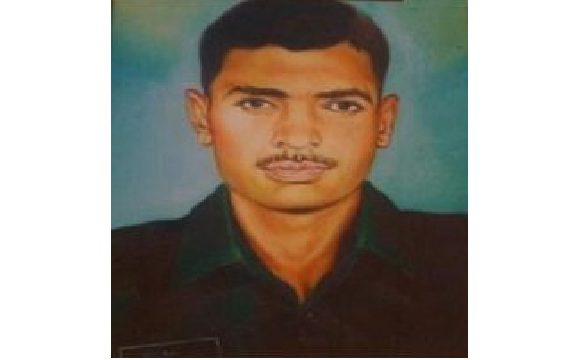
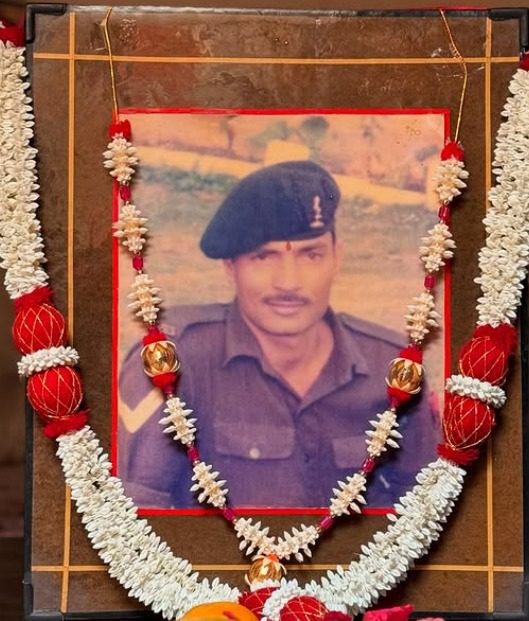
Shivansh
2026 at 5:37 pmI’m currently trying to develop a page honoruing the bravehearts of the Corps Of Signals……
I think you’ll be able to find some more info about Lance Havildar Birbal, SC of Sigs by contacting ‘official_gajender_scout_1818’ on Instagram. I was able to find the L Hav Birbals photos in some of his posts addressed as ‘father’…..
Shivansh
2026 at 5:39 pmCorrection of previous msg’s grammer- honouring* find L Hav Birbal’s photos*