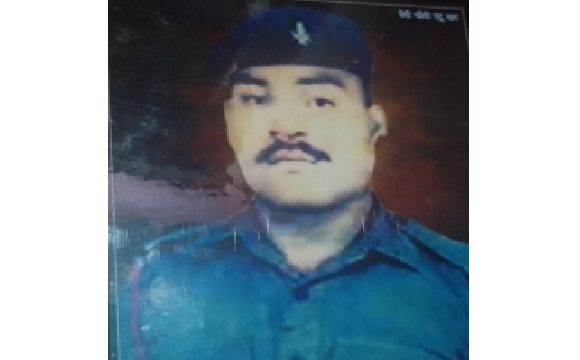
Lance Naik Narain Singh Negi hailed from Banjbagar village in the Chamoli district of Uttarakhand — a region renowned for its rich military heritage and long-standing tradition of producing brave, disciplined, and dedicated soldiers for the service of the nation. Nestled in the Garhwal hills, this region has historically been a land of courage and patriotism, where stories of sacrifice, valour, and national service have been deeply woven into the social and cultural fabric of everyday life. Growing up in such an environment, L Nk Narain Singh Negi was naturally influenced by the strong martial traditions and patriotic spirit that surrounded him from an early age. The disciplined lifestyle of the hill communities, coupled with the legacy of soldiers from the region who had served the country with distinction, played a significant role in shaping his character. These values instilled in him a deep sense of responsibility, resilience, and devotion to the nation. After completing his education, he chose the noble path of military service, inspired by both the proud traditions of his homeland and his personal desire to contribute to the defence and security of the country. With determination and commitment, he was recruited into the 7th Battalion of the Garhwal Rifles (7 Garh Rif), one of the most distinguished, battle-hardened, and highly respected infantry battalions of the Indian Army.
The Garhwal Rifles Regiment carries a glorious legacy of gallantry, discipline, and professionalism. Over decades, its soldiers have demonstrated exceptional bravery and steadfast service in numerous military campaigns, operations, and conflicts, earning the regiment a place of great honour in the history of the Indian Army. Becoming a part of such a prestigious regiment was both a proud achievement and a solemn responsibility for a young soldier like L Nk Narain Singh Negi. The ethos of the Garhwal Rifles — rooted in courage, discipline, loyalty, and selfless service — resonated deeply with his own values and strengthened his commitment to military life. Within the regiment, he underwent rigorous training that sharpened his physical endurance, tactical abilities, combat preparedness, and mental resilience. The demanding military environment further moulded him into a disciplined and dependable soldier capable of performing under challenging conditions. Known among his peers and superiors for his sincerity, dedication, and unwavering commitment to duty, Lance Naik Narain Singh Negi quickly adapted to the hardships and responsibilities of military life. Through his conduct, discipline, and devotion to service, he upheld the proud traditions and honour of the Garhwal Rifles Regiment, reflecting the courage and integrity that define the spirit of the Indian Army.
Western Border Operation: 09 Aug 1973
During the Indo-Pakistani War of 1971, Lance Naik Narain Singh Negi was serving with the 7th Battalion of the Garhwal Rifles (7 Garh Rif), a distinguished infantry battalion deployed in the strategically important Chhamb sector along India’s western border. At the time, the battalion was operating under the command of the 10 Infantry Division, which was responsible for defending this highly sensitive and militarily significant region. The sector’s defence was primarily undertaken by the 191 Infantry Brigade and the 28 Infantry Brigade. The Chhamb sector had historically remained one of the most fiercely contested regions along the Indo-Pak border because of its immense strategic value. Pakistan had earlier captured the area during the wars of 1947–48 and 1965, though it was later returned to India following the ceasefire after the 1965 conflict. During the Indo-Pak War of 1971, Pakistan once again launched a major offensive in the sector and succeeded in occupying the Chhamb area west of the Munawar Tawi River. In response, Indian forces launched determined military operations to contain enemy advances and secure vital defensive positions. During these intense operations, the 7th Battalion of the Garhwal Rifles played an active and courageous role in engaging hostile forces. Despite difficult battlefield conditions, the battalion fought with resilience, tactical discipline, and remarkable determination. By the time the ceasefire was declared on 16 December 1971, the battalion had successfully recaptured the strategically important Sangam Post after fierce combat.
Although the war had officially ended, tensions along the border remained high for a prolonged period. Sporadic ceasefire violations, enemy probing actions, and localized skirmishes continued to threaten security in the region. To maintain vigilance and operational dominance, Indian Army units regularly carried out patrols and defensive operations in their respective sectors. In August 1973, Lance Naik Narain Singh Negi’s battalion remained actively deployed in one such operational area. On 9 August 1973, following a hostile action initiated by enemy forces, his unit was assigned the difficult task of launching a retaliatory assault on an enemy-held post within their Area of Responsibility. The mission was aimed at neutralising the hostile position and preventing further threats to Indian troops and border security. As part of the assaulting force, Lance Naik Narain Singh Negi advanced fearlessly alongside his comrades toward the enemy objective. As the Indian troops approached the target, they were met with fierce and sustained enemy resistance. A heavy exchange of fire soon erupted, turning the assault into a fierce and hazardous battlefield engagement. Despite intense enemy fire and extremely dangerous conditions, the soldiers of 7 Garh Rif continued to push forward with exceptional courage and unwavering determination. In the midst of this fierce battle, Lance Naik Narain Singh Negi displayed extraordinary bravery and steadfast devotion to duty. Fighting shoulder to shoulder with his comrades, he continued to engage the enemy despite grave danger. During the prolonged firefight, he sustained severe injuries while courageously participating in the assault. Even as the battle intensified, the troops pressed forward with unmatched resilience and commitment.
However, the injuries sustained by Lance Naik Narain Singh Negi proved fatal, and he eventually succumbed to his wounds on the battlefield, making the supreme sacrifice in the service of the nation In the same gallant operation, nineteen other brave soldiers of the battalion also laid down their lives while fighting with courage and honour. These included Subedar Sate Singh Sajwan, Naik Govind Singh Rawat, Naik Dhir Singh, Lance Naik Parma Nand Pandey, Rifleman Suresha Nand Pant, Rifleman Prem Singh Agarwal, Rifleman Bachan Singh Rautela, Rifleman Jit Pal Singh Chauhan, Rifleman Jaikrit Singh Negi, Rifleman Prem Singh, Rifleman Ram Prasad Gaur, Rifleman Kundan Singh Gusain, Rifleman Raghubir Singh Gariya, Rifleman Bhagat Singh Barthwal, Rifleman Darwan Singh Negi, Rifleman Hukam Singh Jagwan, Rifleman Mehtab Singh Bisht, Rifleman Raghubir Chand, and Rifleman Umed Singh Bisht. Together, Lance Naik Narain Singh Negi and his fellow martyrs displayed extraordinary courage, unwavering dedication, and supreme devotion to duty. Their sacrifice upheld the proud traditions and glorious legacy of the Garhwal Rifles Regiment and stands as a timeless symbol of patriotism, valour, and selfless service to the nation.
Lance Naik Narain Singh Negi is survived by his wife Smt Tili Devi.

No Comments