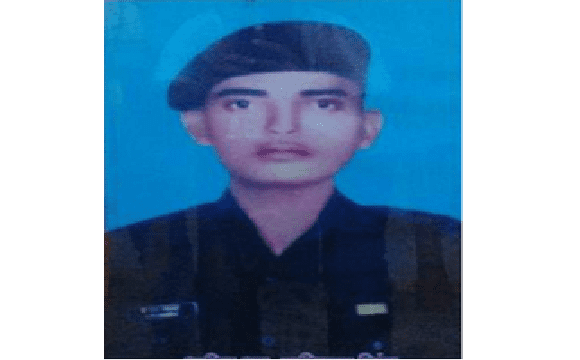

Service No : 1572027M
Date of Birth : June 8, 1960
Place of birth : Jhunjhunu, (Raj)
Service : Army
Last Rank : Sapper
Unit : 270 Engr Regt
Arm/Regt : The Corps of Engineers
Operation : Op Pawan
Martyrdom : October 19, 1987
Sapper Mahipal Singh Jhajharia
Sapper Mahipal Singh Jhajharia was born on 8 June 1960 in Govla village, located in the Chirawa Tehsil of Jhunjhunu district, Rajasthan. This region, known for its proud warrior heritage and deep martial traditions, shaped his early aspirations and values. Jhunjhunu district has historically produced many of India’s finest soldiers, and he would go on to carry forward this legacy with honour. He was born to Shri Sultan Ram Jhajharia and Smt. Marwan Devi, who instilled in him values of integrity, duty, and patriotism. The family belonged to the agrarian and martial communities of the region, where service to the nation was regarded as a matter of pride. Growing up in Govla village during the 1960s and 1970s, Sapper Mahipal Singh received his education in local schools. The cultural environment around him, deeply influenced by Rajasthan’s martial identity, nurtured qualities of courage, discipline, and service.
Answering the call of duty, he joined the Indian Army on 28 July 1984, enrolling into the Corps of Engineers. This moment marked a defining transition in his life as he stepped into the world of soldiering. After completing his training at the Engineer Training Establishments, he was posted to the 270 Engineer Regiment of the Bombay Engineer Group. The Corps of Engineers, also known as the Bombay Sappers, forms a crucial pillar of India’s military engineering capabilities. Sappers are highly skilled in demolition, mine clearance, field fortification, bridge construction, and providing engineering support during combat. Serving in the 270 Engineer Regiment required technical expertise, tactical awareness, physical endurance, and immense courage. As a Sapper, he was trained to navigate mined terrain, clear obstacles, and assist infantry units in challenging and hostile environments.
Op Pawan : 19 October 1987
Sapper Mahipal Singh Jhajharia was deployed in the Jaffna Peninsula of northern Sri Lanka as part of Operation Pawan, the Indian Peace Keeping Force (IPKF) mission launched on 29 July 1987. The operation was initiated under the Indo–Sri Lanka Accord with the objective of enforcing a ceasefire between the Sri Lankan government and Tamil militant groups, supervising the surrender of arms, and restoring peace in Sri Lanka’s northern and eastern regions. For this mission, the IPKF comprised four divisions of the Indian Army, supported by the Indian Navy and the Indian Air Force. The Jaffna Peninsula became the focal point of intense combat, as it was the principal stronghold of the Liberation Tigers of Tamil Eelam (LTTE). The militants had converted the area into a heavily fortified battlefield using anti-tank mines, booby traps, improvised explosive devices, and layered defensive obstacles. Among the units deployed in this hostile environment was the 270 Engineer Regiment of the Bombay Engineer Group, where Sapper Mahipal Singh served as a combat engineer—one of the most forward-deployed and vulnerable roles in the operation.
Sapper Mahipal Singh’s primary task was to clear the way for advancing infantry under combat conditions. He was responsible for detecting and manually neutralising landmines and improvised explosive devices, breaching enemy obstacles, opening safe lanes through mined and booby-trapped areas, and ensuring the uninterrupted movement of assaulting troops. These tasks required him to operate ahead of the main force, often in full view of the enemy and under direct fire. The terrain—comprising dense vegetation, narrow lanes, and built-up areas—further increased the danger, as explosives were frequently concealed along approach routes and defensive positions. By early October 1987, the mission escalated into full-scale combat after the LTTE refused to surrender its weapons. From 12 October 1987 onwards, Indian Army brigades launched coordinated assaults to capture and secure the Jaffna Peninsula. During this critical phase, Sapper Mahipal Singh repeatedly undertook high-risk mine-clearance and route-opening tasks that were essential for the success of infantry operations. Each advance depended on his courage, precision, and technical skill, as even a single undetected device could cause heavy casualties.
Mine-clearance operations demanded intense concentration and physical bravery, with little margin for error. Combat engineers like Sapper Mahipal Singh not only carried out specialised technical tasks but also fought alongside infantry when engaged by the enemy. Despite the constant threat of explosions and small-arms fire, he continued to perform his duties with exceptional resolve and devotion, exemplifying the highest traditions of the Corps of Engineers. On 19 October 1987, while executing these hazardous tasks with exemplary courage and selflessness, Sapper Mahipal Singh Jhajharia laid down his life in the line of duty. His sacrifice occurred during the most intense phase of the Jaffna operations. At the age of 27 years, with just three years of service, he made the supreme sacrifice for the nation.
Sapper Mahipal Singh is survived by hif wife Smt Santosh Devi and brothers Shri Devkaran Singh, Shri Nahar Singh and Shri Rajendra Singh.
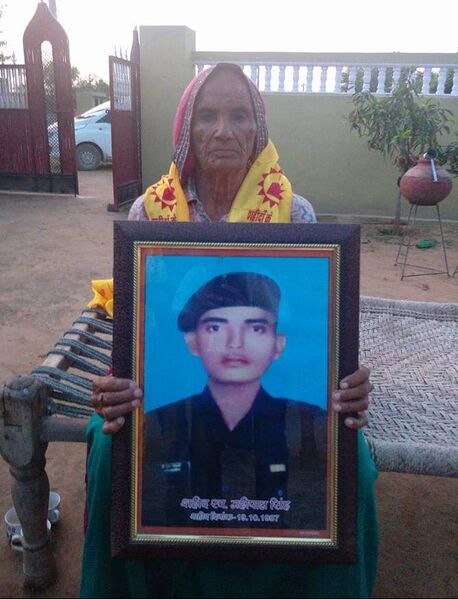
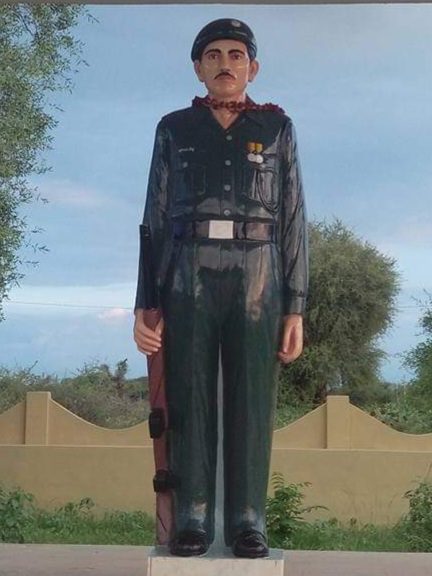
Niku
2026 at 11:50 pmI can proudly say that he was a brave soldier and a true patriot. He continued the legacy of the Jhajharia clan.
Jai Hind!