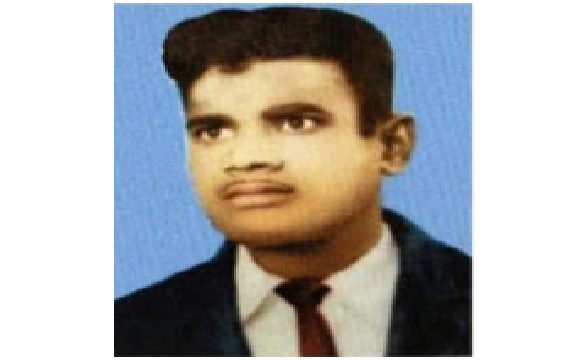

Service No : 2561569M
Place of birth : North Arcot Dist (TN)
Service : Army
Last Rank : Sepoy
Unit : 18 Madras
Arm/Regt : The Madras Regiment
Operation : Indo-Pak War 1971
Martyrdom : December 17, 1971
Sepoy Sampathu
Sepoy Sampathu hailed from Krishnapuram village in Polur, in the North Arcot district of Tamil Nadu—a region known for its rich cultural heritage and a proud tradition of service in the armed forces. After completing his school education, he chose to serve the nation by joining the Indian Army. He was recruited into the 18 Madras Battalion of the Madras Regiment, one of the oldest and most decorated infantry regiments of the Indian Army. Renowned for its fearless soldiers, strict discipline, and an illustrious record of valour, the regiment instilled in him a deep sense of pride, responsibility, and a commitment to uphold its distinguished traditions. During the 1971 Indo–Pak War, Sepoy Sampathu’s unit, 18 Madras, was deployed in the strategically significant Nayachor–Umarkot sector on the western front. The region posed formidable operational challenges, including vast stretches of inhospitable desert terrain, extreme climatic conditions, and the constant threat of enemy action. Despite these hardships, the battalion displayed remarkable determination and resilience. It played a crucial role in containing and repelling Pakistani offensives, effectively preventing any major enemy breakthrough and contributing significantly to the stabilisation of the sector.
Indo-Pak War: 16-17 Dec 1971
In 1971, Sepoy Sampathu’s unit, 18 Madras, was deployed in the southern Rajasthan sector during a period of grave national crisis. India was compelled to go to war with Pakistan following the large-scale atrocities committed by the Pakistani Army in its eastern wing, which led to an unprecedented influx of millions of refugees into India. The sheer magnitude of this humanitarian crisis made armed conflict unavoidable. Consequently, India found itself engaged in a two-front war—on the eastern front, which ultimately culminated in the liberation of Bangladesh, and on the western and northern fronts to counter Pakistani military offensives. On the western front, the Rajasthan sector assumed considerable strategic importance. Indian forces in this region included the 11 Infantry Division and the 12 Infantry Division, while the opposing Pakistani forces comprised the 18 Infantry Division, supported by additional brigades and paramilitary elements. Indian operational plans envisaged a bold double thrust: the 12 Infantry Division advancing along the Longewala–Rahim Yar Khan axis, and the 11 Infantry Division along the Barmer–Naya Chor axis. However, these plans were disrupted when Pakistan launched a major armoured assault on Longewala on the night of 3 December 1971. This attack was resolutely repulsed by determined Indian ground forces, ably supported by effective air strikes from the Indian Air Force, resulting in heavy losses to the enemy and shifting the momentum decisively in India’s favour.
No Comments