

Service No : 4688 GD(P)
Date of Birth : August 22, 1932
Place of birth : Punjab
Last Rank : Squadron Leader
Unit : 1 Sqn
Arm/Regt : Indian Air Force
Operation : Indo-Pak War-1965
Martyrdom : September 11, 1965
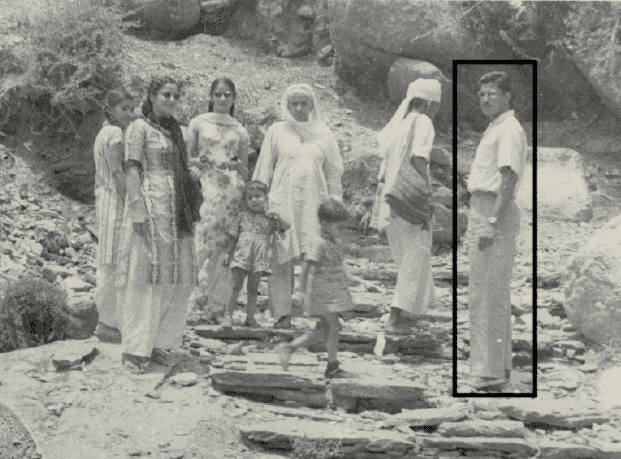
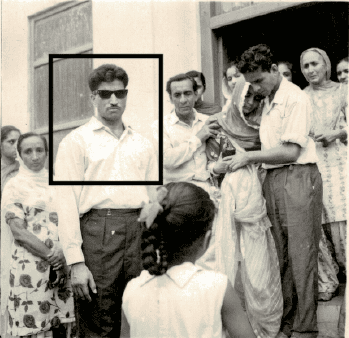
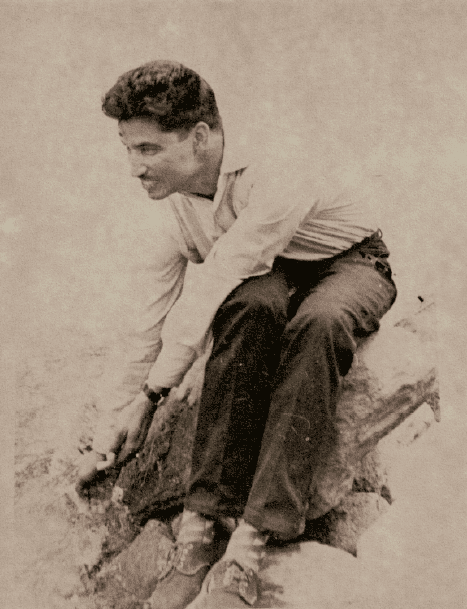
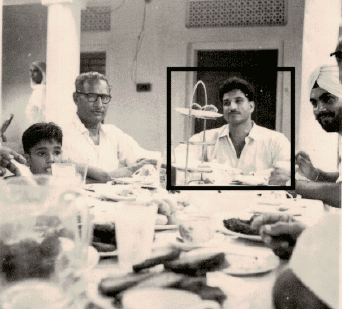
Sqn Ldr RK Uppal
Squadron Leader Raman Kumar Uppal hailed from Punjab and was born on 22 August 1932. From an early age, he displayed a keen interest in aviation and military service, qualities that inspired him to pursue a career in the Armed Forces. His determination and aptitude earned him selection to the prestigious National Defence Academy (NDA), where he joined the 62nd Course. The rigorous military and academic training at the NDA laid a strong foundation for his future career as an officer in the Indian Air Force. On successful completion of his training, he was commissioned into the Indian Air Force as a Pilot Officer on 16 January 1954 at the age of 22. Opting for the flying branch, he underwent intensive flying training to qualify as a fighter pilot. The training demanded exceptional flying skills, quick decision-making, and mental resilience, all of which he demonstrated with distinction. Upon earning his fighter wings, he was posted to operational fighter squadrons, where he gained valuable experience flying frontline combat aircraft.
During the next decade, he served with several flying squadrons based at different Air Force stations across the country. These assignments exposed him to a wide range of operational environments and enabled him to master various aspects of military aviation, including air defence, offensive strike missions, tactical reconnaissance, formation flying, and advanced aerial combat manoeuvres. His professionalism, flying ability, and commitment to duty earned him the respect of his seniors and fellow officers alike. His steady professional growth was reflected in his promotions. He was promoted to the rank of Flying Officer on 16 January 1955 and, in due course, rose to the ranks of Flight Lieutenant and Squadron Leader. Each promotion brought with it greater operational responsibilities, leadership roles, and opportunities to mentor younger pilots while contributing to the combat readiness of his units. By 1965, Squadron Leader Raman Kumar Uppal had completed nearly eleven years of distinguished service in the Indian Air Force. Over the years, he had matured into a highly accomplished and confident fighter pilot with extensive operational experience. Known for his sound judgement, exceptional flying skills, and thorough understanding of air operations, he had established himself as one of the capable officers of the Air Force.
Offensive Strike Mission(Indo-Pak War): 11 Sep 1965
By 1965, Squadron Leader Raman Kumar Uppal was serving with No. 1 Squadron of the Indian Air Force, popularly known as "The Tigers," and was based at Air Force Station Adampur in Punjab. Equipped with the French-built Dassault Mystère IVA fighter-bomber, the squadron was one of the Indian Air Force's premier combat units entrusted with undertaking both offensive and defensive air operations during the Indo-Pak War of 1965. No. 1 Squadron holds a distinguished place in the history of the Indian Air Force. It was the first squadron of the IAF, raised at Karachi on 1 April 1933 with Westland Wapiti aircraft. Following Independence, the squadron was relocated to India and continued to evolve with the changing needs of the Air Force. In 1953, it moved to Palam, and in 1957 it was stationed at Air Force Station Kalaikunda under the command of Squadron Leader Dilbagh Singh, who would later become the Chief of the Air Staff. During this period, the squadron was equipped with the modern Mystère IVA fighter aircraft, significantly enhancing its strike capabilities. The squadron distinguished itself during Operation Vijay in December 1961, the military operation that liberated Goa from Portuguese rule. Under the command of Squadron Leader S. Bhattacharya, No. 1 Squadron carried out successful combat missions, further strengthening its reputation as one of the Indian Air Force's most capable operational units. In 1963, the squadron moved to Air Force Station Adampur, which remained its home base for the next seventeen years.
When the Indo-Pak War broke out in September 1965, No. 1 Squadron was commanded by Wing Commander OP Taneja and immediately became one of the frontline units engaged in combat operations. Flying the Mystère IVA, the squadron was tasked with a wide spectrum of missions, including offensive strikes against enemy airfields, close air support to the Indian Army, battlefield interdiction, attacks on enemy logistics, and airfield defence. The squadron flew its first strike mission on the morning of 6 September 1965, when a formation of four Mystère aircraft attacked a Pakistani military railway train near Ghakkar. During the mission, the formation was intercepted by a Pakistan Air Force F-104 Starfighter, one of the most advanced supersonic fighters of its time. Displaying remarkable flying skill and tactical judgement, the Indian pilots flew at extremely low altitude, successfully evaded the interception, and returned safely to base without suffering any losses. On the evening of the same day, the Pakistan Air Force launched pre-emptive air strikes against several Indian forward air bases, including Adampur. Despite coming under enemy attack, the operational capability and morale of No. 1 Squadron remained unaffected. The very next morning, on 7 September 1965, the squadron was assigned one of the most challenging missions of the war—an attack on the Pakistan Air Force's principal airbase at Sargodha, which housed nearly half of Pakistan's frontline combat aircraft. This operation earned No. 1 Squadron the distinction of becoming the first Indian Air Force unit to strike a Pakistan Air Force airfield during the 1965 war, marking the beginning of a sustained offensive air campaign.
Over the following days, Squadron Leader Raman Kumar Uppal and his fellow pilots flew numerous hazardous combat sorties. These included offensive strikes against heavily defended Pakistani airfields, interdiction missions aimed at disrupting enemy supply routes and communication networks, and defensive patrols to protect Indian air bases from enemy attacks. Each mission demanded exceptional courage, precision, and determination, as the pilots often operated deep inside hostile territory under the constant threat of enemy fighters and intense anti-aircraft fire. Among the squadron's notable achievements during the war were repeated attacks on Pakistani armoured formations. Earlier operations by No. 1 Squadron had destroyed eighteen Pakistani tanks, significantly assisting the Indian Army's ground operations. These successes made the squadron a high-priority target for Pakistani air defence units. On 11 September 1965, Squadron Leader Raman Kumar Uppal was detailed for another critical strike mission. He was part of a formation of four Mystère IVA aircraft tasked with destroying a strategically important bridge near Kasur, a vital communication link used by Pakistani forces to move troops, armour, and supplies. Recognising the military importance of the target, the Pakistan Army had heavily fortified the area with anti-aircraft guns and air defence weapons. Undeterred by the formidable defences, the four-aircraft formation pressed home its attack with exceptional determination. The pilots made repeated low-level attack runs to ensure the destruction of the assigned target despite being subjected to intense and accurate anti-aircraft fire. During one of these attack passes, Squadron Leader Uppal's aircraft was struck directly by enemy anti-aircraft shells. The aircraft immediately caught fire, making it impossible to recover. Despite every effort, the burning Mystère crashed in enemy territory, and Squadron Leader Raman Kumar Uppal made the supreme sacrifice in the line of duty.
Squadron Leader Raman Kumar Uppal was only 33 years old when he laid down his life in the service of the nation. A highly skilled fighter pilot and an inspiring leader, he displayed exceptional courage, unwavering devotion to duty, and complete disregard for personal safety while carrying out his mission. His supreme sacrifice during the Indo-Pak War of 1965 remains an example of the professionalism, gallantry, and selfless commitment that have always characterised the Indian Air Force. His legacy continues to inspire generations of 'Air Warriors' and serves as a reminder of the extraordinary sacrifices made by those who defend the nation.
Ajay Gandhi
2026 at 5:42 amSqn Ldr Raman Kumar Uppal was my father. He gave his life for our Motherland, India, three and a half months before I was born.
As a child, I carried the pain of never having met him. I wondered why destiny had taken him away before I could see his face, hear his voice, or feel his arms around me. With age, that pain slowly turned into understanding, respect, and immense pride.
In 1969, I moved to the United States and later became a citizen there. Yet, no matter how many years passed or how far life took me from India, my connection to my birthplace and to my father’s sacrifice never left me. I am now hoping to return and reconnect more deeply with India, though the journey has not been simple because I no longer have access to my old Indian passport and records from that time.
Today, I know that my father did not leave me behind by choice. He answered the call of duty and made the supreme sacrifice for our nation. I will always carry both the sorrow of his absence and the pride of being his child.
Jai Hind.