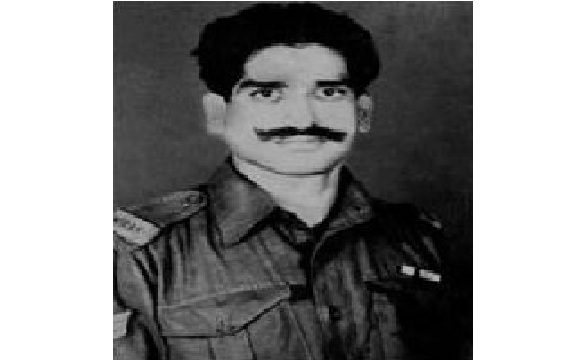
In the southern Rajasthan sector during the Indo-Pak War of 1971, the 18 Madras Battalion was placed under the operational control of 11 Infantry Division. On 4 December 1971, the battalion launched a series of aggressive operations, swiftly overrunning Pakistani border outposts. Maintaining relentless momentum, the unit advanced nearly 45 kilometres into enemy territory and, by 11 December, had established contact with the well-prepared defences at Naya Chor. Continuing its determined advance across inhospitable desert terrain under constant threat of enemy fire, the battalion covered over 40 miles in gruelling conditions. By 16 December 1971, 18 Madras had reached positions at Hingora Tar, just about two kilometres short of Umarkot—placing it in a tactically significant and highly contested zone. At this critical juncture, Subedar Shreedhara Das, serving as a platoon commander in a company of the Madras Regiment, played a key role in holding the battalion’s defensive positions. The unit had established a well-fortified layout at Hingora Tar in anticipation of enemy counterattacks. In the early hours of 17 December 1971, the enemy launched a determined and well-coordinated assault on the battalion’s position. The intensity of the attack severely tested the defenders. Rising to the occasion, Subedar Shreedhara Das displayed exceptional leadership and courage, moving fearlessly from trench to trench under heavy enemy fire. He motivated his men, reorganized their defences where necessary, and ensured that the attack was effectively resisted.
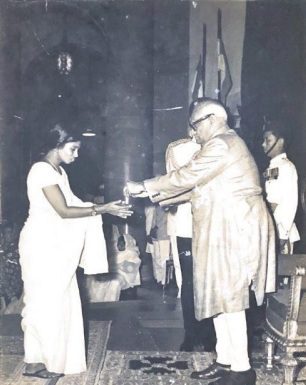
During this fierce engagement, he was seriously wounded. However, demonstrating remarkable fortitude and devotion to duty, he refused evacuation and continued to lead his platoon. His presence on the battlefield inspired confidence among his men and played a decisive role in maintaining their morale under intense pressure. Approximately half an hour later, the enemy launched a second, more aggressive assault and managed to close in on the defensive positions. In the ensuing close-quarter combat, when the crew of one of the Light Machine Guns was killed, Subedar Shreedhara Das immediately took charge of the weapon. With complete disregard for his own safety, he brought devastating fire upon the advancing enemy, inflicting heavy casualties and halting their advance. Despite his grievous injuries, he continued to fight with unwavering determination until he finally succumbed to his wounds. His gallant actions, indomitable spirit, and supreme sacrifice stand as a shining example of leadership, courage, and devotion to duty in the face of overwhelming odds, upholding the finest traditions of the Indian Army. Along with Captain SS Walkar and Sub Shreedhara Das, 21 other brave soldiers of the battalion laid down their lives, including Nb Sub NN Krishnan, Hav AP Ponnappan, Nk M Mani, L Nk SA Narayan, L Nk Panoly Govi, Sep M Muthaiah, Sep Amir Miyan, Sep GV Pillai, Sep Rajan, Sep NCM Appachu, Sep Sampathu, Sep RG Krishna Kurup, Sep Gajendran, Sep Shaik Mahaboob, Sep MA Kasinathan, Sep Arasan Raju, Sep Basav Rajappa, Sep J Ganesan, Sep C Kandasamy, Sep Revan Siddappa and Sep V Somasekharan. For his exceptional bravery, indomitable fighting spirit, inspirational leadership, and supreme sacrifice, Sub Shreedhara Das was given the gallantry award, “Vir Chakra” for his cold courage, fighting spirit, devotion to duty and supreme sacrifice.

K.Rajendran nair
2026 at 7:53 pmA great and patriotic soldier who laid his life for his mother land.
Saneesh surendran
2026 at 7:55 pmIn reply to Chandramathiamma PK.
The brave die never, though they sleep in dust: Their courage nerves a thousand living men. The true soldier fights not because he hates what is in front of him, but because he loves what is behind him.”
Jai hind
B Ravichandran
2026 at 7:55 pmProud to be associated family member of Infantry Division. Madras Regiment. My father was in same Regiment and may be colleague of Sub Das. He was also in 1971 war.
T. P. Baby
2026 at 7:56 pmA real hero of Indian Army.
PA
2026 at 7:57 pmJai hind.
Purushotaman
2026 at 7:57 pmIn reply to KS Rajan.
Death in service to one’s own country is the greatest heroism .
Please know that prayers of so many people are with his family .
Remembering his ultimate service
Chandramathiamma PK
2026 at 7:57 pmA rare photo
For some it is shining up memory
For some it is a new image
A rare personality
Some were lucky to have his warmth,care and Inspiration on his days
For some he is a hero in a war story as he moved trench to trench to save the motherland..
For him it was a call of honour
Gets very few soldiers
You are agreat hero to remember and to show to the future generation
Salutes…
Jai hind
KM Jayachandran
2026 at 7:58 pmI AM proud of my maternal Uncle Sub.Sreedhara Dass..VrC…I was in 6th Std on that fateful day…& he was my Inspiration to join the Armed Force.
Ramachandran Nair
2026 at 7:58 pmI am proud to be his brother in law.You will be a role model for all of us.
Jai Jawan.
KS Rajan
2026 at 7:59 pmI AM proud of my maternal uncle Sub. Sreedhara Dass . On that fateful day myself was serving in Indian Navy