In June 1979, Sepoy Manjit Singh’s unit, the 17 Punjab Battalion of the Punjab Regiment, was assigned to an urgent internal security operation at Bokaro in present-day Jharkhand. The Army had been requisitioned in aid of civil authorities following a grave and unprecedented situation in which a group of Central Industrial Security Force (CISF) personnel had defied orders, seized control of an armoury, and fortified themselves within their barracks. The gravity of the situation was heightened by the substantial cache of weapons and ammunition in their possession. The defiant personnel controlled nearly 400 rifles, 61 pistols, 24 privately owned weapons, and approximately 24,000 rounds of ammunition. Anticipating an armed confrontation, they had systematically converted the barracks and armoury into a well-defended stronghold. The entire complex was fortified with wire obstacles and defensive ditches to impede movement, while sandbag bunkers constructed on rooftops and along first-floor windows provided them with commanding firing positions and clear fields of observation.
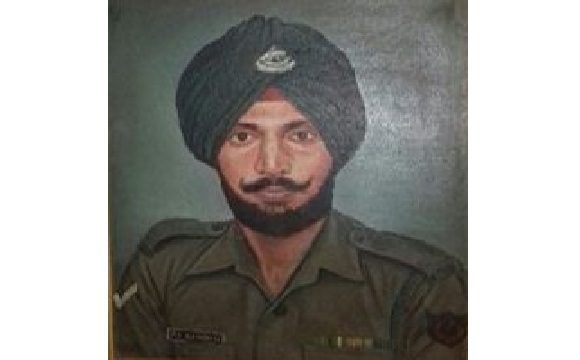
On the night of 24–25 June 1979, the battalion was inducted into the area and rapidly established a well-planned cordon around the complex to isolate the armed group and prevent any escape or reinforcement. The operation was carried out with precision, effectively sealing all approaches to the barracks and armoury. A company under the command of Major Sukhdev Singh was tasked with spearheading the operation, and Sepoy Manjit Singh was among the soldiers assigned to the assault element. As the cordon was being tightened, the troops came under intense and accurately directed rifle fire from the barracks adjacent to the armoury. The entrenched personnel, occupying fortified positions, brought down heavy and sustained fire, effectively denying access from the northern side and creating a significant obstacle to further advance. The situation demanded immediate and decisive action to break the stalemate. To neutralize the threat and regain the initiative, a section was ordered to advance and clear the residential barracks from where the heaviest volume of fire was originating. Sepoy Manjit Singh was part of this assault team. Acting swiftly on the orders of his section commander, he advanced with determination, fully aware of the grave danger involved. Demonstrating exceptional courage and complete disregard for his own safety, he charged towards the objective under a hail of enemy fire, intent on flushing out the entrenched personnel. Upon entering the building, he engaged the adversaries at close quarters in a fierce exchange of fire. During this daring assault, he was struck by a sudden and intense volley of fire from the well-entrenched personnel and was killed instantly. His fearless and selfless action, however, proved to be a decisive turning point in the operation. Inspired by his conspicuous bravery and supreme sacrifice, his comrades rallied with renewed determination. Launching a fierce and coordinated assault, they pressed forward despite continued resistance, successfully overwhelming the position and compelling the defiant personnel to surrender.
In the course of this operation, besides Sepoy Manjit Singh, Major Sukhdev Singh and Sepoy Jaswinder Singh (who later succumbed to his injuries on 28 June 1979) also made the supreme sacrifice, underscoring the high cost of restoring order in such a volatile situation. Sepoy Manjit Singh’s actions in the face of extreme danger exemplified extraordinary courage, steadfast determination, and devotion to duty of the highest order. His sacrifice played a pivotal role in the successful resolution of the crisis and upheld the finest traditions of the Indian Army. In recognition of his exemplary gallantry, he was posthumously awarded the Shaurya Chakra.

No Comments